
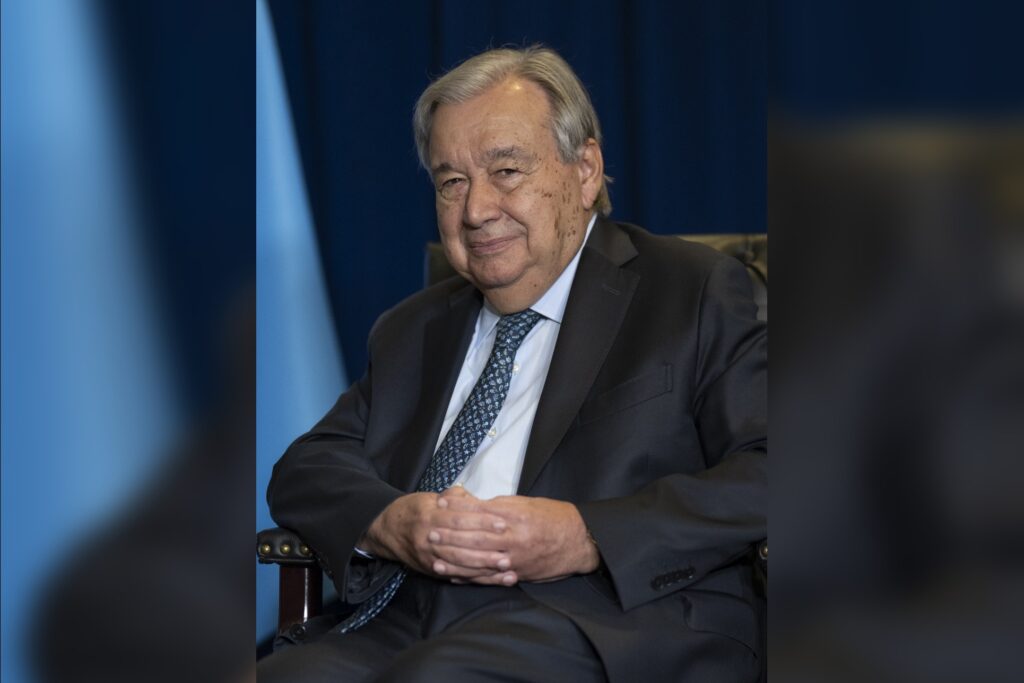
UNITED NATIONS, July 15 — António Guterres, the ninth Secretary-General of the United Nations, is entering the final months of his tenure, a period defined by one of the most consequential challenges to the post-1945 international order since the Cold War. Against this backdrop, the Portuguese diplomat’s leadership has been tested by the full-scale Russian invasion of Ukraine, a war he has consistently condemned as a clear violation of the UN Charter.
Guterres, who took office on January 1, 2017, after a career that included serving as Prime Minister of Portugal from 1995 to 2002 and as UN High Commissioner for Refugees from 2005 to 2015, has made the defence of international law a central pillar of his final years in office.
A Diplomatic Gamble in Wartime
In the corridors of the UN’s headquarters on the East River, the spring of 2022 stands out as a period of intense, high-stakes shuttle diplomacy. In April of that year, Guterres undertook a rare dual mission, travelling first to Moscow to meet with President Vladimir Putin, and then to Kyiv to meet with President Volodymyr Zelenskyy. The visits underscored the UN’s unique, if limited, convening power even as war raged on the ground.
It was during that same trip to Ukraine that Guterres visited the town of Bucha, a suburb of Kyiv where evidence of war crimes had been uncovered following the withdrawal of Russian forces. The visit brought the moral dimension of the conflict into sharp focus for the international community.
The Black Sea Grain Initiative
What is at stake in this conflict extends far beyond the battlefield. Guterres’s most tangible diplomatic achievement during the war was the brokering of the Black Sea Grain Initiative in July 2022. The agreement, a rare moment of compromise between Moscow and Kyiv, allowed Ukraine to resume critical grain exports through its Black Sea ports, helping to stabilise global food prices and avert a wider hunger crisis.
The initiative was a testament to the Secretary-General’s patient, behind-the-scenes engagement. However, its success proved fragile.
Russia withdrew from the agreement in July 2023, a move that Guterres publicly lamented as a blow to millions of people in developing nations dependent on affordable food supplies. The wider picture remains grim. Guterres has repeatedly and publicly called for a cessation of hostilities and a return to diplomatic negotiations, but a political resolution remains elusive.
The UN, through agencies such as the World Food Programme and UNHCR, has provided humanitarian aid to over 14 million people in Ukraine since 2022, a massive logistical operation that continues daily.
What Comes Next
Guterres’s term as Secretary-General runs through December 31, 2026. As that deadline approaches, the question of his legacy is already being debated in diplomatic circles. He will leave office having presided over an institution under immense strain, caught between a permanent member of the Security Council that launched an aggressive war and a Western alliance determined to defend the existing order.
For now, the focus remains on the immediate crises. The war shows no sign of abating, and the humanitarian needs in Ukraine remain vast.
What is at stake, in Guterres’s own framing, is the very credibility of the United Nations Charter and the rules-based system it was designed to uphold. The search for his successor will begin in earnest soon, but the challenges he leaves behind are likely to define the next Secretary-General’s agenda just as powerfully.




