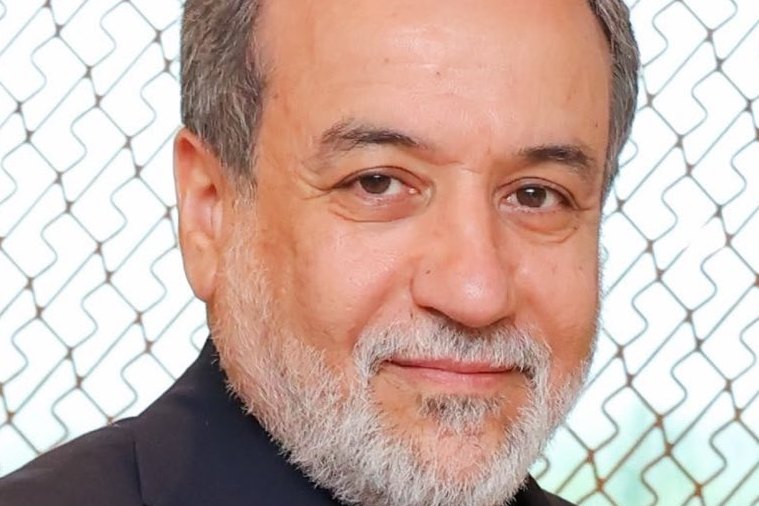
Iranian Foreign Minister Abbas Araghchi confirmed on Friday that indirect exchanges with Washington through intermediaries are continuing, insisting that diplomacy remains Tehran’s preferred route to end the current conflict. The salient point, however, is the price Iran has set for that diplomacy: a public declaration from President Donald Trump that he is willing to deal, and binding guarantees that the United States will not launch another war in the future.
The Mediator Track
Messages are moving through Qatar and Oman, the two Gulf states that have carried the diplomatic traffic since hostilities flared. Araghchi met a Qatari delegation in Muscat on Tuesday, where Doha’s spokesman Majed al-Ansari said the aim was to “narrow differences and reach an agreement to end the war.” Earlier the same day, Araghchi discussed the Strait of Hormuz and maritime security with Omani Foreign Minister Badr Albusaidi. Tehran has said it would reopen the strait within two days if its conditions are met; for now, the waterway remains closed.
Red Lines and Guarantees
Iran’s conditions are extensive. They include major sanctions relief, the release of billions of dollars in frozen assets, and compensation for war damage — demands US officials have dismissed as nonstarters. But two red lines are structural. Araghchi stated that Iran will keep its enriched uranium inside the country, and that its official position on the Treaty on the Non-Proliferation of Nuclear Weapons remains unchanged. In return, Tehran wants a US commitment that amounts to a security guarantee: no future conflict, codified. “We continued to place our hopes in diplomacy to end the current conflict,” Araghchi said, but only if Washington demonstrates seriousness first.
Trust and the Trump Factor
The demand for a presidential declaration is, it would seem, a response to experience. Araghchi criticized Trump’s shifting positions, noting it was unsurprising for the US president to adopt a new stance every day or reverse statements he had made the previous day. For a diplomat who served nine years in the Islamic Revolutionary Guard Corps during the Iran–Iraq War, then spent decades navigating nuclear talks — including the 2015 JCPOA negotiations — the volatility is a known quantity. Araghchi, who has held the foreign ministry portfolio since August 2024, previously served as ambassador to Japan, Finland, and Estonia. He knows the difference between a signal and a commitment.
Regional Frame
The diplomatic push is not confined to the Gulf. At the Economic Cooperation Organization meeting in Islamabad on Monday, Araghchi called for a regionally led security dialogue that would prevent third countries from using regional territory to launch attacks. He framed Iran’s military operations as responses against military facilities of those attacking it, not against neighbouring governments or peoples. The ECO platform — comprising ten states from Turkey to Central Asia — offers Tehran a multilateral stage to argue that US pressure has only strengthened Iranian resolve to resist what it calls excessive and unlawful demands.
For all the noise, the mechanism is narrow: Qatari and Omani mediators carrying messages back and forth, waiting for a single sentence from the White House. Until that declaration arrives, the Strait of Hormuz stays shut, the enriched uranium stays in Iran, and the intermediaries keep travelling to Muscat.
Sources
- Shafaq News..Araghchi: We still place hopes in diplomacy
- Abbas Araghchi
- Araghchi meets Qatari mediators in Oman as Trump threatens Iran over dirty bomb report
- Iranian FM Abbas Araghchi to visit Muscat for talks with Omani counterpart | The Jerusalem Post
- Seyed Abbas Araghchi Departs for Islamabad ECO Foreign Ministers Meeting: 19 outlets compared | NewsCord
- Iran committed to diplomacy, US chose 'different path': Foreign Minister Araghchi
Photo: Foreign Ministry of Oman (OGL-om 1.0)