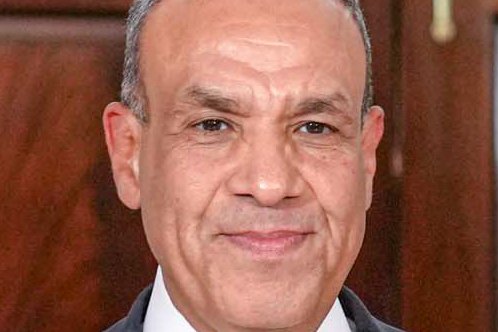
Egyptian Foreign Minister Badr Abdelatty has called on U.S. President Donald Trump to personally intervene to enforce the Gaza peace plan, telling MBN in an exclusive interview that aid deliveries required under the deal are falling short because of what he described as Israeli obstacles.
Abdelatty made the appeal on the sidelines of the 6th Aswan Forum for Sustainable Peace and Development, where he warned that the initiative — endorsed by the United Nations Security Council — must be implemented in full to prevent any single party from obstructing it. Egypt, alongside the United States and Qatar, played a central mediating role in securing the ceasefire agreement under Trump’s plan, which aims to end the war sparked by the Oct. 7, 2023, attacks and establish arrangements for the postwar period.
Ceasefire Phases Stalled Over Sequencing Dispute
The diplomatic push highlights a deadlock over the sequencing of the plan’s next stages. Abdelatty stressed the need for full implementation of the second phase, which includes the withdrawal of Israeli forces, enabling the National Committee for the Administration of Gaza to assume its responsibilities, and accelerating early recovery and reconstruction efforts. He said these steps should ultimately lead to an independent Palestinian state along the June 4, 1967 borders, with East Jerusalem as its capital.
The first phase has not been fully implemented, particularly its humanitarian provisions, Abdelatty said. The plan calls for at least 600 aid trucks to enter Gaza every day, a target not yet met. Israel denies obstructing humanitarian aid, stating it allows supplies including tents and winter necessities to enter but imposes security restrictions on certain items over concerns they could be used by Hamas.
The core dispute centers on disarmament and withdrawal. Abdelatty said Egypt, working with Qatar and Turkey, has made efforts to persuade Palestinian factions, including Hamas, to confine their weapons and hand them over. Israel maintains that Hamas must fully disarm before Israeli forces withdraw from areas of Gaza and the remaining stages proceed. Hamas says Israel must withdraw first.
Regional Leverage and Economic Fallout
Cairo’s leverage stems from its mediation role and its own exposure to the conflict’s economic shockwaves. Abdelatty described the war in neighboring Sudan as a direct threat to Egyptian national security, driving millions of refugees across the border. He also warned that a return to military action with Iran could be more dangerous than previous rounds of fighting, with severe consequences for countries across the region.
The economic toll is already measurable. Abdelatty said the Suez Canal alone lost $20 billion in revenues because of decreased traffic tied to regional tensions, while surging prices of oil, gas, and wheat have hit Egypt hard. As the world’s number one net importer of wheat and grain, Egypt faces a direct impact on families across the region struggling with food costs.
Diplomatic Architecture for Stability
At the Aswan Forum, Abdelatty outlined four principles for sustainable peace: moving beyond ceasefires to political processes addressing root causes; supporting national states and legitimate institutions; clear guarantees for implementation through monitoring and accountability; and strengthening regional ownership of security arrangements. He underscored the link between Egyptian security and that of Gulf countries, urging dialogue to address differences with Iran and full implementation of UN Security Council Resolution 1701 in Lebanon.
On the sidelines, Abdelatty met Iraqi Deputy Prime Minister and Foreign Minister Fuad Hussein to advance economic cooperation ahead of the Iraqi Prime Minister’s visit to Cairo on Monday, November 23, for the fourth session of the Joint Higher Committee. Both ministers reiterated the importance of prioritizing political and diplomatic solutions to regional crises.
Sources
- Exclusive: Egypt’s Foreign Minister Urges Trump to ‘Make Every Possible Effort’ to Enforce Gaza Plan | Alhurra
- Abdelatty urges dialogue to address differences with Iran, stresses link between Egyptian, Gulf security
- In Libya, Alliances Are Shifting – Geopolitical Futures
- US and Iran could still reach deal, says Egyptian Foreign Minister | The National
- Ahead of Iraqi PM’s Visit to Cairo, Egypt & Iraq FMs Hold Talks in Aswan
- Abdelatty, Iraqi counterpart probe bilateral ties, regional developments – Egyptian Gazette
Photo: U.S. Department of State (Public domain)