Rohingya refugees who escaped military violence in Myanmar face a new set of obstacles in Malaysia, a Muslim-majority nation that does not legally recognize their status. As of February 2026, about 126,000 Rohingya were registered with the U.N. refugee agency in Malaysia, yet they remain vulnerable to detention and excluded from formal society.
Origins of a Stateless People
The Rohingya are a predominantly Muslim, Indo-Aryan ethnolinguistic group from Rakhine State, Myanmar. Before the 2017 military crackdown, an estimated 1.4 million Rohingya lived in Myanmar. They have been denied citizenship under the country’s 1982 nationality law, which renders them stateless and restricts their freedom of movement, access to state education, and eligibility for civil service jobs. In 2017, over 740,000 fled to Bangladesh, while others scattered across Asia to countries including Malaysia, India, Indonesia, and Thailand.
Legal Barriers in Malaysia
Malaysia is not a signatory to the 1951 Refugee Convention and has no domestic legal framework recognizing refugees. This absence of legal status leaves Rohingya adults unable to work legally and children without access to public schooling. Without documentation, the community lives under constant threat of immigration raids and detention. The lack of legal recognition also means refugees cannot formally register organizations or own property, blocking pathways to stability.
Social and Religious Exclusion
Despite sharing the Muslim faith with Malaysia’s majority, many Rohingya struggle to practice their religion freely. According to CSW, a religious freedom advocacy group, Rohingya refugees cannot officially register their own places of worship. While some attend local mosques, others report facing discrimination or avoid them entirely for fear of detention. “Religious solidarity is often overtaken by social and cultural differences between the two groups,” CSW said in a statement to The Associated Press. Rohingya Rights Response, a community-led monitoring group, has also documented restrictions on religious gatherings in parts of the country.
Impact on Families and Communities
For families across the region, these barriers translate into daily uncertainty. Parents who survived the journey from Myanmar find themselves unable to secure a future for their children. Community leaders describe a generation growing up in legal limbo, cut off from formal education and the labor market. The inability to register places of worship fractures communal bonds that typically anchor displaced people, leaving many without a spiritual home in a country where faith is central to public life.
Community-Led Responses
In the absence of state support, Rohingya-led initiatives are attempting to fill the gaps. Nur Sadek, who fled Myanmar in 2017, co-founded Rohingya Rights Response to monitor conditions and advocate for refugee rights while studying law in Kuala Lumpur. His story mirrors that of Nurul Hakim, who arrived in 2010 after a perilous journey through Thailand. Hakim says he feels welcomed by local faith leaders, but knows others who have been barred from mosques. These grassroots efforts provide mutual aid and documentation of abuses, but they operate without legal protection or sustainable funding.
Sources
- Rohingya people
- Human Concern International and Human Concern USA Launch Rohingya Coalition to Expand Educational and Economic Opportunities for Rohingya Youth – Bangladesh
- Rohingya refugees in Bangladesh hope ICJ ruling will recognize genocide – Muslim Network TV
- ICJ is due to rule on the Rohingya genocide case. Here's what you need to know
- They fled persecution in Myanmar. In Muslim-majority Malaysia, Rohingya still struggle to belong
- State minister says China-Myanmar corridor could boost trade, aid Rohingya return
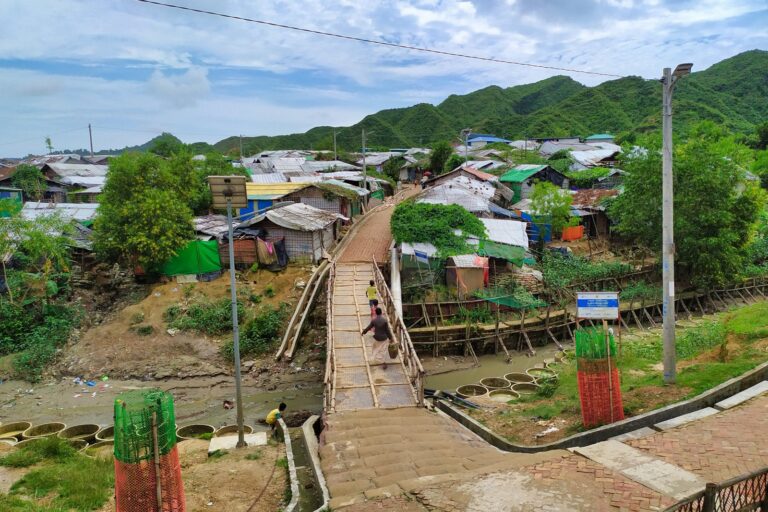
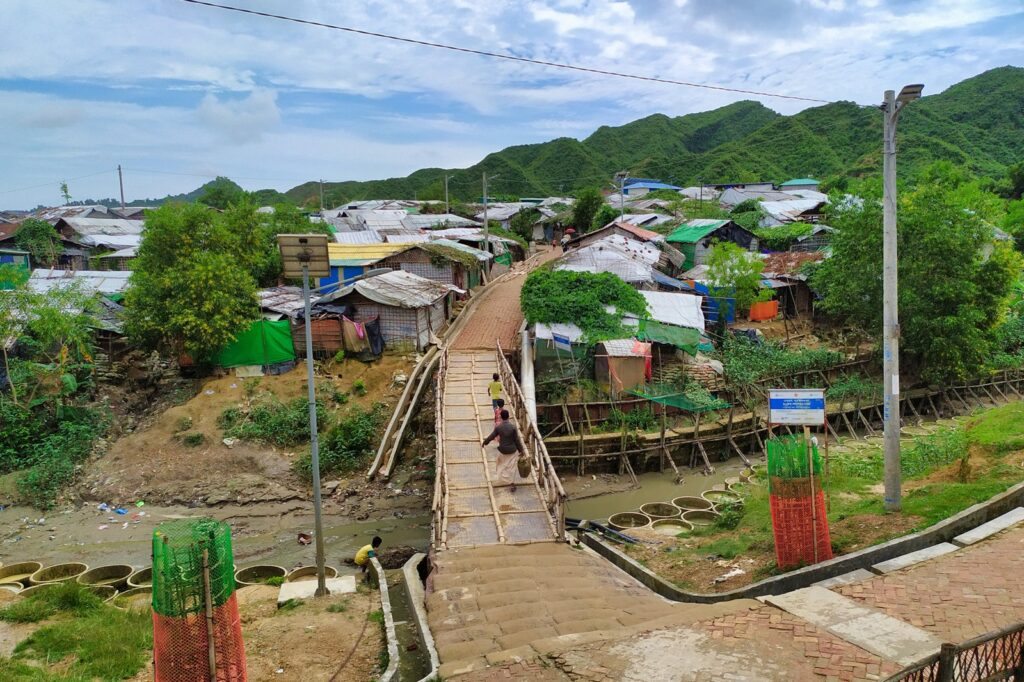
Photo: Rocky Masum (CC BY-SA 4.0)