
Washington, July 15 — The Trump administration has abandoned a proposed fee on cargo vessels transiting the Strait of Hormuz, according to multiple reports citing unnamed administration officials. The plan, first disclosed in December 2024, would have applied to all ships passing through the strategic waterway—not just oil tankers—and was conceived as part of a broader campaign to exert economic pressure on Iran.
The administration’s decision to drop the fee follows months of internal debate and intense lobbying by maritime groups, who argued the charge would raise shipping costs, increase consumer prices, and disrupt global trade. No official statement from the White House or the Department of Defense has been issued as of this report.
Strategic Waterway at Center of Policy Reversal
The Strait of Hormuz, a narrow channel between Oman and Iran, connects the Persian Gulf to the Gulf of Oman and the Arabian Sea. It is the only sea route linking the Persian Gulf to the open ocean, making it one of the world’s most critical maritime chokepoints. Roughly 20 percent of the world’s petroleum passes through its waters, and a large share of seaborne liquefied natural gas and oil supplies transit the strait to reach markets in Europe, Asia, and beyond.
For several Gulf nations—including major oil exporters Saudi Arabia, Iraq, and the United Arab Emirates—the strait is the sole maritime exit. Decades of geopolitical tension have centered on this waterway, particularly between the United States and Iran.
The 1979 Islamic Revolution in Iran reshaped its relationship with Western powers, and since then, Tehran has periodically threatened to disrupt shipping in the strait in response to sanctions or military pressure. While Iran has never fully closed the strait for an extended period, tensions have flared repeatedly in the 21st century, with Iranian military exercises near the strait and seizures of foreign vessels. Western powers have responded by increasing naval patrols to safeguard the flow of trade.
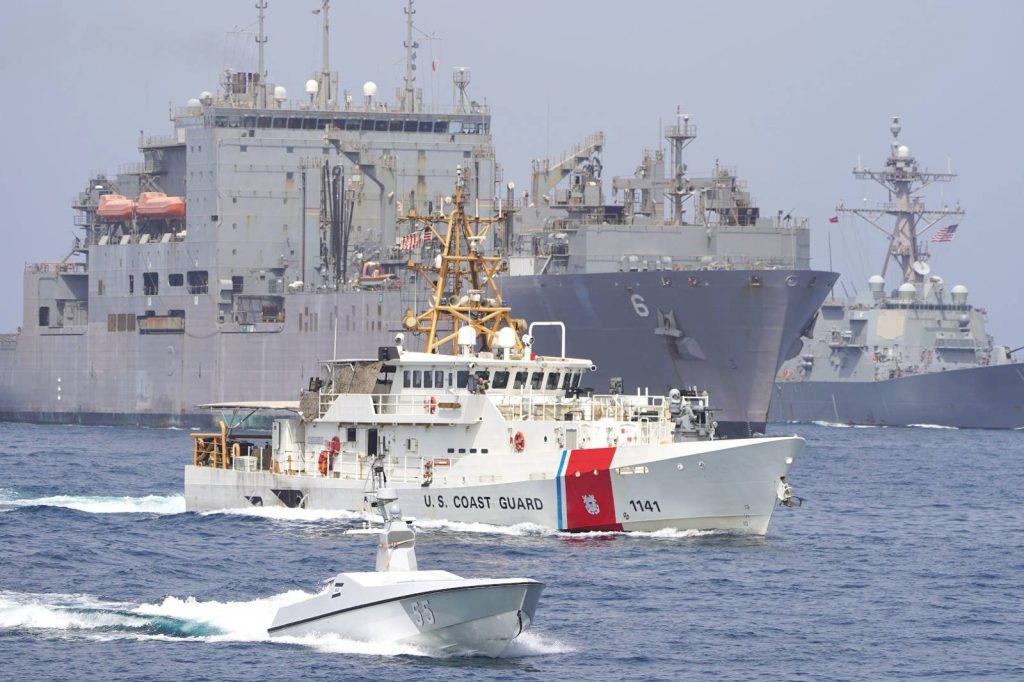
The proposed fee was intended to help cover the cost of U.S. naval patrols in the region. The U.S. Navy’s Fifth Fleet, based in Bahrain, is responsible for maintaining security in the area.
In 2019, following a series of attacks on tankers, the United States and its allies established a maritime security coalition to protect shipping in and around the strait—a reminder of the waterway’s enduring role as a flashpoint in regional power struggles.
Industry Opposition and Internal Debate
The fee proposal drew immediate opposition from the shipping industry and some U.S. allies. Maritime groups warned that the charge would raise operational costs for all cargo vessels, not just those carrying oil, and that higher shipping expenses would likely be passed on to consumers. Critics also argued that the fee could harm global trade by discouraging passage through one of the world’s most vital shipping lanes.
The administration’s reversal, which followed extensive internal debate, signals a shift in its approach to managing the financial and diplomatic burdens of maintaining security in the region.
Implications for U.S.-Iran Strategy
The decision to abandon the fee is widely seen as a tactical adjustment within the administration’s broader strategy toward Iran, which has included maximum pressure sanctions and military posturing. The Strait of Hormuz has long been a leverage point in U.S.-Iran tensions, with Iran threatening to close the strait in response to sanctions.
By dropping the proposed fee, the administration appears to have chosen a different path for addressing the costs of naval patrols, though the underlying pressure campaign remains in place. Any disruption to traffic through the Strait of Hormuz—whether from conflict, blockade, or policy miscalculation—could send shockwaves through energy markets and global supply chains. The waterway’s ancient roots, noted in historical accounts such as the 1st-century Periplus of the Erythraean Sea, underscore its enduring importance to commerce.
For now, the administration’s reversal removes one potential source of friction with the shipping industry and allied nations, while leaving the broader security architecture—and the delicate balance of power in the Gulf—unchanged.




