
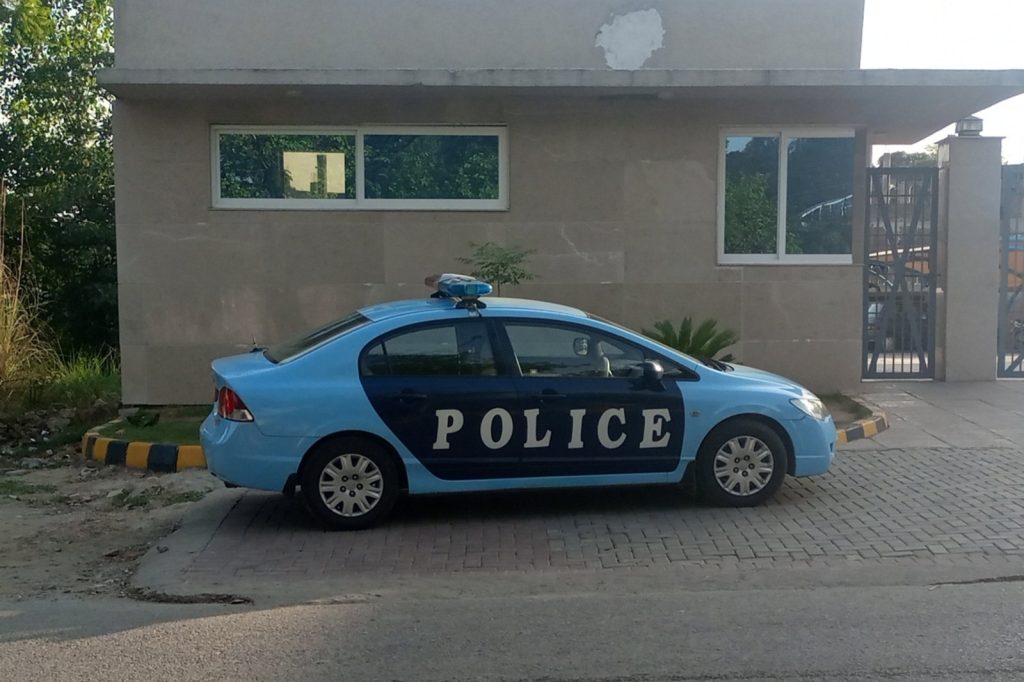
On 24 October 2025, a roadside bomb detonated against a police vehicle in Hangu District, Khyber Pakhtunkhwa, Pakistan, killing three occupants. The incident took place in an area that has historically served as a stronghold for the Pakistani Taliban, a militant group that has long challenged the authority of the Pakistani state.
The Pakistani Taliban, formally known as Tehreek‑e‑Taliban Pakistan (TTP), is a Deobandi jihadist organization operating primarily along the Afghanistan‑Pakistan frontier. Founded by Baitullah Mehsud in 2007, the group has been under the leadership of Noor Wali Mehsud since 2018. Although the TTP publicly professes allegiance to the Afghan Taliban, which has ruled Afghanistan since 2021, it functions independently and does not share the Afghan Taliban’s command hierarchy. Both the United Nations and the Government of Pakistan list the TTP as a terrorist organization.
Over the years, Islamabad has launched numerous military campaigns aimed at dismantling the group’s network, yet the TTP continues to demonstrate a capacity for lethal attacks, as evidenced by the Hantu bombing. The TTP’s ideology is rooted in an ultra‑conservative interpretation of Sunni Islam, with the group seeking to impose its vision on the Pakistani populace.
Its operations have drawn condemnation from the international community, including the United States, which remains a principal partner in Pakistan’s counter‑terrorism efforts. The United States has provided substantial assistance to Pakistan to counter the TTP and other militant factions. While the bilateral relationship has faced periodic strains, both nations share a strategic interest in curbing terrorism and fostering regional stability.
Ongoing U.S. engagement encompasses counter‑terrorism cooperation as well as broader economic development initiatives.
Regional Ramifications
The Hantu blast underscores the persistent insecurity along the porous Afghanistan‑Pakistan border, where the TTP exploits cross‑border mobility to evade security forces. The group’s ability to conduct operations in both countries complicates efforts to contain its activities.
Compounding the security challenge is the presence of other armed actors in the region, some of which are alleged to receive support from Tehran. The Iranian government’s backing of proxy militias has been a point of concern for the United States and its allies, who accuse Tehran of contributing to regional instability. Addressing the threat posed by the TTP will require a multi‑dimensional strategy.
Analysts stress that counter‑terrorism measures must be paired with initiatives aimed at economic development and social cohesion to tackle the underlying drivers of militancy. Continued coordination between the United States, Pakistan, and other regional stakeholders will be essential to formulate an effective response.
As the situation in Khyber Pakhtunkhwa evolves, global observers will monitor developments closely. The recent attack serves as a stark reminder of the enduring volatility in Pakistan’s north‑western provinces and the broader challenges facing the region’s security architecture.




