
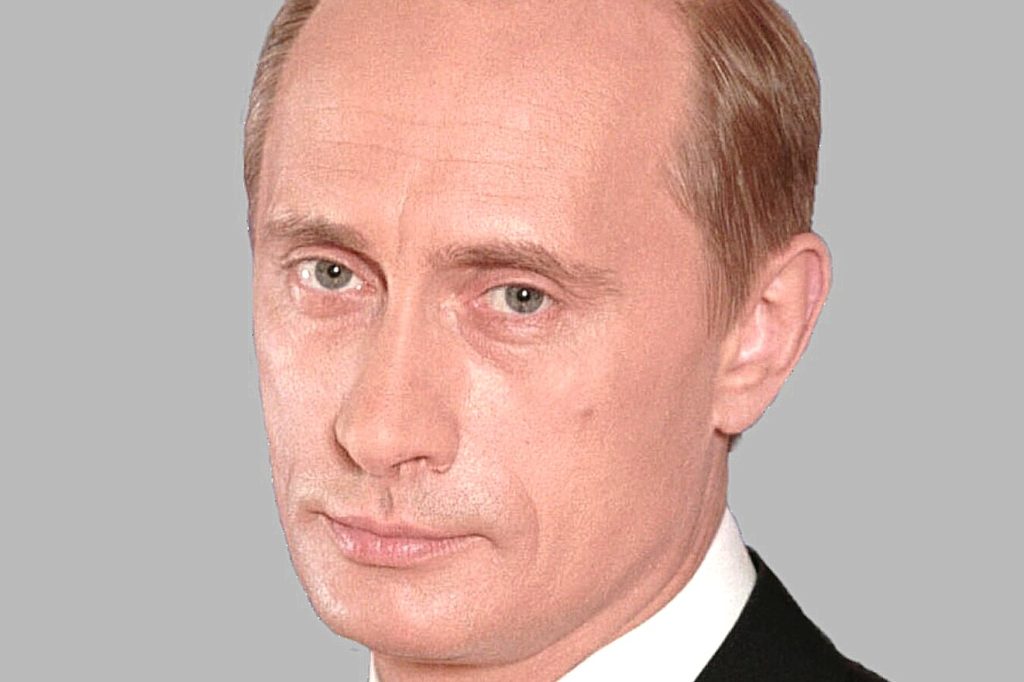
Moscow, July 10 — For more than two decades, Vladimir Putin has commanded Russian politics, but the economic framework that long underpinned his rule is confronting a fresh strain. The former KGB officer, born in Leningrad in 1952, first assumed the presidency on May 7, 2000, and returned to that office in 2012 after serving as prime minister. The full-scale invasion of Ukraine on February 24, 2022, along with the earlier annexation of Crimea in 2014, set off a cascade of international sanctions.
Asset freezes and travel bans from the United States, the European Union, the United Kingdom, and other nations have targeted Putin personally and members of his inner circle. The United Nations reports that the war has produced more than 6.5 million Ukrainian refugees and tens of thousands of civilian deaths.
A Shifting Economic Foundation
Nevertheless, a careful look at the Kremlin’s economic picture reveals resilience that is real but fragile. Russia’s gross domestic product grew by 3.6% in 2023 and by 3.2% in 2024—not a collapse. The key mechanism is oil. Energy revenues typically account for roughly 35% to 45% of Russia’s federal budget.
Proposed tariffs on Russian oil could cut directly into that flow. Follow the money: if those revenues shrink, the Kremlin would have fewer resources to fund both the war effort and domestic stability.
Putin has threatened retaliation, and cutting gas supplies to Europe is a lever he has pulled before; that threat remains on the table. European capitals are watching closely. The continent has spent the past two years trying to wean itself off Russian energy, but the dependency has not been fully unwound.
Russia is a major energy exporter, and revenue from oil and natural gas has historically filled state coffers. The proposed tariffs threaten to reduce that income.
If the Kremlin has less money, it may face harder choices between funding the war and maintaining domestic spending. European countries, which once relied heavily on Russian gas, have been scrambling to find alternative supplies. The roots of the current conflict trace back to 2014, when Russia annexed Crimea and backed separatist forces in eastern Ukraine, triggering the first round of Western sanctions.
The full-scale invasion in 2022 dramatically escalated the war and brought a far broader wave of penalties. Those sanctions have targeted Russian officials, companies, and key sectors of the economy.
The war has also caused a humanitarian crisis, with millions of Ukrainians fleeing their homes.
Domestic Control and External Pressures
Domestically, Putin’s political position appears unshakeable. He was re-elected in March 2024 with 87% of the vote. The election was widely criticized by international observers as neither free nor fair. State-run polls place his approval rating above 80% since 2022.
Those numbers, however, come from state-controlled pollsters, and the Kremlin’s tight grip on media and dissent makes independent verification difficult. Putin’s rule has been marked by a steady consolidation of power, suppression of political opposition, and an increasingly assertive foreign policy.
Russia is a vast country spanning Europe and Asia. It is a federal semi-presidential republic, though in practice power is heavily concentrated in the Kremlin. The country emerged from the collapse of the Soviet Union in 1991 as an independent state.
Its modern history includes a chaotic transition to capitalism, a series of wars in Chechnya, and a long struggle to define its post-Soviet identity. Putin has presided over most of that period, shaping Russia into a centralized authoritarian system.
What Comes Next
The question now is whether the economic pressure points—specifically the proposed oil tariffs—can crack a system that has so far absorbed sanctions without major internal rupture. Putin has shown he will escalate rather than retreat.
The mechanics of the next phase depend on how much Europe is willing to tighten the screws, and how much Russia’s budget can absorb before the domestic calculus shifts. The background of his rule is one of managing crises, but the scale of the current challenge is unlike any he has faced since taking office. The outcome will affect not only Russia but also the global balance of power.




