
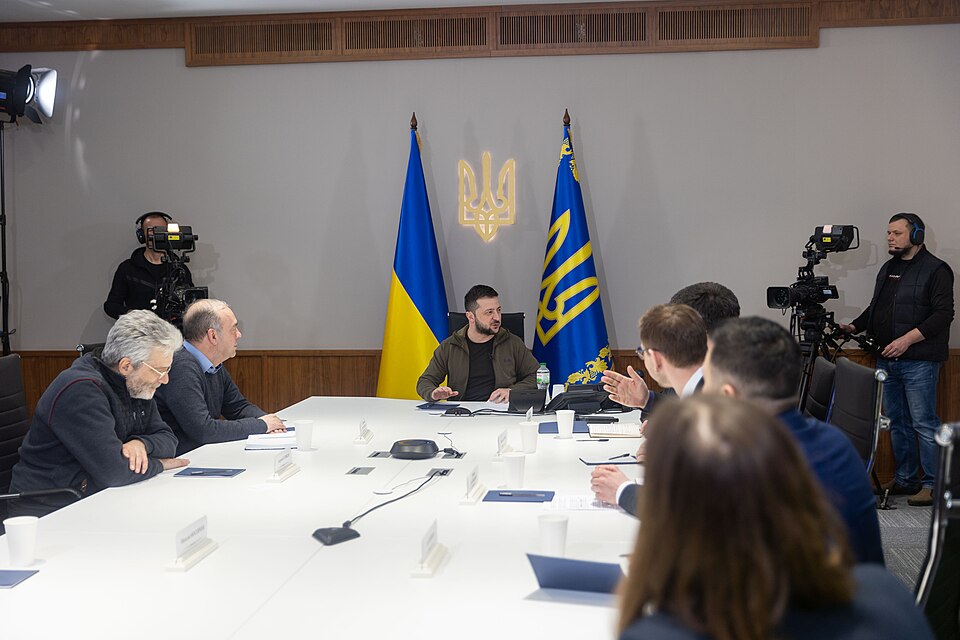
The 2024 NATO summit places Ukraine’s future within the alliance at the heart of strategic deliberations, even as concrete steps toward membership remain undefined. The alliance is expected to reaffirm long-term backing for Kyiv, including a multi-year aid package and a training program, but has withheld any timeline for Ukraine’s formal accession. Ukraine submitted its application for NATO membership in September 2022, but the alliance cites the ongoing conflict and required internal reforms as reasons for not setting a timetable.
The reported decision to exclude President Volodymyr Zelensky from addressing the summit may indicate a cooling of public support for Kyiv, according to the source.
Political Crosscurrents and Transatlantic Strains
The summit’s planning occurs against the backdrop of a potential return of Donald Trump to the U.S. presidency in the 2024 election. Trump has suggested he would reduce American aid to Ukraine and press Kyiv to negotiate with Russia.
The current U.S. administration has not altered the trajectory of its support, yet these political signals remain a factor in NATO’s calculations. European members, led by Germany and France, have increased their aid commitments. However, according to the source, European contributions cannot fully replace U.S. support. The alliance finds itself balancing its stated commitment to Ukraine’s sovereignty against the shifting political realities of the transatlantic landscape.
The outcomes of the summit will shape Ukraine’s defense strategy for the remainder of 2024 and beyond.
Foundations of the Alliance and Ukraine’s Long Path
The North Atlantic Treaty Organization is an intergovernmental military alliance built on the principle of collective security: members agree to defend any member attacked by an outside party. Founded in 1949, the alliance originally aimed to deter the Soviet Union.
After the Cold War, it expanded, accepting several new European members. It has conducted military interventions in Bosnia, Kosovo, and Libya. The alliance invoked its collective defense clause once, following the September 11 attacks, which led to a prolonged involvement in Afghanistan.
Ukraine began building ties with NATO in 1991, joined the Partnership for Peace in 1994, and entered the Intensified Dialogue program in 2005. For years, Ukraine remained neutral, but it pursued membership more aggressively after Russian aggression in 2014 and 2022.
Russia opposes this expansion and views the alliance’s growth as a threat. The current status of the alliance influences global stability: because NATO membership provides a security guarantee, any decision regarding Ukraine directly affects the risk of wider conflict. The alliance now faces internal tension concerning the contributions and commitments of its largest members, particularly as U.S. political dynamics evolve.
What to Watch Next
Key indicators in the coming days include whether the summit’s final communiqué contains any language on a Membership Action Plan or a concrete pathway for Ukraine. Also significant is how European allies will adjust their own defense spending if U.S. aid levels shift. The source confirms that the alliance is navigating these complex factors as it seeks to maintain support for Ukraine while adapting to a changing political environment.
The summit’s decisions will carry weight not only for Ukraine’s immediate defense needs but for the long-term cohesion of the alliance itself.




