
A Summit Defined by Balancing Act
The summit’s official agenda includes reinforcing the alliance’s commitment to Ukraine, which has received coordinated military assistance from NATO members since Russia’s full-scale invasion in February 2022. NATO had begun providing significant non-lethal aid to Ukraine as early as 2014, following Russia’s annexation of Crimea. The alliance’s expansion—from 12 founding members in 1949 to 31 members as of 2023—has been accompanied by a corresponding increase in its responsibilities along its eastern flank.
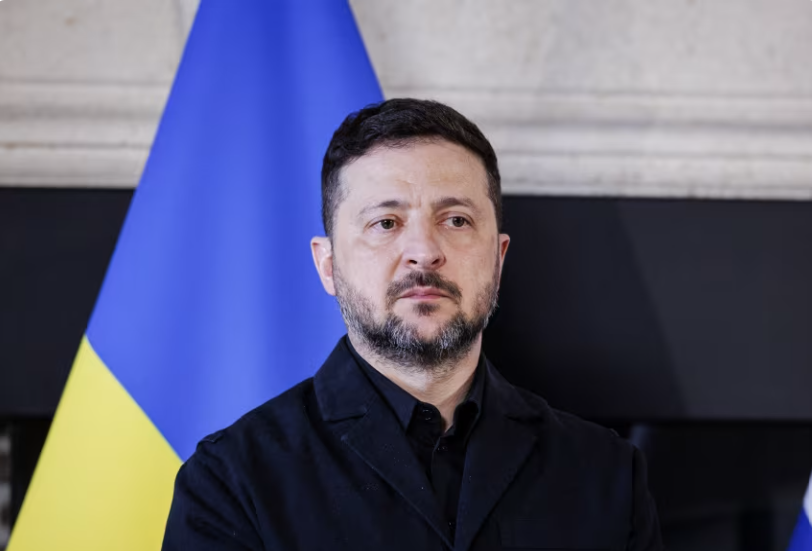
But the reported snub of President Zelensky’s speaking slot underscores the political minefield NATO must navigate. The decision, according to the report, reflects concerns among some member states that a Zelensky speech could become a flashpoint in the U.S. election campaign. Former President Donald Trump, the presumptive Republican nominee, has repeatedly criticized NATO allies for failing to meet the alliance’s benchmark of spending 2% of their gross domestic product on defense, and has questioned the value of the alliance itself. These statements have generated internal tensions within NATO, with member states varying in their willingness to confront Trump directly.
NATO Secretary General Jens Stoltenberg has consistently advocated for Ukraine’s right to self-defense, but the reported bar on Zelensky’s address suggests that some allies are calculating political risks ahead of November’s election. The move indicates that electoral politics inside a leading member nation—the United States—can directly shape alliance choices, even as the summit agenda publicly reaffirms support for Ukraine.
Historical Context and Strategic Stakes
Founded in 1949 after World War II, NATO is an intergovernmental military alliance built on the principle of collective defense: an attack on one member is treated as an attack on all. During the Cold War, its primary task was to counter the Soviet Union and the Warsaw Pact. After the Soviet Union’s dissolution in 1991, the alliance shifted toward out-of-area operations and later accepted a large number of new European members. Russia came to oppose NATO enlargement, and relations deteriorated steadily under President Vladimir Putin. The 2014 annexation of Crimea and the 2022 full-scale invasion of Ukraine pushed the alliance to reinforce its eastern flank and ramp up aid to Kyiv.
Ukraine remains an aspiring member, but its path has been blocked by Moscow’s opposition and the realities of an active war. Summits, which are rare high-level meetings of alliance leaders, are intended to set strategic direction and launch major initiatives. They differ from routine ministerial gatherings and often signal significant policy turns. The reported decision regarding Zelensky’s speech is a sign of strain inside an institution whose unity underpins security across the North Atlantic region.
Looking Beyond the Summit
The tension between supporting Ukraine and managing alliance politics is not expected to dissipate after the summit concludes on July 11. As the U.S. election campaign intensifies, NATO’s internal dynamics will likely grow more complicated. Some members are already calculating how to balance their public support for Kyiv against the potential political fallout in Washington. The reported snub is a subtle but unmistakable indicator that the alliance is navigating a political minefield, and the real test may come after the summit ends, when the political fallout begins to unfold. For readers, such moves serve as a barometer of strain inside a body whose collective defense commitment remains the cornerstone of security for the North Atlantic area.
{“@context”: “https://schema.org”, “@type”: “NewsArticle”, “headline”: “NATO Summit Navigates Ukraine Aid and Political Tensions”, “description”: “A Summit Defined by Balancing Act The summit’s official agenda includes reinforcing the alliance’s commitment to Ukraine, which has received coordinated military assistance from NATO…”, “datePublished”: “2026-07-06T09:30:00+00:00”, “author”: {“@type”: “Person”, “name”: “Li Wei”}, “publisher”: {“@type”: “Organization”, “name”: “InfoPulse Today”, “url”: “https://newsfeed.infopulsetoday.com/”}}




