
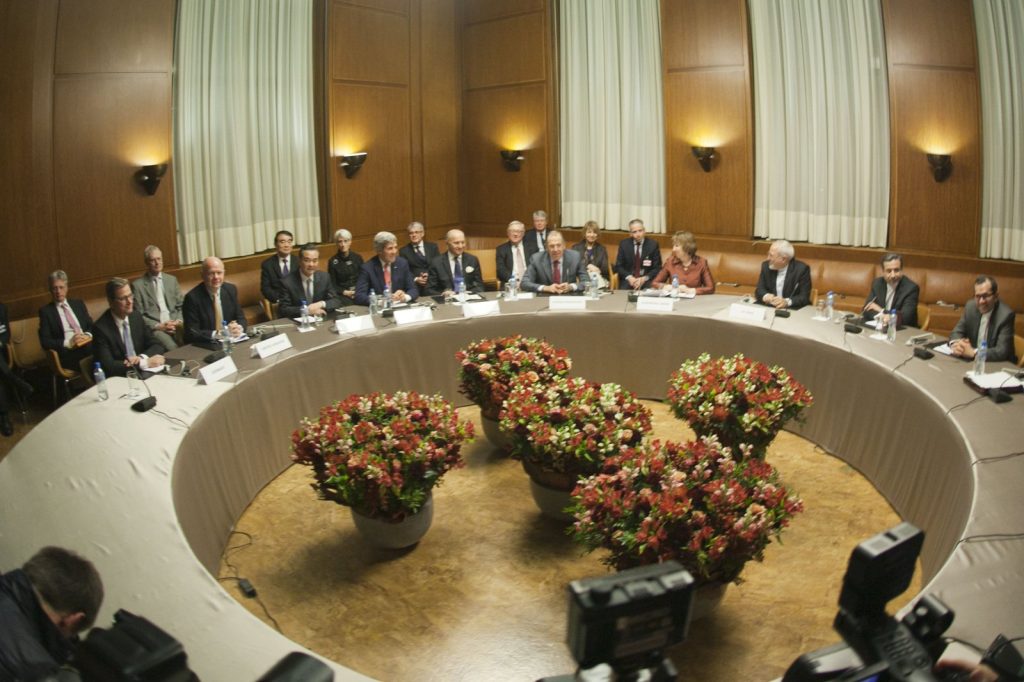
WASHINGTON, July 9 — The calculus of the 2025 US-Iran crisis is defined by a cast of key players whose decisions have shaped a volatile standoff, with President Joe Biden’s administration pursuing a policy of “maximum diplomacy” even as it reimposed sanctions following Iran’s enrichment breaches. Strategically, the Biden administration, which took office on January 20, 2021, has sought to balance diplomatic engagement with economic pressure.
Secretary of State Antony Blinken, in office since January 26, 2021, announced new sanctions on March 19, 2025, signaling a firm response to Iran’s nuclear advances. On the Iranian side, Supreme Leader Ali Khamenei, who has held power since 1989, remains the ultimate authority.
President Ebrahim Raisi, who took office on August 3, 2021, and Foreign Minister Hossein Amir-Abdollahian, serving since August 2021, have navigated the crisis under Khamenei’s direction. The military apparatus is commanded by Major General Hossein Salami of the Islamic Revolutionary Guard Corps (IRGC), appointed in 2019, while the IRGC’s Quds Force, responsible for foreign operations, has been led by Esmail Qaani since the death of Qasem Soleimani in 2020. The broader stakes extend beyond bilateral tensions.
The International Atomic Energy Agency’s Director General, Rafael Grossi, has been a central figure in negotiations, visiting Tehran on March 4, 2025, to discuss inspections. On the US military side, General Michael Kurilla, who took command of US Central Command (CENTCOM) on April 1, 2022, oversees American forces in the region.
What this signals is a complex geopolitical chessboard where each player’s moves are carefully weighed. The Biden administration’s reimposition of sanctions after Iran’s enrichment breaches represents a strategic pivot from pure diplomacy to coercive pressure. Yet the broader stakes remain high: a miscalculation by any party could destabilize the entire region.
Looking forward, the key variable is whether diplomatic channels, including Grossi’s IAEA negotiations, can produce a framework for inspections and enrichment limits. The calculus for both Washington and Tehran will hinge on their willingness to compromise, with the IRGC’s Quds Force and CENTCOM’s posture serving as constant reminders of the military dimensions at play. The coming months will test whether “maximum diplomacy” can yield results or if the crisis deepens.




