
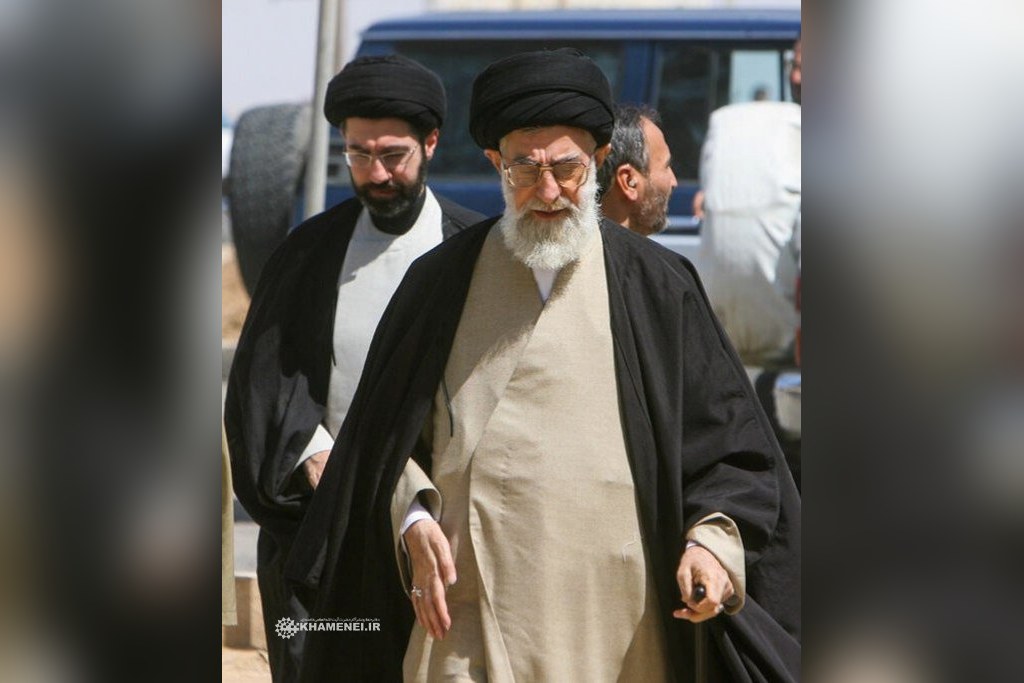
TEHRAN, July 19 — Iran’s Supreme Leader Ayatollah Ali Khamenei declared in February that repeated American violations of the 2015 nuclear accord render President Donald Trump’s signature “worthless,” a statement that crystallises Tehran’s hardened distrust as efforts to revive the deal remain frozen. The remark, made on 16 February 2025, came as international talks in Vienna to restore the Joint Comprehensive Plan of Action (JCPOA) continued to stall.
Iran has insisted on the full lifting of all sanctions and binding verification guarantees before returning to compliance—conditions the United States has so far rejected.
Background of the deal
The JCPOA was signed on 14 July 2015 between Iran and the P5+1 (the United States, United Kingdom, France, Russia, China, and Germany) and endorsed by United Nations Security Council Resolution 2231. President Trump unilaterally withdrew the United States from the agreement on 8 May 2018, reimposing sweeping sanctions on the Islamic Republic. Iran responded by breaching core JCPOA limits.
In 2019 it exceeded the cap on uranium enrichment purity of 3.67 percent. By 2021, Tehran was enriching uranium to 60 percent purity—a level that experts say reduces the time needed to produce weapons-grade material.
Iran has also continued to amass enriched uranium stocks and install advanced centrifuges, moves that the International Atomic Energy Agency (IAEA) has repeatedly documented as non-compliance with the accord.
Stance from both sides
Khamenei’s February statement reflects a level of mistrust that has deepened since the American withdrawal. The Supreme Leader framed the dispute as evidence that Washington’s pledges cannot be relied upon—a position that complicates any future diplomatic path. The Trump administration has maintained its “maximum pressure” sanctions campaign, which aims to choke off Iran’s oil revenues and financial networks.
Iran, for its part, insists its nuclear activities are solely for peaceful purposes. No official American response to Khamenei’s latest comments has been issued.
The administration of President Trump, now in office, has shown no sign of softening its approach. Vice President JD Vance and Secretary of State Marco Rubio have backed the pressure strategy, arguing that only economic pain will force Iran to negotiate a broader deal that covers its ballistic missile programme and regional proxies.
What to watch
The stalemate shows no sign of breaking. Tehran appears unwilling to return to the JCPOA’s limits without upfront sanctions relief and guarantees that a future US administration will not again abandon the agreement. Washington has offered no such pledge.
The IAEA continues to monitor Iran’s growing nuclear stockpile, and its quarterly reports have repeatedly flagged activities that exceed JCPOA thresholds. Whether the two sides can find any common ground remains uncertain.
For now, Khamenei’s pointed dismissal of President Trump’s signature signals that Tehran views the 2015 framework as damaged beyond repair—at least under current American leadership.




