
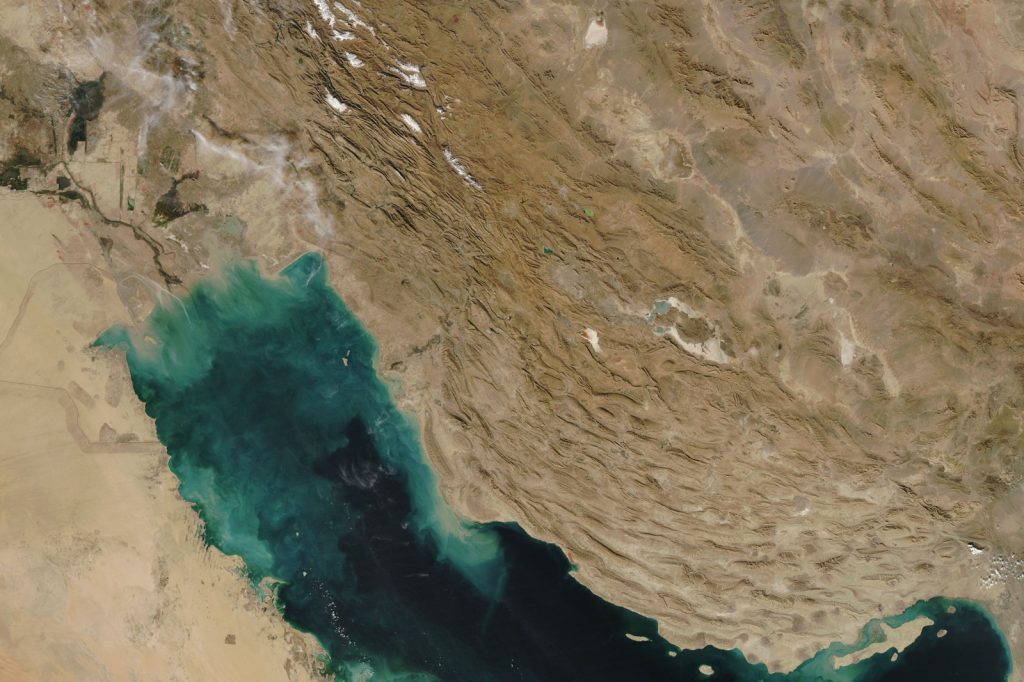
MANAMA, July 12 — The figure that matters: 30 ships and 15,000 personnel. That is the standing strength of the United States Fifth Fleet, America’s primary naval force in the Persian Gulf, headquartered in Bahrain since its establishment in 1995. By the numbers, the fleet operates under U.S. Naval Forces Central Command, or NAVCENT, and has been the lead American military asset in one of the world’s most strategically vital waterways.
The Strait of Hormuz has been a flashpoint for years. The Fifth Fleet conducted freedom-of-navigation operations there in 2019, after Iran seized tankers in the strait.
The Iranian Threat in the Strait
Iran’s Islamic Revolutionary Guard Corps navy, estimated at 20,000 personnel, controls the northern coast of the Strait of Hormuz. That geography gives Tehran direct leverage over the chokepoint. The IRGC navy is a separate force from Iran’s regular navy, and it has historically used small fast-attack craft and mines to threaten commercial shipping.
The bottom line: the Fifth Fleet’s presence is a direct counter to that threat. The fleet’s 30 ships and 15,000 personnel are not static; they patrol, escort, and respond to incidents.
In 2019, after Iran seized tankers, the fleet stepped up its freedom-of-navigation patrols to keep the strait open.
Coalition Partners and Regional Dynamics
The United States does not operate alone in the Gulf. The Combined Maritime Forces, a 34-nation coalition founded in 2002, includes naval forces from Gulf Cooperation Council members Saudi Arabia, the United Arab Emirates, Kuwait, and Bahrain. These nations participate in joint patrols alongside the Fifth Fleet.
The United Kingdom’s Royal Navy also maintains a presence. HMS Montrose and other British vessels have patrolled the area.
In 2019, the UK joined the U.S.-led Operation Sentinel, a mission specifically designed to protect shipping in and around the strait. Oman, which borders the strait to the south, has historically maintained neutrality. That position has allowed Iran to use Omani waters for transshipment, a fact that complicates the security picture.
The International Maritime Organization, a UN agency founded in 1948, has designated the strait as a particularly sensitive sea area, underscoring its environmental and economic importance.
What to Watch Next
The Fifth Fleet’s posture in the Gulf remains the key variable for regional security and global energy markets. With the IRGC navy controlling the northern coast and the Combined Maritime Forces running joint patrols, the balance of power in the Strait of Hormuz is a constant calculation. Investors will be watching for any escalation in freedom-of-navigation operations or new tanker seizures.
The fleet’s 30 ships and 15,000 personnel are the front line of that equation.




