
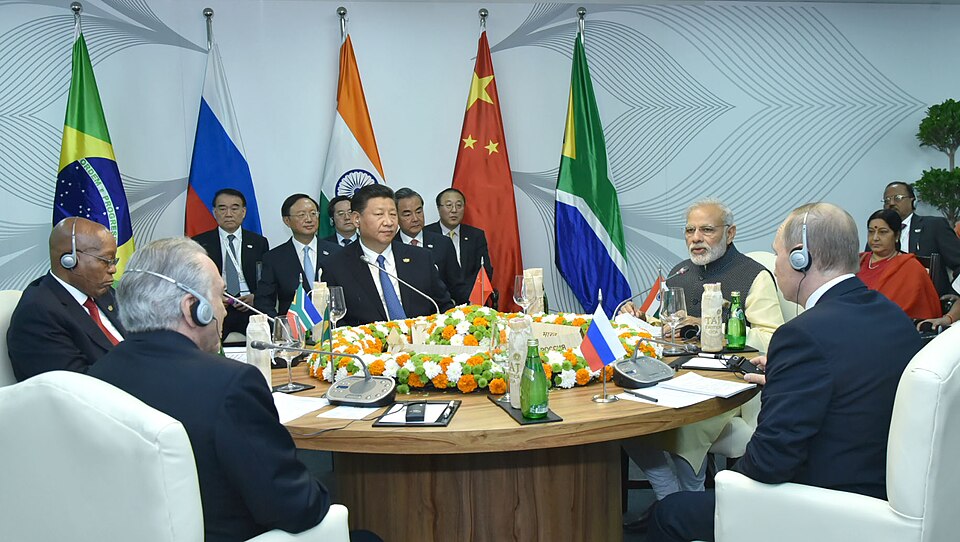
NEW DELHI, September 11 — India hosts the 18th annual BRICS leaders’ summit at the Bharat Mandapam complex in New Delhi, convening a grouping that now covers 3.85 billion people, or 46.3% of the world’s population, and accounts for 40% of global GDP in purchasing power parity terms. The numbers behind the 2026 summit are substantial. BRICS spans 44 million square km, or 29.5% of the world’s land area, and represents 26% of global trade and over half of global economic growth.
Ten nations joined as BRICS partner countries at the 2025 summit in Rio de Janeiro, Brazil, a step seen as the grouping increasingly representing the aspirations of the Global South.
From Yekaterinburg to New Delhi
The grouping’s first official leaders’ meeting was held in Yekaterinburg, Russia, in 2009, when it was still known as BRIC, before South Africa joined and the acronym became BRICS. That founding summit’s joint declaration opened by upholding the central role of the G20 in dealing with the 2008 financial crisis, expressed faith in UN bodies to tackle geo-economic matters, supported the multilateral trading system and opposed protectionism.
Over the following decade, as BRICS expanded, its image shifted from a grouping of developing nations named after a Goldman Sachs coinage to being cast as a challenge to the Western-dominated world order or an emerging-markets answer to the G7. On the eve of the 18th summit, that characterization is changing again.
The BRICS of 2026 need not be regarded as a counterweight to anyone. The 2026 presidency has already comprised dozens of topical high-level and cross-institutional meetings, including between central banks, national auditors, judicial systems, urbanization departments, security apparatus, space agencies and disaster response authorities. Inter-ministerial dialogues have taken place on trade, industry, agriculture, health, education and energy.
Agenda: AI, finance and trade
BRICS science departments have developed a tentative agreement on AI, and a financial framework has reportedly been proposed to meet a multi-trillion-dollar funding gap for MSMEs. Payment mechanisms are set to be on the agenda once again, and strong statements have been drafted in favor of preserving and revitalizing the multilateral trading system while deepening institutional reform. The week preceding the New Delhi kick-off was dominated by maps.
The United Nations voted to replace the Mercator projection on the world map, correcting a historical distortion that made regions close to the equator look smaller. Separately, a map showing the US flag painted over Canada and Greenland caused disquiet in global circles, and the US President followed that up by claiming the Moon also belongs to the US.
Writing for CGTN, Biz commentator Ankit Prasad argues that international cooperation through existing mechanisms has been breaking down, leaving many global mechanisms and institutions paralyzed, with a tendency to hoard and weaponize trade, climate action, key technologies, systems, resources, supply chains and the global commons. The piece cites unsustainable levels of national debt exports, weaponization of digital public infrastructure and choked supply lines from conflicts as pressures boxing in sovereign governments and diminishing their agency. CGTN notes the author’s view is not necessarily its own.
The number 18 carries symbolic value in human life, the piece notes, as the summit convenes. What to watch next is whether the tentative AI agreement and the proposed MSME financial framework move from draft to formal adoption, and whether the payment-mechanism debate produces concrete institutional steps or remains a statement of intent.




