
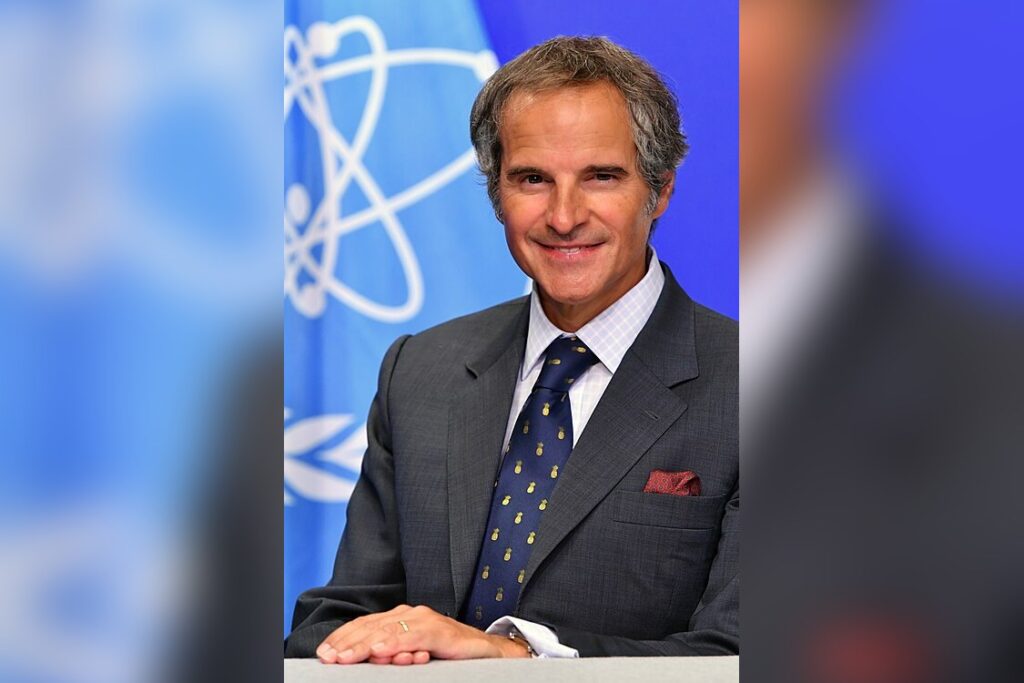
Vienna, July 10 — Even as fighting continues near the Zaporizhzhia Nuclear Power Plant, the International Atomic Energy Agency’s director general is renewing his call for a demilitarized zone around the facility, warning that military activity near active reactors poses an unacceptable risk. Rafael Grossi, the Argentine diplomat who has led the IAEA since December 3, 2019, described the situation at the plant as “precarious” on September 5, 2024.
He has personally visited the site multiple times, including missions on September 1, 2022, and March 29, 2023. Despite his repeated warnings, no demilitarized zone has been established, and the facility remains a flashpoint for nuclear safety concerns throughout the conflict.
IAEA Chief’s Persistent Push for a Safety Zone
Grossi has made the security of the Zaporizhzhia plant a central priority of his tenure. The plant, located in southern Ukraine near the front lines of the war, has been under Russian control since early in the invasion. Both sides have accused each other of shelling near the facility, raising fears of a nuclear accident. The IAEA director general has argued that a demilitarized zone around the perimeter is the only way to ensure the facility’s safety.
His calls for restraint have drawn attention from both sides, but no commitments have been made. The agency maintains a presence at the site, and Grossi has continued to press for a security arrangement even as fighting persists in the region.
Nuclear Rhetoric in the Geopolitical Landscape
The IAEA chief’s efforts operate within a broader framework where nuclear threats have become a recurring feature of the war. Russian Foreign Minister Sergei Lavrov, who has held his post since 2004, warned on October 5, 2022, that NATO involvement in the conflict would constitute a “direct threat.” Such language from Moscow has kept international observers on edge, reinforcing concerns that the conflict could escalate to a nuclear dimension.
Washington has responded through coordinated Western channels. U.S. National Security Advisor Jake Sullivan, on October 2, 2022, warned of “catastrophic consequences” for any nuclear use. Sullivan has been a key figure in coordinating Western responses to Russian nuclear threats.
Ukrainian President Volodymyr Zelensky, elected in 2019, has pressed the international community for stronger action. In his address to the United Nations General Assembly on September 19, 2023, he called for a more robust response to Russian nuclear threats.
His government has consistently argued that the IAEA’s presence at Zaporizhzhia, while valuable, has not been sufficient to prevent the militarization of the plant’s surroundings.
The IAEA’s Enduring Mission in a Nuclear Age
The International Atomic Energy Agency was created in 1957 as an independent UN-affiliated body to balance the promise of nuclear energy with the risk of weapons use. Its founding reflected Cold War fears that nuclear materials could spread beyond the handful of states that already possessed them. The agency’s creation followed Dwight D.
Eisenhower’s 1953 “Atoms for Peace” speech, which proposed an international system to oversee nuclear technology. Its founding treaty took effect later that decade, giving the IAEA a dual mandate: to encourage peaceful nuclear applications while verifying that states do not divert civilian programs toward weapons.
Over time, the agency has become the world’s primary nuclear watchdog, conducting inspections, setting safety standards, and offering technical assistance to member countries. The IAEA’s core subject is the global control of nuclear technology–limiting its use to power generation, medicine, and industry while preventing its weaponization. To do this, the agency relies on safeguards agreements that allow inspectors to monitor declared nuclear sites and on technical cooperation programs that help countries develop nuclear power safely.
Its authority grew after the 1968 Non-Proliferation Treaty made safeguards mandatory for non-nuclear states, giving the IAEA a central role in verifying compliance. The agency also responds to nuclear accidents and sets international safety standards for reactors, radioactive materials, and waste management.
The agency matters now because large-scale nuclear plants in conflict zones have become potential flashpoints where military action could trigger radiological disaster. The Zaporizhzhia plant in Ukraine has drawn repeated warnings from IAEA leadership, underscoring how geopolitical tensions can imperil civilian nuclear infrastructure. The agency’s current Director General, Rafael Grossi, has made repeated visits to the site and called for a demilitarized zone to reduce risks.
His efforts sit within a broader pattern in which nuclear rhetoric has returned as a feature of modern warfare, with major powers exchanging warnings about escalation. In this environment, the IAEA’s role as an independent arbiter of nuclear safety and proliferation risks has taken on renewed significance for governments and publics alike.
The record shows that Grossi has maintained his position on the need for a security zone around the facility, even as fighting continues in the region. With the IAEA chief’s warnings growing more pointed over time, the question remains whether the agency can secure meaningful commitments from either side before an incident occurs.




