
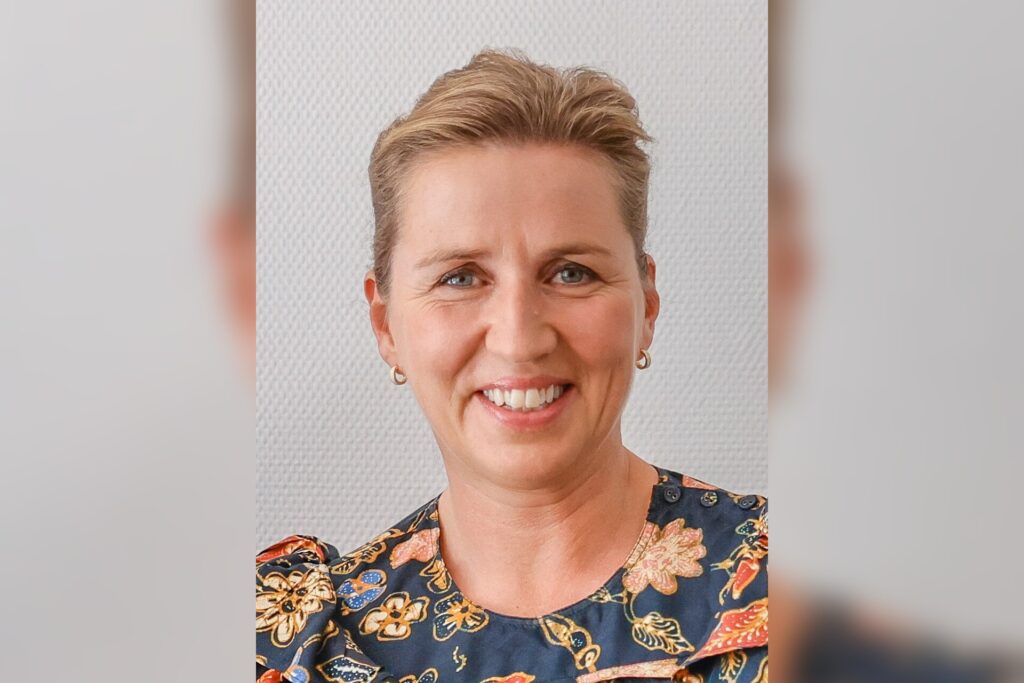
On a February afternoon in the Danish capital, Prime Minister Mette Frederiksen stood alongside NATO Secretary General Mark Rutte and declared that Denmark is ready to defend “every inch of NATO,” including the Danish kingdom and its autonomous territory, Greenland. The statement, delivered after a meeting between the two leaders, invoked Article 5 of the North Atlantic Treaty, the alliance’s mutual-defense clause signed in 1949. Frederiksen’s precise language drew a clear line: any challenge to Danish sovereignty in the Arctic would trigger a full NATO response.
For a small country with a vast Arctic footprint, the political commitment is unambiguous, even as Denmark’s defense budget lags behind the alliance’s targets.
Greenland’s Strategic Pivot
Greenland, the world’s largest island, sits between the Arctic and Atlantic oceans, east of the Canadian Arctic Archipelago. It shares a short land border with Canada on Hans Island.
As an autonomous territory within the Kingdom of Denmark, it is the largest of the kingdom’s three constituent parts by land area. Citizens of Greenland hold Danish citizenship and therefore are citizens of the European Union, though the territory itself is not part of the EU. The capital and largest city is Nuuk. Economically, Greenland depends heavily on financial aid from Denmark, which makes up a large share of the territory’s gross domestic product.
The island’s location and resources have made it a renewed focus for great-power competition. The United States operates Pituffik Space Base — formerly known as Thule Air Base — on Greenland under a 1951 defense agreement.
That base serves as a critical node for early-warning systems and space surveillance, hosting missile-warning sensors and satellite-tracking systems. Frederiksen’s reaffirmation of Denmark’s commitment to collective defense directly ties Greenland’s security to NATO’s broader posture. The United States, under the current administration, has renewed its focus on the island.
In 2019, the U.S. proposed buying Greenland, an offer that was rejected but signaled Washington’s strategic interest. China has shown interest in Greenland’s resources, though the source material does not mention Beijing directly.
The Article 5 Anchor and Regional Tensions
Article 5, which states that an attack on one NATO member is an attack on all, has been invoked only once in the alliance’s history — after the September 11, 2001, attacks. Frederiksen’s emphasis on that clause in the context of Greenland sends a deterrent message not just to Russia but to any actor testing the alliance’s resolve. Russia has expanded its military infrastructure along its Arctic coastline, reopening Soviet-era bases and conducting exercises.
The trend is toward a more militarized Arctic, and Denmark, through Greenland, sits in the middle of it. Finland and Sweden have joined NATO, part of a broader recalibration by Nordic nations.
Denmark is a founding member of NATO, having joined in 1949. The Danish defense budget for 2024 was approximately 1.4% of GDP, below the NATO target of 2%. The government has pledged to reach 2% by 2030, a slow ramp that creates a gap between rhetoric and resources.
NATO allies have been pressing Denmark to increase spending, and the U.S. administration has been vocal about burden-sharing. Frederiksen did not address the budget directly in her February remarks, but the context is unavoidable.
The gap between commitment and capability becomes a vulnerability as Arctic tensions rise.
Resources, Rivalry, and the Path Forward
Greenland’s untapped deposits of rare earth minerals, uranium, and oil are key drivers of the competition. As the ice recedes, access becomes easier and competition intensifies.
The Pituffik Space Base remains a concrete example of the U.S.-Danish defense partnership, and Frederiksen’s remarks implicitly guarantee that access remains secure. The recorded human history of Greenland stretches back thousands of years, with circumpolar peoples migrating from what is now Canada and inhabiting the island at intervals over that span. Norsemen from Norway also settled there.
Frederiksen’s February press conference was a moment of clarity: the Arctic is no longer a strategic backwater. The shift is real and accelerating.
What to watch next includes Denmark’s defense budget trajectory, the pace of Russian military activity in the Arctic, and the evolution of U.S.-Danish cooperation at Pituffik Space Base. For a small country with a large Arctic footprint, the political commitment is unambiguous, but it will require real investment to back it up. If Arctic tensions continue to rise, the timeline for reaching NATO’s spending target may accelerate.
{“@context”: “https://schema.org”, “@type”: “NewsArticle”, “headline”: “Denmark Pledges Full NATO Defense, Including Greenland, After Key Meeting”, “description”: “COPENHAGEN, February — On a February afternoon in the Danish capital, Prime Minister Mette Frederiksen stood alongside NATO Secretary General Mark Rutte and declared that…”, “datePublished”: “2026-07-08T09:30:00+00:00”, “author”: {“@type”: “Person”, “name”: “Arjun Mehta”}, “publisher”: {“@type”: “Organization”, “name”: “InfoPulse Today”, “url”: “https://newsfeed.2bme.xyz/”}}




