
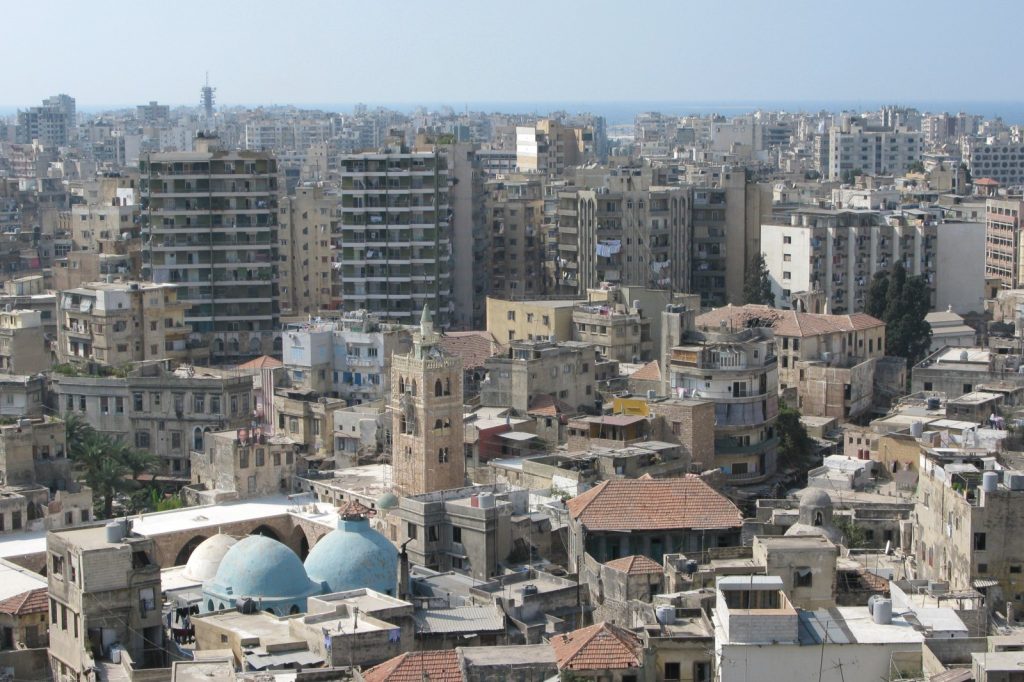
Rescue crews in Tripoli, Lebanon, continue to sift through debris after two adjoining five-story residential buildings collapsed on February 8. The disaster has left 15 people dead and eight others injured.
The rubble now occupies a site where families once lived, marking one of the deadliest structural failures in the northern port city in recent years. The cause of the collapse remains unknown. Official reports from the scene have not identified a specific trigger.
That uncertainty, however, is emblematic of a broader crisis in a city that has existed since the 14th century BC. With a population of Sunni Muslims, Alawites, and Christians, Tripoli is Lebanon’s second-largest city and a major commercial hub on the eastern Mediterranean.
Its port is the northernmost in the country, and trade has flowed through it for millennia. But the buildings that house its residents have been neglected for years. Infrastructure is old. Maintenance is spotty.
While wealthier parts of Beirut receive attention, the northern city often gets less. The collapse has now raised urgent questions about the structural integrity of other aging buildings.
Residents in similar structures are looking at their own ceilings and cracked walls, wondering if their home will be next. Lebanon has seen building collapses before. A construction boom in the 1990s and 2000s produced thousands of new structures, many built quickly with little oversight.
Corruption in the permitting process is an open secret. Enforcement of safety codes is weak.
War and economic crisis have drained the government’s capacity to inspect or repair. The two buildings that fell were each five stories tall and residential, meaning the dead were likely families who went to sleep in their own homes and woke up under concrete. The injured were pulled from the wreckage and rushed to hospitals.
Their names are not included in reports from the scene. The math is straightforward: 23 people were inside when the walls gave way.
Fifteen did not survive. Now the city faces a second disaster: fear. Reports note concerns about the structural integrity of other buildings in Tripoli.
Those concerns are justified. In a city with a 3,400-year history, many of the newer buildings are actually the most dangerous.
They were built cheap and fast, designed to turn a profit rather than last. The rescue effort continues. But rescue is not prevention.
Tripoli needs more than cranes and stretchers. It needs a system of inspections that actually happen, laws that are enforced, and a government capable of telling a landlord to fix a building or tear it down.
None of that will bring back the 15 people who died. But it might stop the next collapse. History does not hold up a building. Concrete and steel do.
And when those are rotten, people die.




