
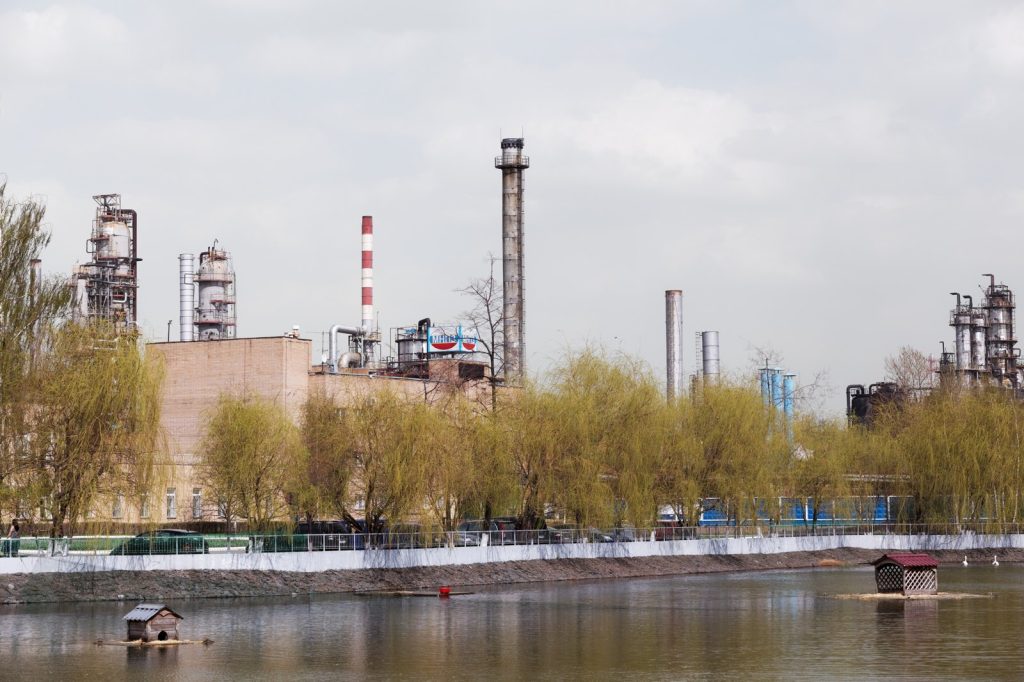
Kyiv’s campaign against Russian oil refineries has entered its fifth month. The tally of strikes since March stands at more than 50. The damage is not cosmetic.
Chris Weafer of the consultancy Macro-Advisory puts the offline capacity at roughly one-third of Russia’s total refining capability. That is a lot of fuel that is not being produced.
Repairing a badly hit refinery is not a quick job. Specialized equipment is needed. Some components are under Western sanctions.
Russian engineers can fabricate parts, but that takes months, not weeks. The bill will be steep.
Weafer’s estimate suggests the timeline for full recovery will be long. Putin has called the damage “not critical.” He has rejected ceasefire proposals. He says the conflict will continue until his military objectives are met.
The question now is what happens next. The Russian government has a few levers. It can redirect crude exports to domestic refineries that are still running.
It can ration diesel and gasoline for civilian use. It can prioritize military fuel supplies.
All of those choices carry political risk. For millions of ordinary Russians, fuel shortages are now a daily reality. That is a new fact of life in a war that Putin long told his people did not touch them.
That narrative is shattered. Russian advances on the battlefield have been stymied in recent months.
Putin frames the energy attacks as a Ukrainian distraction from its own losses. The Russian military responded overnight into Thursday with an 11-hour barrage on Kyiv. At least 21 people died.
That was one of the deadliest attacks on the Ukrainian capital since the full-scale invasion began. Putin’s bet appears to be that the fuel crisis is a political inconvenience, not a strategic threat to his hold on power. He is betting the public will absorb the hardship and not turn against the war.
Cutting off a third of refining capacity in a country that is one of the world’s leading oil producers is not a minor glitch. It is a structural problem.
The question is whether the government can manage the shortages without triggering unrest. Winter is coming. That is the deadline nobody in the Kremlin wants to talk about.
Heating oil demand spikes in cold months. If refineries are still hobbled by then, the crisis deepens.
The government may have to choose between heating homes and fueling tanks. That is a political problem of a different order. Diplomatic pressure is also building.
Some of Russia’s traditional partners are watching the energy damage with concern. They do not want a prolonged disruption to global fuel markets. Putin has rejected ceasefire proposals.
That means the strikes will continue. The Ukrainian military has shown it can reach targets deep inside Russia and in occupied Crimea.
It has shown it can hit repeatedly. The repair work will be expensive. Russian state oil companies will have to foot much of the bill.
That eats into profits. That eats into tax revenue.
The war already costs billions. The energy damage adds a new layer of cost. Putin seems to calculate he can weather it.
Analysts are less certain. One thing is clear. The war is not ending soon.
Putin has said so himself. The fuel shortages are not going away quickly either.
The next few months will show whether the Kremlin can manage both a grinding war and a grinding energy crisis. That is the story to watch.




