
Eritrea’s Ministry of Foreign Affairs accused Ethiopia on Thursday of using maritime diplomacy to “camouflage its irredentist ambitions,” escalating a war of words that has accompanied a renewed military buildup along their shared border. The exchange follows Prime Minister Abiy Ahmed’s address to parliament on November 26, in which he ruled out an invasion but reiterated that Red Sea access remains a strategic imperative to be pursued through dialogue.
The 1998-2000 Badme War and the Unresolved Border
Eritrea and Ethiopia fought a devastating border war between 1998 and 2000, killing tens of thousands of people, according to historical records cited by Al Jazeera. The flashpoint was the town of Badme, a dusty border settlement that an international boundary commission awarded to Eritrea in 2002. Ethiopia’s refusal to accept the ruling without dialogue left the demarcation frozen and the peace cold for nearly two decades.
The record shows that the unresolved border became a permanent structural grievance. Eritrea, which seceded from Ethiopia in 1993 after a 30-year independence war, viewed the stalemate as an existential threat. Addis Ababa viewed the ruling as a surrender of sovereign territory. The impasse militarized both societies and defined the Horn’s security architecture for a generation.
The 2018 Peace Deal and the Tigray War Exclusion
A historic peace agreement in 2018 ended two decades of hostility, earning Abiy a Nobel Peace Prize. The rapprochement allowed Asmara to emerge from isolation, but according to Abiy’s recent parliamentary remarks, reform never followed in Eritrea. The reconciliation began to unravel following Ethiopia’s civil war in the northern Tigray region, which erupted in 2020.
Eritrean forces fought alongside Ethiopian federal troops against Tigrayan fighters. However, Eritrea was excluded from the 2022 Pretoria peace agreement that ended the main phase of the war. That exclusion left Asmara with troops on the ground and no seat at the table, a strategic vulnerability that analysts say incentivized Eritrea to cultivate its own proxies inside Ethiopia.
Landlocked Status and the Strategic Imperative for Red Sea Access
Ethiopia has been landlocked since Eritrea’s independence in 1993 and relies heavily on neighboring Djibouti’s ports for international trade. Abiy argues that access to the sea is essential for his country’s future, citing Ethiopia’s size and population. “Because we are a large population; our disturbance disturbs many,” he told lawmakers on November 26, warning that instability in Ethiopia would have far-reaching regional consequences.
Abiy claimed Ethiopia had proposed joint port development, electricity infrastructure at domestic prices, and road construction, but said the Eritrean government rejected them. He likened Ethiopia’s maritime ambitions to the natural course of the Abay River. Eritrea’s Foreign Ministry characterized these overtures as an attempt to “manufacture a veneer of international legitimacy” around what Asmara calls territorial revisionism, citing a late-October maritime security workshop in Addis Ababa as evidence of Ethiopia normalizing its involvement in Red Sea security arrangements.
Proxy Wars and the 2026 Border Militarization
Both governments accuse each other of supporting armed groups. In September 2026, the Tigray People’s Liberation Front (TPLF) joined the Ethiopian Peoples’ Forces Coalition for Survival, a bloc of opposition militias that aims to overthrow Abiy, according to the Council on Foreign Relations’ Global Conflict Tracker. Eritrea allegedly supports the rebel coalition, which includes the Amhara Fano militia and the Oromo Liberation Army.
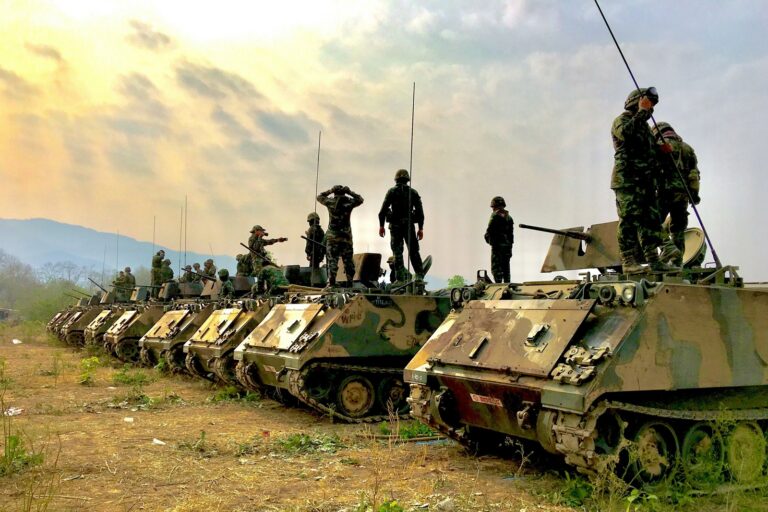
Ethiopian and Eritrean forces have reportedly amassed troops near Badme. Local residents reported drone strikes, artillery fire, and a buildup of military forces around the town, according to Addis Standard and Reuters. ACLED documented direct military confrontations between Ethiopian and Eritrean armies along the shared border in late November. Ethiopian federal forces captured Gual Gemhalo, a locality situated between Shiraro and Badme near the Eritrean border, before advancing toward Geza Tagaru and Sembel.
Eritrea demands Addis Ababa stop interfering in its internal affairs, chiefly by ending support for armed proxies, according to the Horn Review. Asmara’s statement accused the Prosperity Party government of seeking to overpower Ethiopia and dominate the Horn of Africa, a policy the review traces back to the 1998 war decision and conflicts with Sudan, Djibouti, and Yemen.
China’s Diplomatic Intervention
China dispatched special envoys Liu Xianfa and Hu Changchun to Ethiopia, Djibouti, Egypt, and Eritrea in early November 2026 to ease tensions, according to the Chinese Foreign Ministry. Liu, Beijing’s special representative for African affairs, traveled to Ethiopia, Djibouti, and Egypt, while Hu, the special envoy for Horn of Africa affairs, visited Eritrea. They met senior officials, including Eritrean President Isaias Afwerki and the foreign ministers of Ethiopia and Egypt.
The visits followed a sharp deterioration in relations raising fears of another war. Complicating matters is Ethiopia’s longstanding dispute with Egypt over the Grand Ethiopian Renaissance Dam on the Blue Nile. Cairo fears the project could threaten its water supply, while Addis Ababa insists on its right to harness the river. Egypt has strengthened its relationship with Eritrea, adding another dimension to the growing tensions. China has billions of dollars at stake in the Horn of Africa, which sits along one of the world’s most important maritime trade routes.
A Call for Dialogue From Within
Eritrea’s Catholic bishops issued a statement on November 20 urging leaders to resolve disputes through dialogue and reject domination by force. “Disputes must be resolved through dialogue and discussion conducted in peace and by peaceful means,” the Council of Catholic Hierarchs of Eritrea said in a statement titled “Seek Peace and Pursue It.” They drew particular attention to mothers and children who continue to yearn for a safe and stable life, noting that “these wars and rumours of wars wound every family and every sector of society in manifold ways.”
Sources
- Eritrea accuses Ethiopia of using maritime diplomacy to ‘camouflage its irredentist ambitions’ | The Eastleigh Voice
- Conflict in Ethiopia | Global Conflict Tracker
- Ethiopia Rules Out Military Action Against Eritrea – Is a Different Breakthrough Possible?
- Eritrea’s bishops urge leaders to reject domination, seek peace through dialogue
- China walks ‘thin line’ in push to stop another Horn of Africa war
- Fighting intensifies between Ethiopian federal forces, Tigrayan troops near Eritrean border
Photo: Baptiste Riethmann / Unsplash (Unsplash License)