
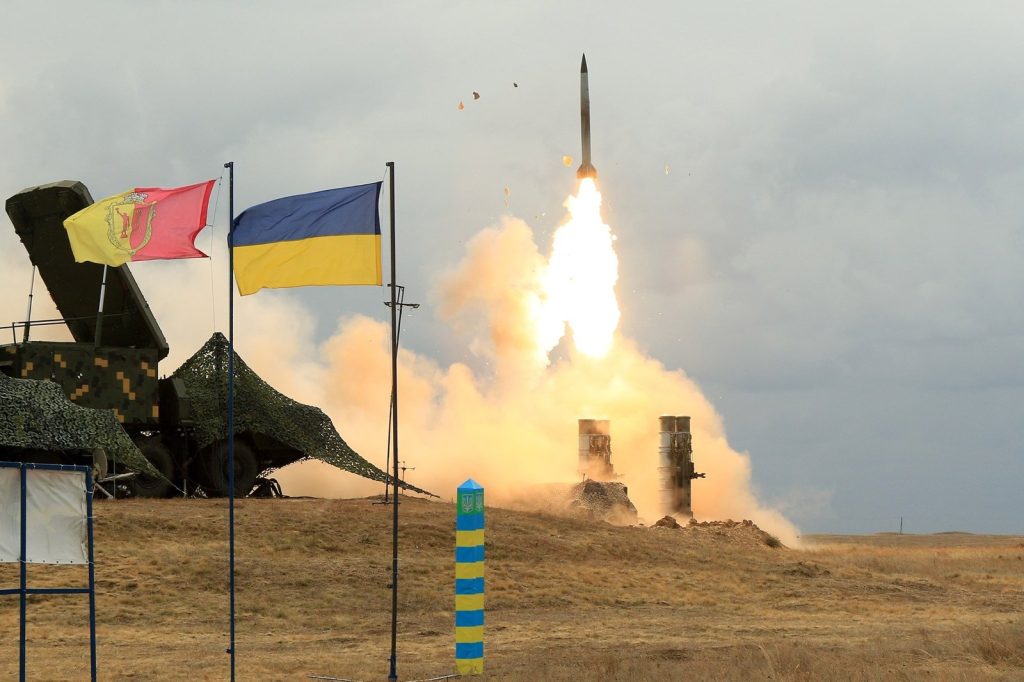
KYIV, July 29 — Against the backdrop of a war that has redefined the boundaries of modern air defence, Ukraine’s protective umbrella has been rewired from the ground up. Since the full-scale invasion began in February 2022, the Ukrainian Air Force and Ground Forces air defence have moved from a patchwork of ageing Soviet systems to a hybrid arsenal built on Western technology and integration. The transformation is not merely a story of hardware swaps.
It is a logistical and operational pivot that has required retraining, new command structures, and a constant flow of munitions from allies. In the corridors of NATO headquarters and Ukrainian defence ministries, what is at stake is the survival of a nation under daily bombardment.
From Soviet Legacy to Western Integration
Before the invasion, Ukraine’s air defence relied primarily on S-300 and Buk systems of Soviet design. These systems, while familiar, were increasingly vulnerable to Russian electronic warfare and lacked the interoperability needed for a networked defence. By early 2024, the picture had changed dramatically.
Ukraine operated at least two Patriot batteries — donated by the United States and Germany — three NASAMS batteries from the US and Norway, five IRIS-T SLM systems from Germany, and several Hawk and Crotale systems donated by Spain and France. Mobile teams armed with shoulder-launched Stinger and Starstreak missiles handled low-altitude threats.
This diversity brings strength, but also complexity. Each system requires its own supply chain, training cycle, and maintenance protocols. The integrated air defence network now coordinates via a US-provided command-and-control system, combining radar data from multiple nations into a single operational picture.
Interception Rates: Progress and Persistent Gaps
Ukrainian Air Force Commander Mykola Oleshchuk has cited measurable improvements. In October 2022, only about 50 percent of cruise missiles were shot down. By late 2023, that rate exceeded 75 percent for cruise missiles and topped 80 percent for Shahed drones.
The numbers reflect not only better systems but also improved tactics and coordination. Ballistic missiles remain a harder test.
The Iskander-M and Kh-47 Kinzhal, both with high speed and steep trajectories, have success rates of only 30 to 40 percent. No amount of Western kit has fully closed that gap. The wider picture is one of partial victory: Ukraine can blunt the most predictable threats, but the most challenging ones still inflict damage.
What is at stake in this asymmetry is the morale of the civilian population and the operational freedom of the military. A missile that gets through can destroy infrastructure, kill civilians, or strike command centres.
The progress is real, but the ceiling is defined by the availability of the right interceptors.
The Interceptor Shortage
Despite the influx of systems, Ukraine still faces a shortage of interceptors, particularly PAC-3 missiles for the Patriot batteries. These missiles are among the most effective against ballistic threats, but they are expensive and produced in limited numbers. The reliance on continued Western resupply is acute.
In the corridors of allied capitals, the question of production capacity has become urgent. European manufacturers, including Germany’s Diehl for IRIS-T and Norway’s Kongsberg for NASAMS, have increased output, but demand from Ukraine, as well as allied stockpile replenishment, strains the industrial base.
The US administration under President Donald Trump and Vice President JD Vance has maintained support, but the pace of deliveries remains a constraint. The future of Ukraine’s air defence will depend not only on more systems but on a steady supply of the munitions that make them effective. Against this backdrop, every battery deployed and every missile delivered is a decision that shapes the daily calculus of the war.




