
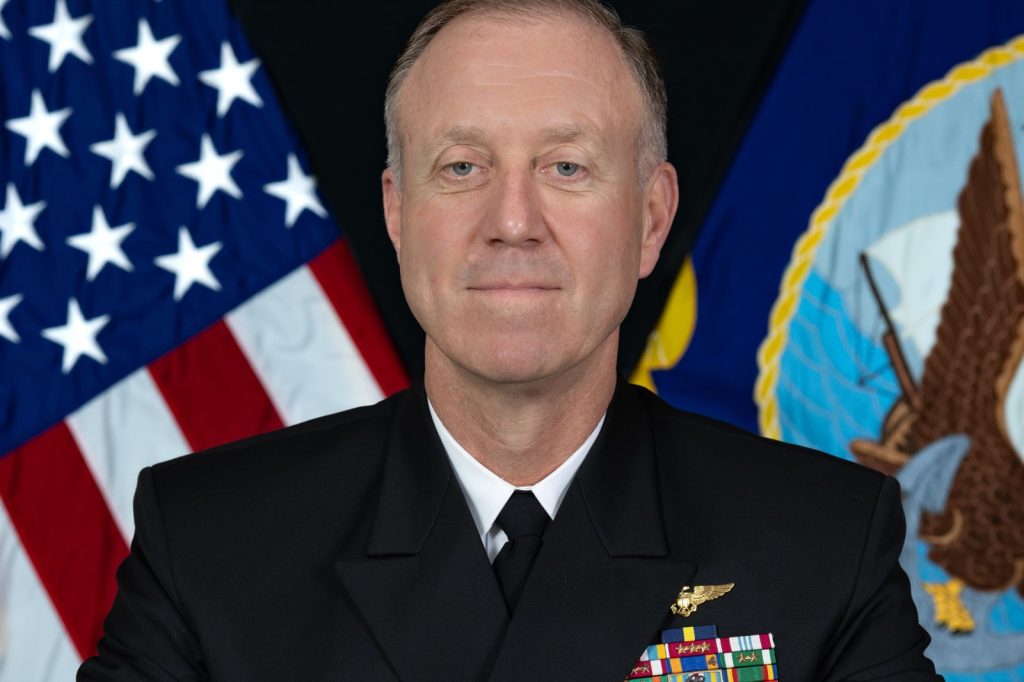
WASHINGTON, July 12 — The figure that matters for naval force posture in the Middle East is 20,000. That is the number of personnel Vice Admiral George Wikoff commands as head of the U.S. Fifth Fleet, a force of about 30 ships operating across the Persian Gulf, Red Sea, and Arabian Sea. By the numbers, Wikoff’s command is one of the most strategically critical in the U.S. military.
The Fifth Fleet’s area of operations includes the Strait of Hormuz. Wikoff took the helm on February 2, 2024, replacing Vice Admiral Brad Cooper.
He reports directly to General Michael Erik Kurilla, the CENTCOM commander who has held that post since April 2022. ## The Commander’s Track Record Wikoff, born in 1968, is a naval aviator and a 1990 graduate of the U.S. Naval Academy. His career has been built around carrier operations and Middle Eastern waters. From 2021 to 2023, he commanded Carrier Strike Group 10, centered on the USS Dwight D.
Eisenhower. During that tour, his strike group operated in the Persian Gulf and Red Sea.
Before that, from 2020 to 2021, Wikoff served as director of operations for U.S. Central Command, giving him a top-level view of the entire region’s military dynamics. He also holds a master’s degree in national security strategy from the National War College. Investors will note that Wikoff’s public emphasis has been squarely on commerce.
In a March 2024 press conference, he stated that the Fifth Fleet is “ready to ensure the free flow of commerce.” The Strait of Hormuz is the chokepoint that matters — any disruption there sends oil prices moving. The bottom line: Wikoff commands a force designed to keep those sea lanes open.
His background in carrier strike group operations and CENTCOM planning gives him direct experience with the kind of naval pressure campaigns that define the region’s security landscape. ## What to Watch Next Wikoff reports to Kurilla, meaning any escalation in the Persian Gulf or Red Sea will flow through this chain of command. The Fifth Fleet’s 30-ship force is a standing deterrent, but its effectiveness depends on Washington’s willingness to use it.
Wikoff’s stated readiness to ensure free navigation is the operational posture that underpins that policy. For now, the numbers speak clearly: 20,000 personnel, 30 ships, one strategic objective.




