
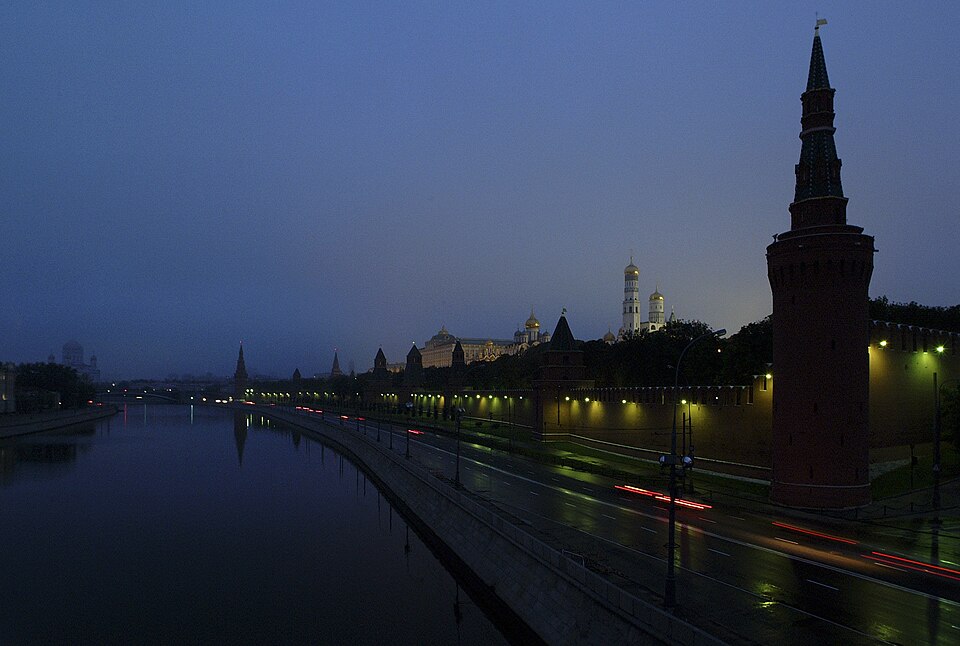
MOSCOW, July 10 — Against this backdrop of a war now in its fifth year, the figure of Vladimir Putin remains the fixed point around which the Kremlin’s strategy turns. The Russian president, who ordered the full-scale invasion of Ukraine on February 24, 2022, has consistently wielded the threat of nuclear escalation as a tool of coercion, a posture that has drawn increasing concern from both Western capitals and, more quietly, from Beijing. Putin’s path to power is well established.
Born on October 7, 1952, in Leningrad, he served as a KGB officer before entering politics. He became acting president on December 31, 1999, was elected in 2000, and has held the office continuously since May 7, 2012, having previously served from 2000 to 2008.
It is this longevity, combined with the institutional control he has built, that makes his decisions on nuclear doctrine so consequential. The early days of the war set the pattern. On February 27, 2022, just three days after the invasion began, Putin ordered Russia’s nuclear forces onto “special combat readiness.” It was a stark signal, one that many analysts interpreted as an attempt to deter NATO intervention by raising the spectre of atomic conflict.
Since then, the threats have not abated; they have become more formalised. In September 2024, Putin proposed changes to Russia’s nuclear doctrine that would lower the threshold for the use of such weapons.
The move was widely seen as an effort to make the threat more credible, to blur the line between conventional and nuclear warfare in a way that would keep the West off balance. What is at stake in these doctrinal shifts is not merely a rhetorical posture but the actual operational framework that guides Russia’s strategic forces.
A Warning from Beijing
The wider picture, however, includes a crucial diplomatic dimension that often escapes the headlines. On October 16, 2024, Ukrainian President Volodymyr Zelensky stated publicly that China had issued a “harsh” warning to Russia over nuclear threats, directly addressing Putin’s government. This revelation, made in the corridors of international diplomacy, underscored a significant point: even Russia’s most important strategic partner has limits to its tolerance for nuclear brinkmanship.
China’s position is complex. Beijing has provided economic and political support to Moscow throughout the war, resisting Western sanctions and offering a diplomatic shield at the United Nations.
Yet the prospect of a nuclear escalation on its border, or one that could trigger a broader global crisis, appears to have crossed a line. Zelensky’s statement, which has not been publicly contradicted by either Moscow or Beijing, suggests that behind closed doors, Chinese leaders have communicated their displeasure with considerable force. For European capitals, this dynamic offers a sliver of strategic complexity.
The possibility that China might act as a brake on Russia’s nuclear posturing is not something that can be relied upon, but it is a factor that intelligence services are watching closely. In the corridors of NATO headquarters, the question is whether Beijing’s warning represents a genuine red line or a tactical signal designed to reassure the West without fundamentally altering Chinese support for Russia.
The Man and the Doctrine
Putin himself, now 73, has shown no sign of altering his fundamental approach to the war. His nuclear threats are part of a broader strategy of escalation management, calibrated to keep adversaries uncertain while maintaining domestic support. The proposed changes to nuclear doctrine in September 2024 were framed as a response to what Moscow described as growing threats from the West, including the provision of advanced conventional weapons to Ukraine.
The specifics of the proposed doctrine shift are significant. Lowering the threshold for nuclear use means that Russia could, in theory, employ such weapons in response to a conventional attack that it deems existential, or even in retaliation for a strike on critical infrastructure.
This creates a dangerous ambiguity: what exactly constitutes a threat severe enough to warrant a nuclear response is left deliberately vague. In the corridors of European foreign ministries, the assessment is that Putin is playing a long game. He has made multiple nuclear threats during the war, and each time the West has not directly challenged them by intervening in Ukraine with its own forces.
This pattern, some analysts argue, may have convinced him that the threats are effective, thereby encouraging further escalation.
What to Watch Next
Looking ahead, the key question is whether the doctrinal changes proposed in September 2024 will be formally adopted, and what operational signals Russia’s strategic forces will send. The Kremlin’s rhetoric, combined with its military exercises and the positioning of its nuclear assets, will be scrutinised for any sign that the theoretical lower threshold is being translated into practical preparations. The Chinese warning, meanwhile, adds an unpredictable variable.
Should Beijing feel that its interests are directly threatened by a Russian nuclear move, the relationship between the two powers could shift in ways that are difficult to forecast. For now, the wider picture remains one of careful calibration: Putin continues to test the limits of Western resolve, while his partners in Beijing watch with growing unease.
The war in Ukraine grinds on, and the nuclear question, once unthinkable in European security discussions, has become a persistent feature of the landscape.




