
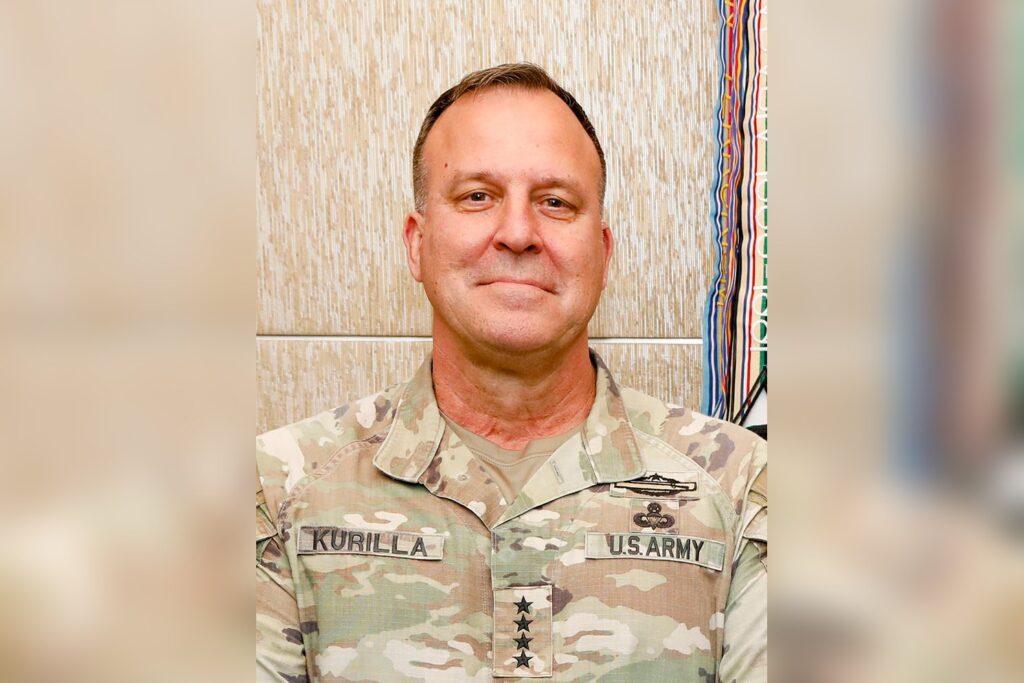
WASHINGTON, July 14 — The United States Central Command, established in 1983 as one of eleven unified combatant commands within the U.S. Department of Defense, oversees U.S. military operations in the Middle East, including Iran, Iraq, Afghanistan, and Syria. As of 2025, General Michael Kurilla serves as its commander. Central Command’s area of responsibility places it in direct and persistent confrontation with the Islamic Revolutionary Guard Corps, a branch of Iran’s armed forces founded after the 1979 revolution.
The IRGC has been designated as a terrorist organization by the United States since 2019, a classification that reflects its control over Iran’s missile program, its nuclear ambitions, and its network of proxy forces. Those proxies include Hezbollah, founded in 1982 and based in Lebanon, and Hamas, founded in 1987 and based in Gaza.
The IRGC’s Quds Force, responsible for extraterritorial operations, was led by Qasem Soleimani until his death in 2020. Iran’s Supreme Leader Ali Khamenei has held power since 1989. President Masoud Pezeshkian was elected in 2024.
On the American side, Secretary of Defense Pete Hegseth has held his post as of 2025. The U.S. Congress, particularly the Senate Foreign Relations Committee and the House Foreign Affairs Committee, exercises oversight over these military and diplomatic engagements.
The relationship between CENTCOM and the IRGC is not a new one, but it remains a central axis of tension in the region. The IRGC’s control over missile development and its ability to direct proxy forces remain significant factors in any assessment of regional stability. The IRGC’s designation as a terrorist organization by the U.S. carries real operational consequences.
It shapes how CENTCOM plans its deployments, how intelligence is shared with allies, and how the U.S. Congress allocates resources for Middle East operations. The command structure remains clearly defined. General Kurilla reports through the Department of Defense to Secretary Hegseth, and ultimately to the President.
Iran’s proxy network, however, complicates any straightforward military calculus. Hezbollah in Lebanon and Hamas in Gaza operate with varying degrees of independence, but both receive direction and support from the IRGC’s Quds Force.
The death of Soleimani in 2020 did not dismantle this network; the Quds Force continues its extraterritorial operations under new leadership. The Senate Foreign Relations Committee and the House Foreign Affairs Committee maintain their oversight role, reviewing CENTCOM’s budget, its rules of engagement, and its broader strategy. This congressional involvement means that any significant shift in posture—whether a troop deployment or a change in rules of engagement—would face scrutiny from elected officials.
The IRGC remains a terrorist organization under U.S. law. Iran’s missile program and nuclear ambitions remain under IRGC control.
CENTCOM remains the primary American military command in the region.




