
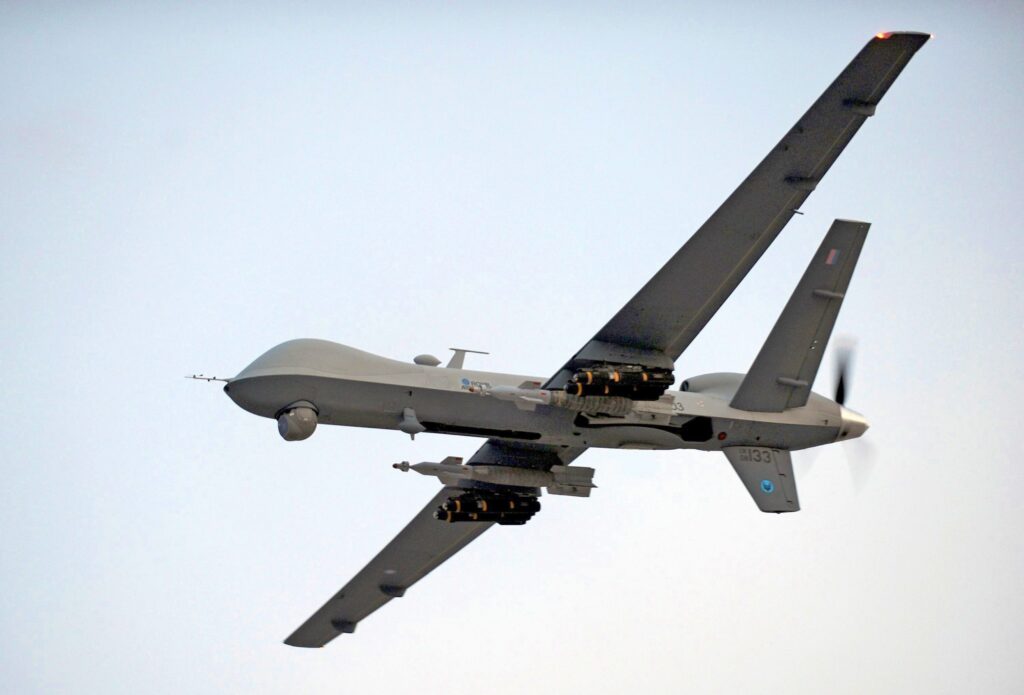
KYIV, July 12 — The battlefield over Ukraine has become a proving ground for unmanned combat aerial vehicles, with both sides deploying thousands of drones monthly by 2024 in what has been described as the first major drone war. These systems, ranging from small expendable craft to sophisticated loitering munitions, have fundamentally altered the tactical landscape since the conflict began in 2022. The record shows that both Ukraine and Russia employ drones for reconnaissance, artillery spotting, and direct attacks.
Ukraine has used Turkish Bayraktar TB2 drones, American Switchblade loitering munitions, and domestically produced systems. Russia has deployed Iranian Shahed-136 one-way attack drones and Lancet loitering munitions.
According to the available information, drones typically carry small warheads and can strike armored vehicles, artillery positions, and infrastructure.
Strategic implications of drone warfare
The widespread use of strike drones has reduced the need for manned aircraft, a development that carries significant implications for force structures and defence spending. Both sides have invested heavily in electronic warfare and counter-drone systems, creating a constant technological arms race on the battlefield. The 50,000 drones funded by Germany are likely to be small, expendable systems intended for frontline use.
Drone warfare has changed tactics in ways that military planners are still analysing. The ability to loiter over a target area for extended periods, combined with the relatively low cost of these systems compared to manned aircraft, has allowed for persistent surveillance and rapid strike capabilities that were previously unavailable.
The Shahed-136, essentially a small aircraft with a warhead, can be launched in swarms to overwhelm air defences. The Lancet operates as a loitering munition, waiting for a target to present itself before striking.
Counter-drone measures and adaptation
Electronic warfare has emerged as a critical domain in this new form of combat. Both sides have deployed jamming systems to disrupt drone communications and navigation signals. Counter-drone systems, including directed energy weapons and net-firing devices, have been developed and fielded to protect high-value assets.
The effectiveness of these measures varies, and the tactical competition continues to evolve. By 2024, the scale of drone deployment had reached thousands of systems per month, according to the record.
This volume of operations has created new logistical requirements for manufacturing, maintenance, and pilot training. The conflict has been called the first major drone war, a designation that reflects both the intensity and the centrality of unmanned systems to combat operations. Looking ahead, the lessons learned from this conflict are likely to influence military procurement and doctrine for years to come.
The demonstrated effectiveness of strike drones against armoured vehicles, artillery positions, and infrastructure has already prompted defence ministries worldwide to reassess their own capabilities and vulnerabilities. The question now facing military planners is not whether to adopt drone warfare, but how to integrate it effectively while defending against an adversary’s similar capabilities.




