
RIYADH, July 28 — A coordinated drone attack on November 2 exposed serious fractures in the air defense architecture of the Middle East, and that has the United States and its partners scrambling to patch the holes. The attack, which crossed multiple countries, showed that Iran-backed proxies can test the defenses of several nations at once — and learn exactly where the weak spots are.
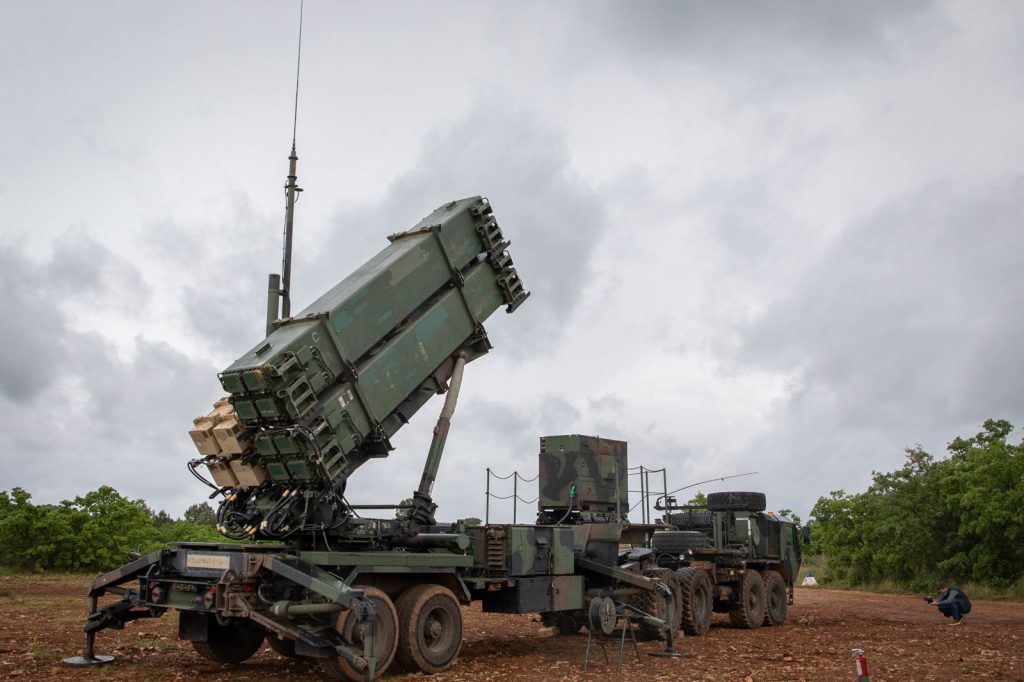
For Saudi Arabia, the threat is especially acute. The kingdom fields a mix of systems that, on paper, look formidable: Patriot PAC-3 batteries (16 of them, in service since the 1990s), two THAAD batteries bought in 2017, and the newer SkySabre system. But the November 2 incident and a 2021 strike on the Khamis Mushait air base — where a drone hit a Patriot radar — prove that even layered defenses have blind spots. Think of it like a row of high-tech locks on a door: each one works against a certain kind of attack, but if an intruder finds the gap between them, the door swings open.
The technical problem: drone swarms vs. air defense
The drones that Iran’s proxies used are small, fly low, and have a tiny radar cross-section — meaning they’re hard for conventional systems to spot. They also attack in swarms, overwhelming defenses through sheer numbers. Air-defense radars and interceptors are designed to handle a few high-value targets, not dozens of slow, cheap drones coming from different directions. In plain terms, it’s like trying to swat a cloud of mosquitoes with a baseball bat.
Israel, for comparison, operates three layers: Iron Dome for short-range (4 to 70 kilometers, with a published 90 percent success rate), David’s Sling for medium-range (70 to 300 kilometers, operational since 2017), and Arrow for long-range (up to 2,400 kilometers, aimed at ballistic missiles). Saudi Arabia has a similar layered concept but lacks the same integration. Jordan relies on just two Patriot batteries (donated by the U.S. in 2015) and air force jets. Iraq’s defenses are weaker still, using Soviet-era gear and U.S.-supplied QW-18 MANPADS — shoulder-fired missiles that are no match for a coordinated drone assault.
The practical upshot: even before November 2, the gaps were known. Iran’s proxies had already studied the vulnerabilities. The 2021 attack on Khamis Mushait wasn’t a fluke — it was a live-fire test.
The coordination problem — and the CENTCOM fix
The U.S. military has moved additional Patriot and THAAD batteries into the region since October 2023. But hardware alone doesn’t solve the deeper issue: there is no integrated air-defense network among the Gulf states and their neighbors. It’s not like NATO, where allied radars feed a common picture and interceptors can be handed off seamlessly. Here, national systems operate mostly in silos.
U.S. Central Command (CENTCOM) is trying to change that by working to share real-time radar data among partner nations. The idea is that if a drone is spotted over Jordan, Saudi radars and interceptors should see it instantly — and be able to react. But political mistrust slows the effort down. Countries don’t want to reveal the full capabilities of their sensors, or worry that shared data could leak to adversaries.
So the November 2 attack served as a kind of field test. Iran’s proxies probed multiple countries’ defenses simultaneously, mapping the seams. The question now is whether the patchwork can be stitched together before the next wave comes. For ordinary residents of Riyadh or Jeddah, the practical upshot is that the air-defense umbrella still has holes — and the technology to close them exists, but the politics do not.




