
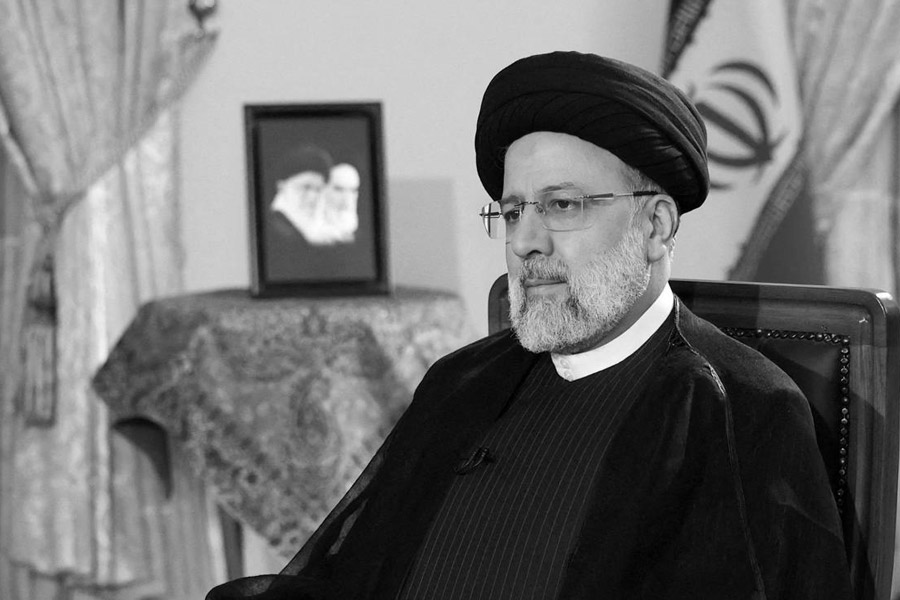
TEHRAN, July 14 — Ebrahim Raisi, the hardline president of Iran, marks three years in office this month, presiding over a nation where nuclear enrichment has reached near-weapons-grade levels, domestic dissent has been met with force, and an economy remains crippled under international sanctions. Born December 14, 1960, Raisi took the presidency on August 3, 2021, succeeding the more moderate Hassan Rouhani. A former head of the judiciary, Raisi is widely regarded as a protégé of Supreme Leader Ali Khamenei, who retains ultimate authority over Iran’s nuclear and military decisions.
For communities across the region, from Beirut to Sanaa, Raisi’s tenure has meant a steady hand on the levers of Iran’s proxy network — Hezbollah in Lebanon, Hamas in Gaza, the Houthis in Yemen, and Shia militias in Iraq — all of which he has leveraged in his vow to retaliate against any U.S. attack. Closer to home, the Raisi government has confronted waves of domestic unrest.
The 2022 Mahsa Amini protests, ignited by the death of a young woman in morality police custody, drew millions of Iranians into the streets in the most sustained challenge to the Islamic Republic’s authority in decades. The crackdown that followed left hundreds dead and thousands arrested, according to human rights groups. For families across Iran, the legacy of those protests lingers in a climate of surveillance and fear.
Nuclear escalation under Raisi
Under Raisi’s watch, Iran has expanded its nuclear program to enrichment levels of 60% and near-weapons-grade — a sharp escalation from the limits set by the 2015 nuclear deal, which the United States abandoned in 2018. The International Atomic Energy Agency has reported that Iran now possesses enough enriched material for multiple nuclear devices, should it choose to weaponize. For policymakers in Washington and Tel Aviv, this trajectory has narrowed the window for diplomatic resolution.
The president has repeatedly vowed retaliation against any U.S. attack, a threat given weight by Iran’s network of armed proxies. Hezbollah in Lebanon fields tens of thousands of rockets capable of striking Israeli cities.
The Houthis in Yemen have demonstrated the ability to disrupt Red Sea shipping. In Iraq, Shia militias loyal to Iran have targeted U.S. bases. For communities across the Middle East, the prospect of a wider conflict involving these forces is a constant source of unease.
Sanctions and economic strain
Raisi inherited an economy battered by U.S. sanctions reimposed after the 2018 withdrawal from the nuclear deal. Inflation has soared, the rial has plunged, and unemployment remains high, particularly among young Iranians. The Raisi government has sought to deepen trade ties with Russia and China, but for ordinary families, the cost of basic goods — bread, cooking oil, medicine — has become a daily burden.
The president has defended his economic record, pointing to increased oil exports and infrastructure projects. Yet the sanctions regime, which targets Iran’s oil sales, banking sector, and access to international financial systems, continues to constrict the economy.
For families across the region who rely on remittances from relatives working in Iran, the squeeze is felt in smaller sums sent home.
Succession and the supreme leader
Raisi’s relationship with Supreme Leader Khamenei has been central to his political rise. Khamenei, now 87, has groomed Raisi as a potential successor, though the ultimate decision rests with the Assembly of Experts. Raisi’s hardline credentials — his role in the 1988 mass executions of political prisoners, his tenure as head of the judiciary — have endeared him to the conservative establishment.
But his presidency has also exposed the limits of his authority: Khamenei retains final say on nuclear and military matters, and Raisi has at times appeared more as an executor than an architect of policy. For communities across Iran, the question of what comes after Khamenei looms large.
Raisi’s elevation to the presidency was seen as a step toward consolidating hardline control, but the protests of 2022 demonstrated that the regime’s legitimacy is far from assured. The supreme leader’s health, the succession process, and the possibility of renewed unrest all remain variables that could reshape the political landscape.
What to watch next
As Raisi enters his fourth year in office, several factors will determine Iran’s trajectory. The nuclear program’s continued expansion may provoke a military response from Israel or the United States. Domestic discontent, while suppressed, has not been extinguished.
And the health of the supreme leader, whose authority underpins the entire system, remains an open question. For families across the region, from the bazaars of Tehran to the refugee camps of Lebanon, the choices made in the coming months will carry consequences that extend far beyond Iran’s borders.
Raisi’s Iran is a nation under pressure — nuclear, economic, and political — and the world is watching to see how it responds.




