
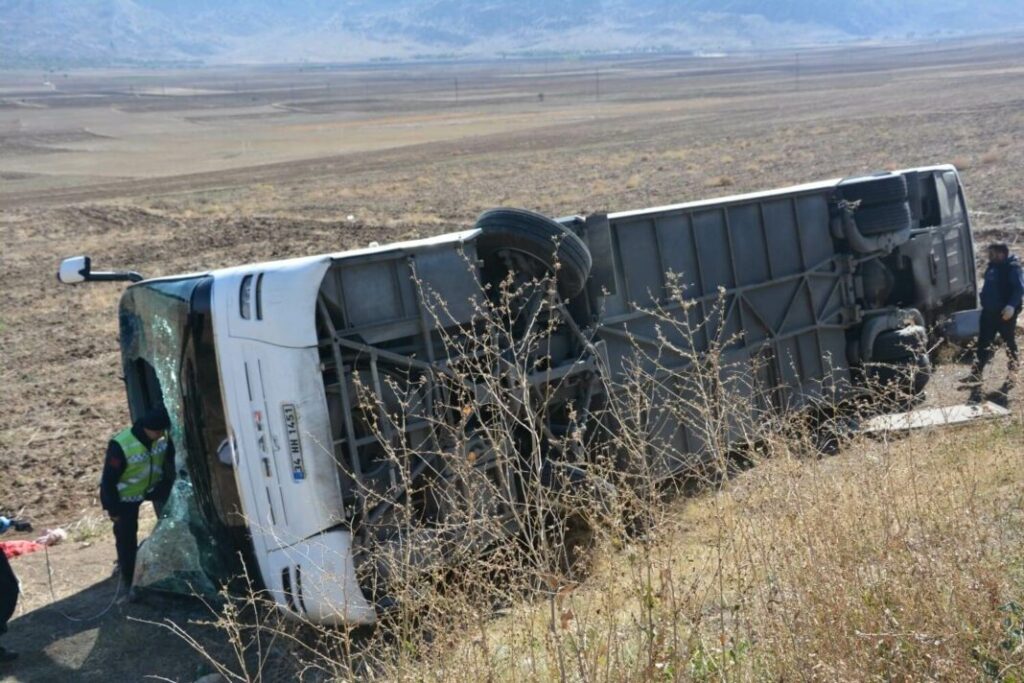
On the evening of 18 October 2024, a coach carrying Japanese tourists left the paved lane and fell into a roadside ditch near the provincial capital of Afyonkarahisar, western Turkey. No fatalities were reported, but twenty‑two passengers sustained injuries that required treatment at local hospitals.
Afyonkarahisar, known for its mineral springs, marble quarries and Ottoman‑era mosques, attracts visitors who seek its thermal baths and scenic countryside. Most of these travelers rely on coach transport that traverses two‑lane highways cutting through mountains and farmland, the typical mode of travel outside Turkey’s major cities. The accident occurred on one of these routes.
Authorities in Afyonkarahisar opened a formal investigation immediately, as is customary after serious road incidents in Turkey. The inquiry will examine several variables that have long been part of the national debate on road safety.
First, the condition of the roadway itself: while some Turkish highways are modern, well‑lit and divided, others—particularly rural stretches linking tourist sites to main arteries—remain narrow, older and often lack adequate guardrails. Second, the maintenance status of the vehicle; tour buses are subject to stricter standards than ordinary coaches, yet enforcement of these standards can be inconsistent. Third, driver performance, including possible fatigue, speed, or unfamiliarity with the local terrain, will also be scrutinised.
Japan’s foreign ministry has been alerted, and the Japanese embassy in Ankara is monitoring the medical care being provided. Treating a sudden group of foreign patients places additional demands on local hospitals, which must coordinate translation services, insurance processing and consular assistance.
The incident adds to a broader picture of Turkey’s mixed road‑safety record. The World Health Organization notes that the country’s traffic‑related fatality rate exceeds the European average. Over the past two decades, the Turkish government has invested heavily in new highways and tunnels, yet many secondary roads have not kept pace with these upgrades.
Tourism remains a cornerstone of Turkey’s economy, especially as the nation works to restore visitor numbers after the pandemic and the 2023 earthquakes. Japanese tourists, though a relatively small segment, are valued for their longer stays and higher per‑capita spending.
Consequently, a crash involving twenty‑two of them is likely to attract attention both in Tokyo and Ankara, where the Ministry of Culture and Tourism has been promoting safe travel as part of its international branding. Key questions for investigators will include: Was the bus properly serviced before departure? Did the driver receive sufficient rest?
Were road signs at the crash site clear and visible? Answers to these routine queries take on added significance when foreign nationals are involved, as the Turkish government seeks to avoid a reputation for unsafe travel conditions.
For the moment, the priority remains the care of the injured Japanese tourists, who depend on local medical teams and diplomatic support while they recover. The incident serves as a reminder that even routine coach journeys through picturesque provinces carry inherent risks. The physical road and the ditch remain unchanged; the ongoing investigation will determine whether any modifications are needed to improve safety for future travelers.




