
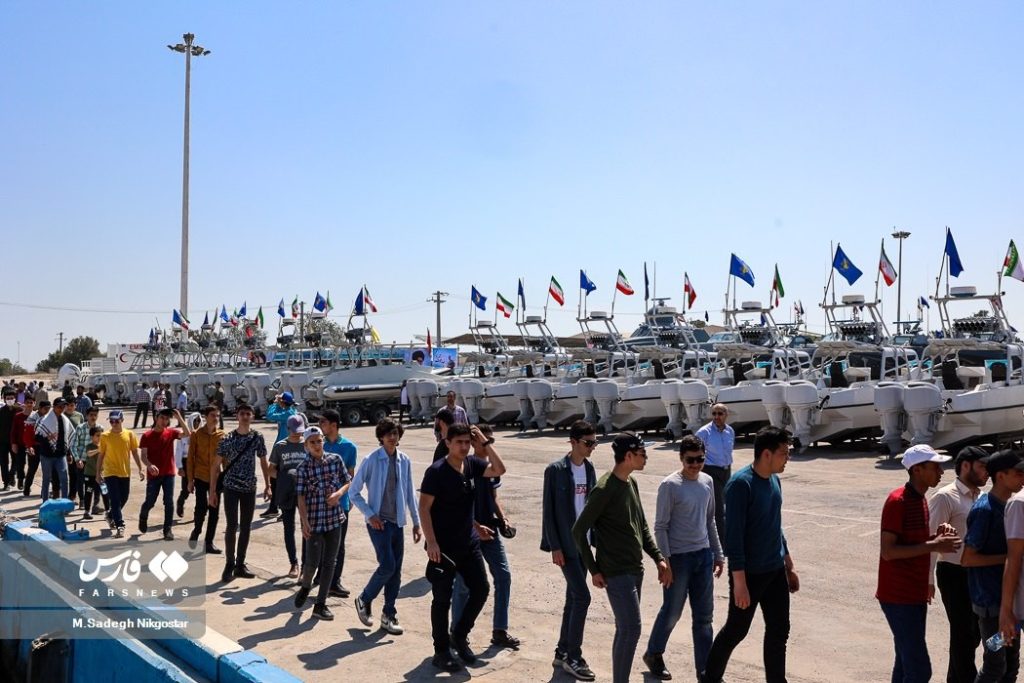
A new American toll on shipping through the Strait of Hormuz has drawn a sharp warning from Iran’s foreign minister, who labeled the measure an act of economic warfare and promised “serious consequences.” Abbas Araghchi’s condemnation, delivered on March 20, 2025, framed the U.S. action as a deliberate assault on Iran’s economic lifeline. The narrow chokepoint, connecting the Persian Gulf to the open ocean, carries a significant portion of the world’s oil and has long been both an economic artery for Tehran and a lever of regional power.
Iran has repeatedly threatened to close the strait during periods of heightened tension with Washington, including in 2018 and 2019. Those threats never materialized into a full blockade, but they underscored the waterway’s potential as a flashpoint.
The U.S. Fifth Fleet, based in Bahrain since 1995, patrols the region to keep the strait open and shipping safe. In 2019, the United States launched Operation Sentinel, a multinational naval coalition designed to protect commercial vessels transiting the strait and nearby waters. That operation remains a cornerstone of American strategy in the Gulf.
A diplomatic and legal maze
The new toll adds a layer of complexity to an already volatile region. The legal standing of the measure is uncertain because the United States has not ratified the United Nations Convention on the Law of the Sea (UNCLOS), the 1982 treaty that guarantees freedom of navigation through international straits and has been in force since 1994.
Without U.S. ratification, the toll could be challenged at the World Trade Organization, where trade disputes over measures affecting commerce are routinely adjudicated. Diplomatic channels remain open, but the path forward is unclear. Key U.S. allies in the region, Saudi Arabia and the United Arab Emirates, have expressed concern about regional stability.
Their economies and energy exports depend on unhindered passage through the strait. Any disruption threatens not only their oil revenues but also the broader global energy market.
The European Union maintains INSTEX, a payment mechanism designed to bypass U.S. sanctions on Iran and facilitate legitimate trade between European companies and Iran. The EU may now seek a diplomatic solution to the toll dispute, potentially using INSTEX as a bargaining chip or a channel for dialogue. Next steps could include discussions at the United Nations Security Council, where the United States holds a permanent seat, giving Washington significant leverage over any resolution or debate.
What this means for the region
For the families of American service members stationed across the Gulf region—in Bahrain, the United Arab Emirates, and Qatar—the rhetoric from Tehran is a familiar source of anxiety. The human side of this confrontation is not abstract. Every day, tankers carrying crude oil from Saudi Arabia, Iraq, Kuwait, and the UAE navigate the strait.
Their crews are multinational, their cargo essential to global economies. Iran’s economy, already battered by years of sanctions, faces further pressure if the toll disrupts its own shipping or provokes a broader confrontation.
The regime in Tehran has shown it can withstand economic pain, but the cost to ordinary Iranians is severe. The toll itself has not yet been fully defined in public documents. Its exact structure, amount, and enforcement mechanism remain unclear.
What is clear is that both sides are digging in. The U.S. administration under President Donald Trump has taken a hard line on Iran, pulling out of the 2015 nuclear deal in 2018 and reimposing sweeping sanctions.
The toll on the strait appears to be another tool in that pressure campaign. Iran’s response, through Araghchi’s warning, suggests that Tehran will not simply absorb the measure. “Serious consequences” is a phrase that carries weight in diplomatic circles.
The roots of the current standoff run deep. Relations between Iran and the United States were relatively stable for much of the twentieth century, but they soured decisively after the 1953 coup that overthrew Iran’s democratically elected prime minister.
That operation, orchestrated by American and British intelligence, installed a monarchy that lasted until the 1979 revolution. Ever since, mutual suspicion has defined the relationship. Iran’s position astride the Strait of Hormuz has given it both economic leverage and a strategic military card to play during crises. Over the decades, both Washington and Tehran have repeatedly tested each other’s red lines in the Gulf.
The current escalation adds a new dimension: the toll transforms a military flashpoint into an economic one, yet the underlying military posture remains unchanged. American and Iranian forces operate within close proximity, and any miscalculation could trigger a wider conflict.
For now, the world watches the strait. Ships continue to pass. But the margin for miscalculation has narrowed.




