Thirteen people died and 308 were injured on October 10 when a missile hit Riyadh’s King Khalid International Airport, the deadliest attack on the Gulf state in more than a decade, according to the Telegraph. A U.S. citizen was among the dead. The Houthis, in other words, got through one of the most expensive air-defense networks in the world.
Saudi Arabia spent $83 billion on defense last year, the Stockholm International Peace Research Institute says, far more than any other country in the Middle East, Israel included. Yet the record shows the Houthi barrage keeps landing.
Asymmetry in the Air
“No country can ever have a 100% interception rating, that just doesn’t really exist,” Elizabeth Dent, a senior fellow at the Washington Institute for Near East Policy, told CBS News. But the airport strike, she said, “was a hell of a one to miss.”
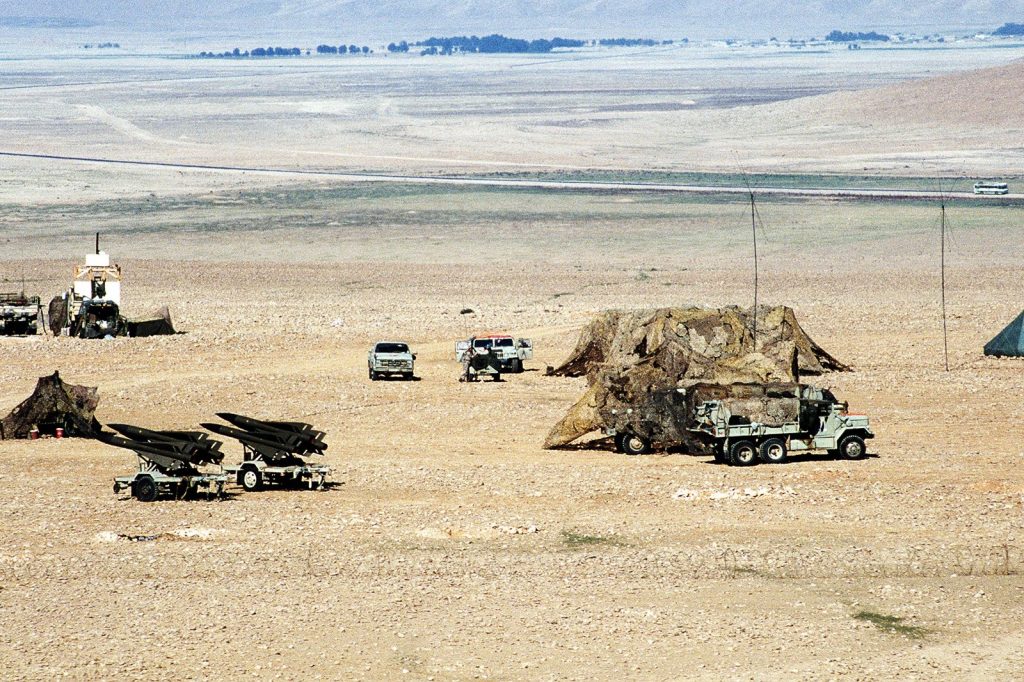
The arithmetic favors the attacker. A Patriot interceptor costs as much as $4 million a unit, and Saudi Arabia has bought 730 of them from Washington since 2020, according to U.S. military data. The Houthis fly an array of cheap drones, some supplied by Iran and some local copies of Iranian designs, and launch them in swarms. Allison Minor, a senior fellow at the Center for Strategic and International Studies, told CBS News the Houthis “combine an overwhelming number of relatively cheap systems, namely drones, to distract and disrupt and exhaust,” then weave in the more destructive missiles.
Thomas Juneau of Chatham House put the logic plainly. If the Houthis hit Saudi infrastructure with only a minority of their attempted attacks, it counts as a success for them and “an embarrassment and a loss” for Riyadh. Dent added that Houthi drones and cruise missiles can change course, which makes them harder to track. If one layer of the defense fails, a gap opens. That may be what happened at the airport.
A Border With Every Exposure
Geography does the rest. The kingdom shares a border of more than 800 miles with Yemen, much of it facing territory the Houthis hold. To the west the Houthis are fighting for the Red Sea shipping lanes. To the north, across the Iraqi border, sit Iran-backed militias. To the east the Persian Gulf is all that separates the oil fields from Iran.
Then there is what needs protecting. “There is a lot of critical infrastructure: multiple airports, many pipelines, as well as extensive oil production and export infrastructure, military bases, government buildings, royal palaces,” Juneau said. “It is simply extremely difficult to provide air defenses for all these sites over such a large area.”
Houthi attacks in recent weeks have killed at least 20 people and struck the headquarters of Saudi Aramco. Staff were evacuated from the company’s Dhahran headquarters on Thursday after an alarm, following an attack earlier in the week. Saudi Arabia’s East-West pipeline, which lets it divert exports around the blockaded Strait of Hormuz to the Red Sea, was offline for nearly two weeks after a September attack. Neither Saudi nor Houthi authorities answered CBS News’ request for comment.
The Economic Bill
More than 5,500 flights have been cancelled across the kingdom since the airport attack, and schools in the capital closed for nearly two weeks. Riyadh has also postponed its flagship “Davos in the Desert” investment conference, which was due to bring executives from firms such as BlackRock and Goldman Sachs from October 26. Andreas Krieg, a senior lecturer in defence studies at King’s College London, called the postponement “an extraordinary admission” that the kingdom cannot guarantee the conditions to host it.
Michael Stephens of the Royal United Services Institute said the attacks threaten Crown Prince Mohammed bin Salman’s Vision 2030 plan to diversify away from oil. “They need stability and security to do that and that equation is thrown out of the window.” Analysts warn of the deepest recession since the 1980s oil price crash. Oxford Economics cut its forecast in September from a 2.3 percent contraction to 4.5 percent, expecting Houthi attacks to trim Saudi Arabia’s contribution to global oil supply by 6.8 percent through the end of 2028.
Looking for Help Abroad
Saudi Arabia is hunting for partners. Pakistan has confirmed a troop deployment under a mutual defense pact with Pakistan and Turkey, and France has agreed to send “military means” to help protect the Yanbu oil terminal. Egypt says it is ready to help. Britain announced it would send RAF Typhoons to defend Saudi airspace from drones and missiles, though not to strike the Houthis in Yemen. Defence Secretary Wes Streeting called the attacks “despicable.”
Minor warned that the patchwork has its own risk: whether the interoperability of so many troops, aircraft, radars and interceptors becomes too much to manage. The other open question, she said, is how deep the Houthi stockpiles run, and whether this is a years-long campaign or a short salvo meant to force a return to negotiations on better terms.
Sources
- Houthi–Saudi conflict
- Saudi Arabia spends billions on its military. Why can't it stop deadly attacks by Iran's Houthi allies?
- How Saudi Arabia drew Britain into another war in the Middle East
Photo: Staff Sgt. Dean Wagner (Public domain)