The Strait of Hormuz, the only sea passage linking the Persian Gulf to the open ocean, has been a flashpoint in U.S.-Iran tensions for decades. Now a proposal to impose a 20% toll on vessels transiting those waters marks a potential departure from the economic and naval pressure campaigns Washington has employed since the 1980s.
According to a review of past maritime and economic measures, no direct precedent exists for such a toll in the Persian Gulf. The initiative, which could be classified as a form of economic warfare under the 1917 Trading with the Enemy Act, would add a new dimension to the long-running confrontation between the United States and Iran.
A New Tool in a Long Campaign
The toll proposal departs from the toolkit the United States has historically used against Iran. Previous pressure campaigns relied on naval blockades and sanctions rather than transit fees.
During the 2019–2020 maximum pressure campaign, for instance, the U.S. imposed a naval blockade on Iran. That effort slashed Iran’s oil exports from 2.5 million barrels per day in 2018 to 400,000 barrels per day in 2020. On May 5, 2019, the U.S. deployed the USS Abraham Lincoln carrier strike group to the region to enforce that blockade. If enacted, the toll would represent a new legal mechanism.
The Trading with the Enemy Act grants the president broad authority to regulate commerce during wartime, and the record shows the U.S. has used economic pressure against Iran for decades. However, the toll mechanism itself would be a novel tool in that arsenal.
While similar charges exist elsewhere—the Panama Canal levied an average of $150,000 per vessel in 2023 and the Suez Canal $400,000 per vessel—such fees have never been applied to transit of the Persian Gulf.
Historical Context of Maritime Pressure
The proposal draws on a history of U.S. naval and economic measures in the region, even as it breaks new ground in form. In 1987–1988, the United States conducted Operation Earnest Will to protect Kuwaiti tankers after Iran attacked 546 vessels during the Tanker War from 1984 to 1988.
That conflict saw Iran target commercial shipping in the Gulf, prompting a U.S. response that relied on naval escort and minesweeping rather than any toll system. More recently, in 2012, the European Union imposed an embargo on Iranian oil that cut exports by 1.2 million barrels per day. That measure, like the U.S. naval blockade that followed in 2019–2020, focused on restricting the flow of petroleum rather than taxing its passage.
The 1973 Arab oil embargo on the United States, which ran from October 1973 to March 1974 and cut 4.3 million barrels per day, demonstrated how control over maritime chokepoints can be leveraged for political ends—though it, too, relied on a production and export cutoff rather than a transit fee.
Global Energy Implications
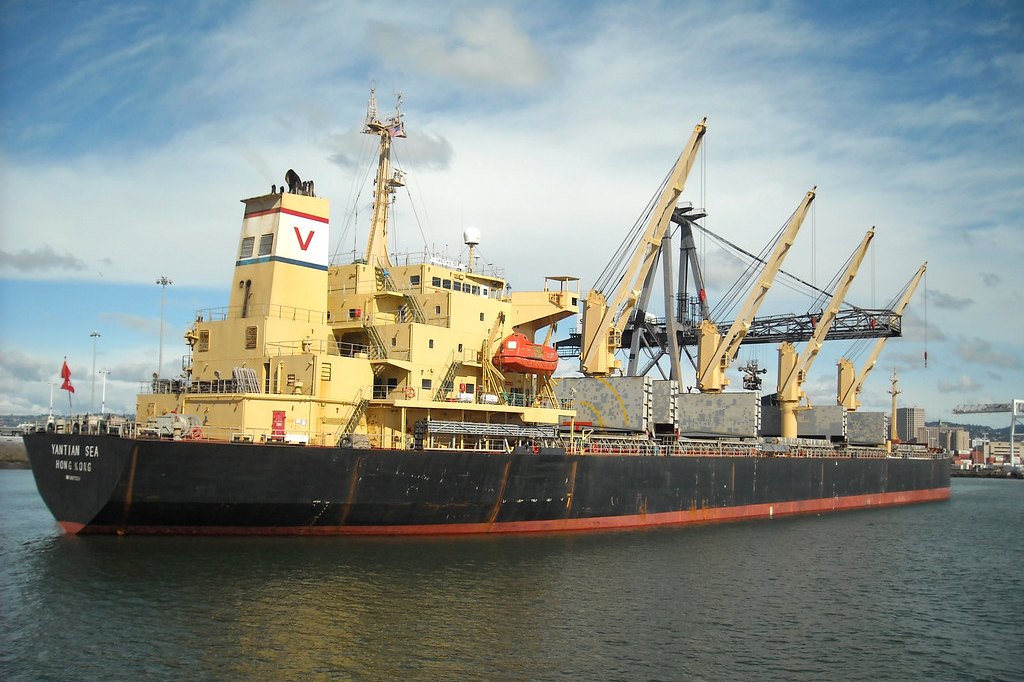
The Strait of Hormuz sits between Iran to the north and Oman and the United Arab Emirates to the south. It is the sole maritime route for several nations, including Iraq, Kuwait, Bahrain, Qatar, and the UAE. Because it is a primary path for petroleum products heading to Asia and Europe, any disruption can cause severe supply shortages.
A large share of the world’s liquefied natural gas and seaborne oil trade moves through the waterway, making it a global energy chokepoint. Iran has occasionally threatened to close the passage and has made preparations to mine the waters.
Those threats echo the Tanker War era, when Iran attacked numerous vessels, prompting Operation Earnest Will. The new toll proposal, if implemented, would mark a shift from wartime-era blockade tactics to a peacetime economic instrument—one that, under the Trading with the Enemy Act, could still be interpreted as an act of economic warfare. The Strait’s strategic significance ensures that any change in the terms of transit will have consequences far beyond the Gulf itself, affecting energy markets and the economies of nations on both sides of the oceans that depend on the petroleum that flows through this narrow corridor.