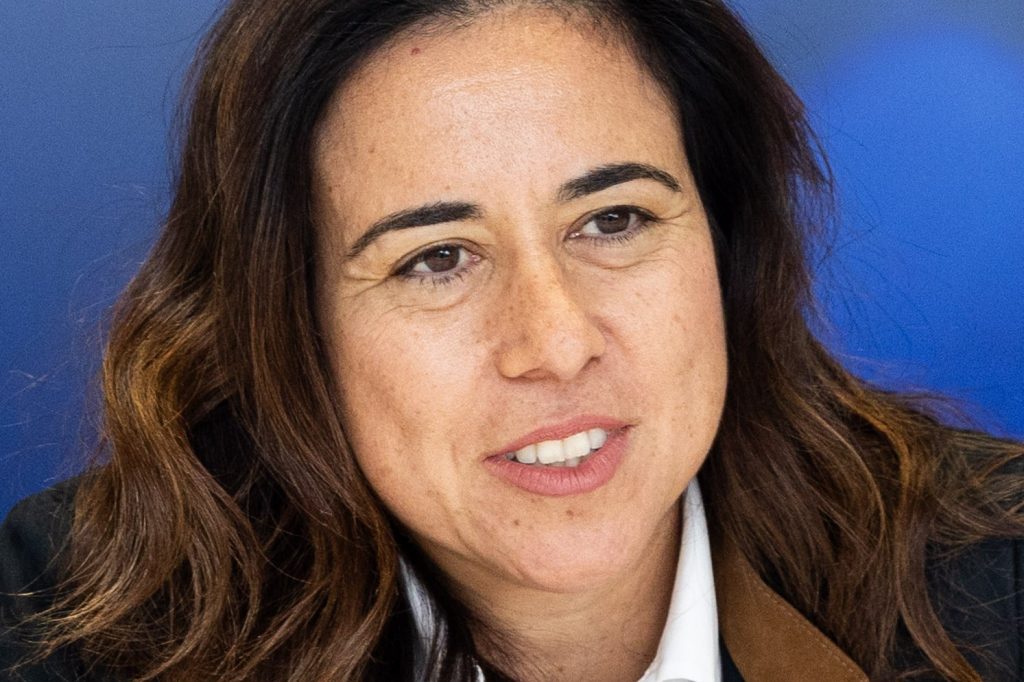
For families across the Gulf, Africa and Asia, the question of who runs the United Nations is not abstract, and the United Arab Emirates has just put forward a candidate whose country is under scrutiny over the war in Sudan. Lana Nusseibeh, the UAE’s first female ambassador to the UN, was formally nominated this month by President Mohamed bin Zayed Al Nahyan to succeed António Guterres, whose term ends on December 31, 2026.
A late entry into a stalled race
She joins six other candidates at a difficult moment. According to PassBlue, the race is deadlocked: every candidate has drawn at least two red “no” votes from permanent members of the Security Council. The three leaders in the latest straw poll, on October 16, were Rebeca Grynspan of Costa Rica, Carolyn Rodrigues Birkett of Guyana and Rafael Grossi of Argentina. Each drew two “discourage” votes from a permanent member. Michelle Bachelet withdrew in late September after US criticism of her advocacy for women’s rights.
To win, a candidate needs nine of the Council’s 15 votes and no veto from the United States, Britain, France, Russia or China. The General Assembly then votes. PassBlue said Nusseibeh enters with name recognition from her years as ambassador and with the UAE’s strong ties to Washington, but she still has to win over the other four veto holders. A straw poll planned for October 23 was reportedly postponed so the UAE could submit her papers.
Geography may also count against her. By the usual regional rotation the job should go to Latin America or Eastern Europe. No Latin American has held it since 1991, and no Eastern European ever has.
The Sudan question
The sharpest criticism concerns Sudan. UN sanctions monitors have accused the UAE of arming and funding the paramilitary Rapid Support Forces, who are fighting the Sudanese army. Amnesty International reported in May 2025 that Chinese-guided bombs and howitzers used by the RSF had been re-exported by the Emirates, in breach of the Darfur arms embargo. The Emirati government rejects the findings and denies supplying weapons or military support to either side. The International Court of Justice dismissed Sudan’s case against the Emirates for lack of jurisdiction, without resolving the underlying allegations.
Nathaniel Raymond, who directs the Humanitarian Research Lab at the Yale School of Public Health, called her candidacy a potential “catastrophe” for the UN’s work in Sudan, Yemen and elsewhere in the region. He described a conflict of interest between the UN and a state “credibly accused by the UN itself” of helping make the El Fasher massacre possible. Human Rights Watch’s 2026 report on the UAE, meanwhile, describes severe restrictions on expression, association and assembly.
Supporters point elsewhere. Brett McGurk, a former Biden national security adviser, wrote on October 21 that the UAE became the largest global provider of humanitarian aid to Gaza, according to UN data, because of Nusseibeh, and called her an inspired choice. Her father’s Palestinian roots may also help her in some quarters.
Her record
Nusseibeh was born in Abu Dhabi in 1978. Her father, Zaki Nusseibeh, was born in Jerusalem and became a government official in the UAE. The family is reported to have guarded the keys to the Church of the Holy Sepulchre since the 7th century. She studied at Wycombe Abbey in England, took bachelor’s and master’s degrees in history at Queens’ College, Cambridge, and earned a master’s in Israeli and Jewish Diaspora Studies at SOAS in 2003. She speaks English, Arabic, French and Hebrew.
Her early work included UNESCO consulting in Paris and a post at the Gulf Research Center, before she joined the UAE foreign ministry in 2009. She served as UN ambassador from September 2013 to April 2024. She was a Vice President of the 72nd General Assembly session, and in 2017 she presided over the UN Women Executive Board. She got the UAE onto the Security Council for 2022 to 2023, the first time since 1986. In December 2023 she led the passage of Resolution 2720, which pushed for reopening border crossings into Gaza for humanitarian aid. She also defended the Abraham Accords weeks before they were signed, telling The National that the “empty chair policy” had not brought the peace people hoped for.
She is now Minister of State at the foreign ministry. In her vision statement she said she had taken a leave of absence from that post effective immediately, citing Article 100 of the UN Charter and the duty to act with the interests of the United Nations only in view. “There will be no exemptions for friends and no grudges against critics,” she wrote. The UN has never had a woman secretary-general, and she is the fourth woman in the field.
Sources
- Lana Nusseibeh
- Who is Lana Nusseibeh, the UAE's candidate for UN Secretary-General? – i24NEWS
- UAE Candidate Is Likely to Be Asked About Her Nation's Controversies Abroad – PassBlue
Photo: Jennifer Jacquemart / European Union (CC BY 4.0)