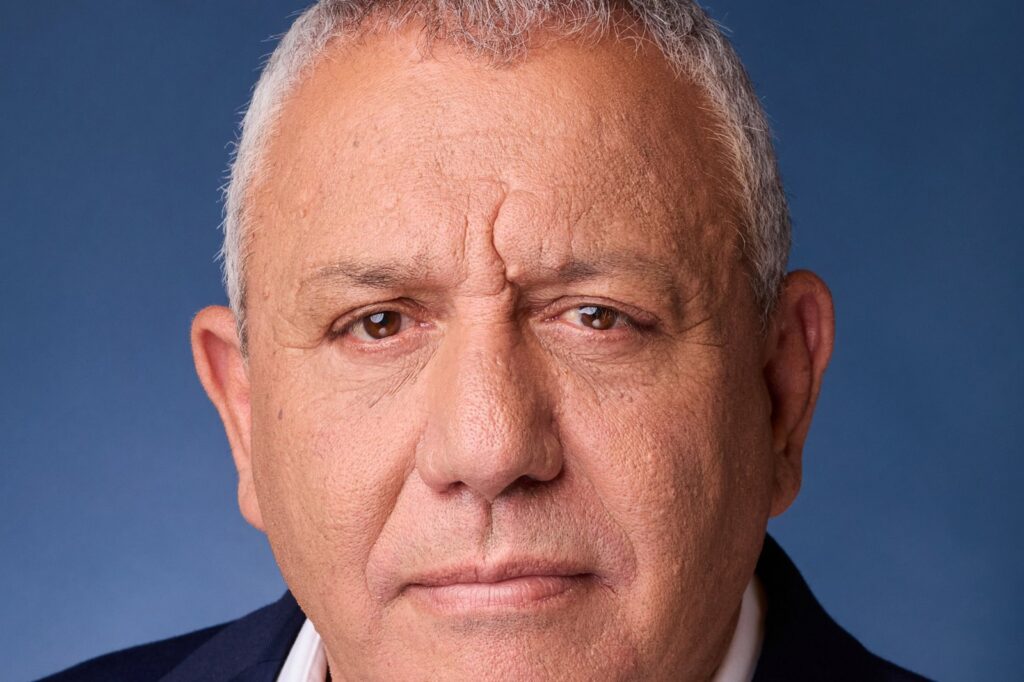
Gadi Eisenkot, 66, a former general and now leader of the Yashar party, has become the opposition’s strongest candidate against Prime Minister Benjamin Netanyahu in the October 27 vote. A year ago he was polling in single digits. For families across the region watching Israel’s politics, the question is what a change at the top would mean for Gaza, Iran and the wider neighborhood.
A son of immigrants from Safi
Eisenkot was born in Tiberias in 1960 to Meir and Esther Eisenkot, Jewish immigrants from the Moroccan town of Safi. The family moved to the southern port city of Eilat when he was one. His father worked the Timna Valley copper mines and his mother kept the home. He enlisted in the Golani Brigade in 1978 and spent some 40 years in uniform. Along the way he earned a history degree at Tel Aviv University and a master’s from the U.S. Army War College. He served as the army’s 21st chief of staff from 2015 to 2019, under Netanyahu.
The contrast with the prime minister is deliberate. Netanyahu’s upbringing was in Jerusalem, inside the circles of power. Eisenkot grew up outside them. Israel has never had a Mizrahi prime minister, and many Mizrahi voters have long backed Netanyahu’s Likud. Eisenkot rarely mentions his ethnicity, though analysts believe it is part of his appeal.
That appeal was put on display in an ugly way. TV host Yinon Magal, widely seen as a Netanyahu mouthpiece, called Eisenkot a “monkey” of Mizrahi-Moroccan heritage managed by “Ashkenazi elites.” Magal later said he meant an underworld term for a frontman steered from behind the scenes. Even Netanyahu, not known for contrition, condemned the remarks.
Ground forces, restraint and a hard line
As chief of staff, Eisenkot turned the army back toward ground maneuver, infantry and armored training. His multiyear “Gideon” plan, approved in April 2016, called for a stronger force and a new cyber command. In 2016 he also backed a military trial of Sgt. Elor Azaria, who shot a wounded Palestinian attacker in Hebron, saying he was defending the army’s discipline and ethics. Right-wing politicians, Netanyahu among them, pressed him not to.
On security he is no dove. He supported Israeli operations in Gaza, Lebanon and Iran, and within the army he is linked to the “Dahiyeh doctrine” of overwhelming force against civilian infrastructure, as well as the “campaign between wars.” On Iran he shares Netanyahu’s aims of blocking a nuclear weapon and weakening Tehran’s proxies, but he has faulted the lack of strategy in the latest conflict.
Loss and a political turn
The war reached his own home. His youngest son, Gal, 25, died fighting in Gaza in December 2023, and two nephews were killed as well. “Over Gal’s grave, I swore that the price he paid, he and his friends, those he knew and those he didn’t, would not be in vain,” he wrote in Yedioth Ahronoth in April 2026.
He entered politics in 2022 with Benny Gantz and joined Netanyahu’s emergency war cabinet after the October 7, 2023 attack. The two quit in June 2024, citing the lack of a clear plan for the war’s aftermath. Eisenkot has accused Netanyahu of prolonging the fighting, and endangering hostages, for political reasons.
What he promises
His campaign leans on accountability. He pledges a state commission of inquiry into the failures of October 7, which Netanyahu has resisted, and military or national service for all citizens. He backs exemptions for up to three percent of Haredim studying full time at yeshiva, but opposes the old system of blanket exemptions for ultra-Orthodox men. He also wants reforms that strengthen the separation of powers, and he calls domestic polarization a serious threat.
On Gaza, he says he would end Hamas rule within 18 months, through Trump’s ceasefire plan or what he calls “creative” military operations. He supports a long-term ceasefire that returns captives and disarms Hamas’s missiles and rockets. On Palestinians the picture is bleaker. Before October 7 he warned that holding the West Bank risked a bi-national state. Now he rejects the two-state solution and has called its supporters “delusional,” offering no alternative. He does oppose formal annexation and illegal outposts, and says he would crack down on settler violence, which he labels “Jewish terrorism.”
The arithmetic ahead
Most recent polls give Yashar 20 to 23 of the Knesset’s 120 seats, ahead of Likud, and show him leading Netanyahu on who is better suited to be prime minister. Yet neither Netanyahu’s bloc nor the anti-Netanyahu bloc is on course for 61 seats. Eisenkot has said he will try to form a government even without 61, which could mean a minority government backed from outside by Arab parties. Some other opposition leaders have ruled out working with them.
Washington has weighed in. Trump gave Netanyahu his “complete and total endorsement” on Sunday, calling him a “great warrior prime minister.” Asked whether he could work with someone else, Trump replied: “Maybe I will, maybe I won’t, who wants to take the chance?”
Sources
- Gadi Eisenkot
- Who is Gadi Eisenkot, Netanyahu’s main challenger in Israel’s elections? | CNN
- Israeli Forces Seize Palestinian Homes in Hebron; Opposition Leader Says Netanyahu Unfit to Lead
Photo: יהב טרודלר (Yahav Trudler – Yahav Studio) (CC BY-SA 3.0)