
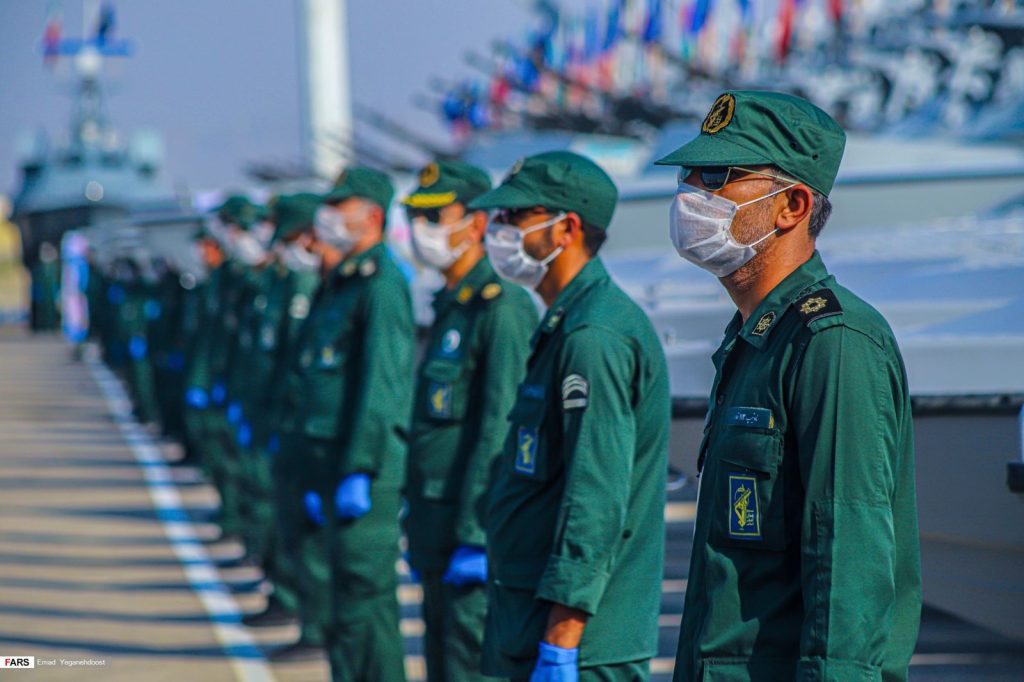
MANAMA, July 7 — The Islamic Revolutionary Guard Corps Navy has built its entire strategy around a simple idea: speed and numbers can beat size and firepower.
Think of it like a pack of small, fast boats versus a single massive warship. The IRGC operates a fleet of fast-attack craft, including Boghammar-class boats. These aren’t your typical naval vessels. They’re small, agile, and designed to swarm larger ships, armed with machine guns, rockets, and anti-ship missiles.
Here’s what that means in plain terms. The IRGC doesn’t try to match the U.S. Navy ship-for-ship. Instead, its doctrine leans heavily on what military planners call asymmetric warfare — using speed and overwhelming numbers to try to punch above its weight.
The practical upshot for anyone watching the Persian Gulf is this: a confrontation wouldn’t look like a traditional naval battle. It would be chaotic, fast, and involve many small attackers trying to overwhelm a larger vessel’s defenses before they can react effectively.
The IRGC has another, quieter tool in its arsenal: naval mines. This isn’t hypothetical. Iran has used them before. During the Tanker War from 1984 to 1987, the IRGC deployed both moored and bottom mines. More recently, in 2019, Iran used limpet mines — the kind divers attach directly to a hull — against tankers near Fujairah.
The U.S. response has been to reinforce its presence. The U.S. Navy’s Fifth Fleet, based in Bahrain, coordinates maritime security in the region. As of May 13, 2025, the Pentagon had deployed the USS Dwight D. Eisenhower carrier strike group to the region.
The stated mission: deter further attacks. The carrier group gives the Fifth Fleet a significant mobile airbase and strike capability, a counterweight to the IRGC’s swarm tactics.
So what should readers watch for next? The key dynamic is the mismatch in doctrine. The U.S. Navy is built for power projection and blue-water dominance. The IRGC Navy is built for asymmetric, close-quarters conflict in the narrow waters of the Gulf. Any incident that draws these two forces into direct contact carries a high risk of rapid escalation, precisely because each side is optimized for a different kind of fight.




