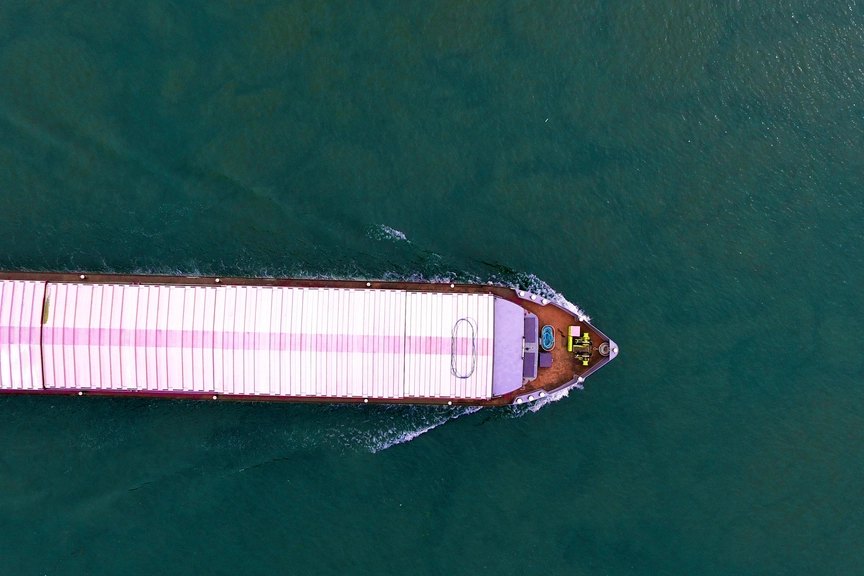
The U.S. military has formally confirmed that Iran has resumed attacks on commercial shipping in the Strait of Hormuz, a strategic waterway connecting the Persian Gulf to the Gulf of Oman. According to the U.S. Navy’s Fifth Fleet, Iranian fast-attack craft harassed a tanker near the strait on May 11, 2025, firing warning shots.
This incident ends a period of relative calm that followed a U.S.-backed maritime security initiative launched in 2023.
A Critical Chokepoint Under Pressure
The Strait of Hormuz measures just 21 miles across at its narrowest point, yet it funnels roughly 20 percent of the world’s oil each year. This makes it one of the most strategically vital maritime passages on the planet.
The waterway runs between Iran to the north and the Musandam Peninsula to the south, with the southern coast comprising territory held by Oman and the United Arab Emirates. It serves as the only sea route from the Persian Gulf to the open ocean, meaning it is the sole maritime exit for several nations — including Iraq, Kuwait, Bahrain, Qatar, and the United Arab Emirates. Because such a large share of the world’s seaborne oil and liquefied natural gas passes through these waters, any disruption can trigger severe supply shortages on global markets.
Iran has periodically threatened to block the strait or prepare mines there, especially in response to international sanctions. However, prior to the 2026 Iran War, the passage remained open through most Middle East conflicts.
That later conflict created a major crisis when Iranian blockades closed the strait entirely. The May 2025 incident by Iranian fast-attack craft represents a significant escalation after a period of relative quiet that had been sustained by the 2023 U.S.-backed maritime security initiative. The U.S. Central Command has stated that such actions threaten global energy supplies and maritime security.
Iran’s Islamic Revolutionary Guard Corps (IRGC) has not officially commented on the incident.
U.S. Response and Regional Implications
In direct response to the harassment, the United States has deployed additional naval assets to the region, including the USS Dwight D. Eisenhower carrier strike group, as of May 13, 2025. This deployment is intended to reassure allies and protect commercial shipping lanes. The carrier strike group’s presence signals a proactive U.S. commitment to maintaining freedom of navigation through this critical chokepoint.
U.S. officials view the Strait of Hormuz as a vital artery for global energy markets, and any disruption can quickly affect prices and supply lines far beyond the Persian Gulf. The Strait of Hormuz is particularly important for petroleum products heading to Asia and Europe.
Because it is the only seaway out of the Gulf, nations such as Iraq, Kuwait, Bahrain, Qatar, and the United Arab Emirates depend on it entirely for their maritime exports. The May 2025 incident demonstrates that Iran retains the capability to harass commercial traffic, and the situation remains fluid. Early findings suggest that further incidents could occur, despite the U.S. naval buildup.
Balancing Hope and Caution Amid Uncertainty
For patients and families following this situation, the encouraging part is that the United States has taken proactive steps to secure the waterway. The deployment of the Eisenhower carrier strike group and other assets underscores a determination to protect the flow of essential goods, including medical supplies and treatments that may rely on global supply chains. However, early findings indicate the situation remains unpredictable.
Patients should talk to their doctor if they have concerns about how global energy disruptions might affect their access to medical supplies or treatments. The key is to stay informed through reliable sources and consult your doctor for personalized guidance.
As always, balancing hope with caution is the most prudent approach. The Strait of Hormuz has long been a strategic chokepoint for global trade, and its vulnerability is now again in sharp focus. With Iran’s IRGC remaining silent on the incident and the U.S. reinforcing its naval presence, the coming weeks will test the effectiveness of diplomatic and military measures to keep this vital waterway open and safe for commercial shipping.