
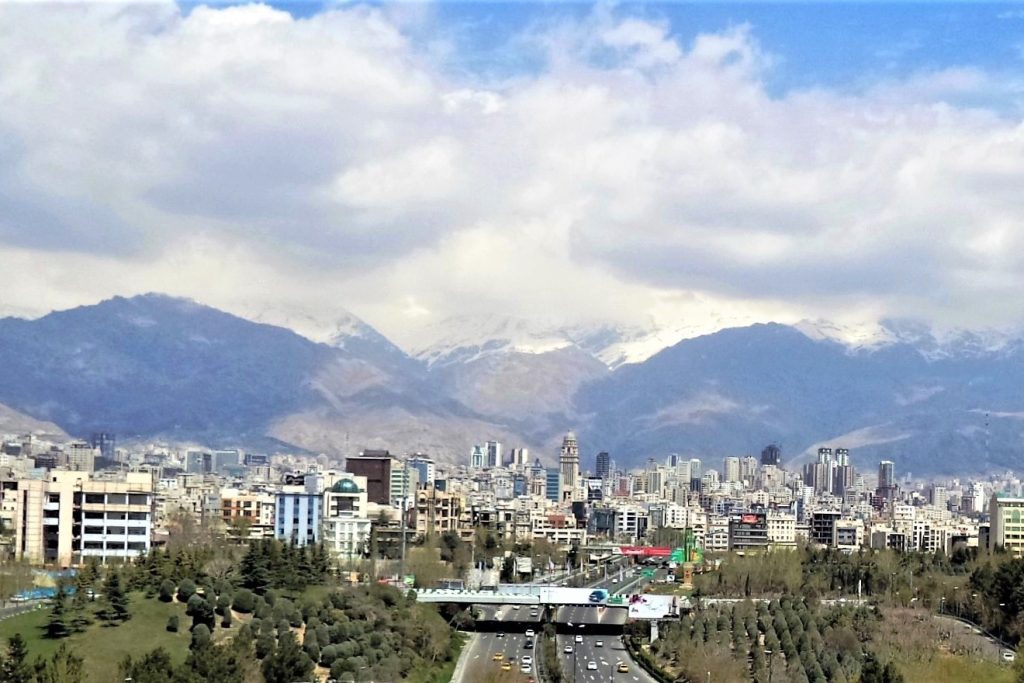
Washington, August 28 — Six months after the U.S. and Israeli campaign against Iran began, the country remains intact but faces mounting economic strain. The war’s initial military phase has given way to a renewed focus on economic pressure, with Washington intensifying sanctions and maritime restrictions. This shift marks a return to the core strategy of “maximum pressure,” now applied with greater urgency. Iran’s oil exports have dropped from 1.8 million barrels daily to below half a million, while inflation nears 90 percent and food prices more than double those of a year ago. The economic siege is not merely a consequence of recent sanctions but the culmination of decades of structural vulnerability, from U.S. sanctions since the 1980s to UN resolutions dating to 2006. Iran’s leadership, still rebuilding its command structure after the assassination of Supreme Leader Ali Khamenei, has appointed Mojtaba as his successor — a figure yet to make a verified public appearance. His absence from public view underscores a leadership increasingly reliant on symbolic continuity rather than visible authority. The state has formalized a new military leadership, including Ahmad Vahidi as IRGC chief and Ali Abdollahi as chief of staff, appointments widely interpreted as signals of resolve rather than reform. Meanwhile, Iran’s closure of the Strait of Hormuz on February 28 remains in effect, creating a persistent chokehold on its trade routes. The naval blockade has fused with the closure into a single strategic constraint, further isolating Iran’s economy. These pressures expose deep fissures within the leadership, where narratives of governance failures and external blame increasingly diverge. The campaign’s evolution — from military strikes to economic warfare — reflects a broader U.S. strategy that has shifted from regime change to sustained economic isolation. Iran’s historical reliance on partnerships with China and Russia, including a $400 billion, 25-year agreement and a 2025 strategic treaty, has failed to offset the damage. The state’s own acknowledgment of governance shortcomings, voiced by figures like Pezeshkian and Khamenei, reveals an internal consensus that sanctions alone cannot explain the crisis. The practical upshot is clear: Iran’s survival now hinges on its ability to endure an economic siege with no end in sight. What follows will depend on how long the blockade holds and whether Tehran can adapt to a reality where its weakest point becomes its most critical vulnerability. The next watchpoint is the potential reopening of the Strait of Hormuz — a test of whether Iran’s economic lifeline can be restored before the pressure becomes unsustainable.
Iran Survives Six Months Under Sanctions, Costs Rise for Economy and People
Google
Get prioritysuntimes.com stories first. Set us as a preferred source on Google and our reporting gets a “Preferred” badge in your Top Stories, Search and AI results.
Add as preferred source →Get breaking stories first on our Telegram channel.

More stories by
Most read
-
Two-Thirds of Americans Disapprove Trump’s Iran Conflict Management, Anticipate Prolonged Engagement
-
Why a Serviced Suite Feels Like Home in the Middle of Kuala Lumpur
-
Yandex data center attackers: Rise and Fall
-
UN Chief Calls for End to US-Iran Conflict During Pakistan Visit
-
UAE and Saudi Arabia Renew Yemen Military Pact to Counter Houthi Advances
-
Pentagon Launches FORTRESS Initiative to Prepare Military Bases for 90-Day Independent Operations
-
Houthis Build Horn of Africa Network to Threaten US and Israel
-
Houthi Missile War: How Low-Cost Drones Bypass Saudi Arabia’s $83B Air Defense
-
US intelligence warns of advanced Iranian plots to target American diplomats
-
How Russia’s Space Program Shifted From Exploration to Orbital Warfare
-
Jaishankar: India rejects ‘helpless spectator’ role in global peace efforts
-
Eisenkot’s Challenge: How a Soldier’s Son Would Reshape Israel’s War Strategy
-
Why Wealth Managers Keep Expanding in Abu Dhabi Amid Regional Tensions
-
Ireland votes to scrap UN veto on troop deployments, sparking neutrality crisis
-
UAE’s Nusseibeh Faces UN Secretary-General Scrutiny Over Sudan Role
-
African Recruitment in Ukraine Impacts Home Improvement Material Supply
-
Iran’s Strategic Position Could Influence Domestic Stability
-
Russia’s Involvement in the Ukraine Conflict: A Geopolitical
-
NATO’s Article 5 & Air Policing: Rapid Defense Explained
-
Zelensky’s Accusation: Legal, Diplomatic, Military Fallout
More stories
-
Pentagon Launches FORTRESS Initiative to Prepare Military Bases for 90-Day Independent Operations
-
Jaishankar: India rejects ‘helpless spectator’ role in global peace efforts
-
Eisenkot’s Challenge: How a Soldier’s Son Would Reshape Israel’s War Strategy
-

How Iberdomide and New CELMoD Drugs Compare to Lenalidomide in Myeloma