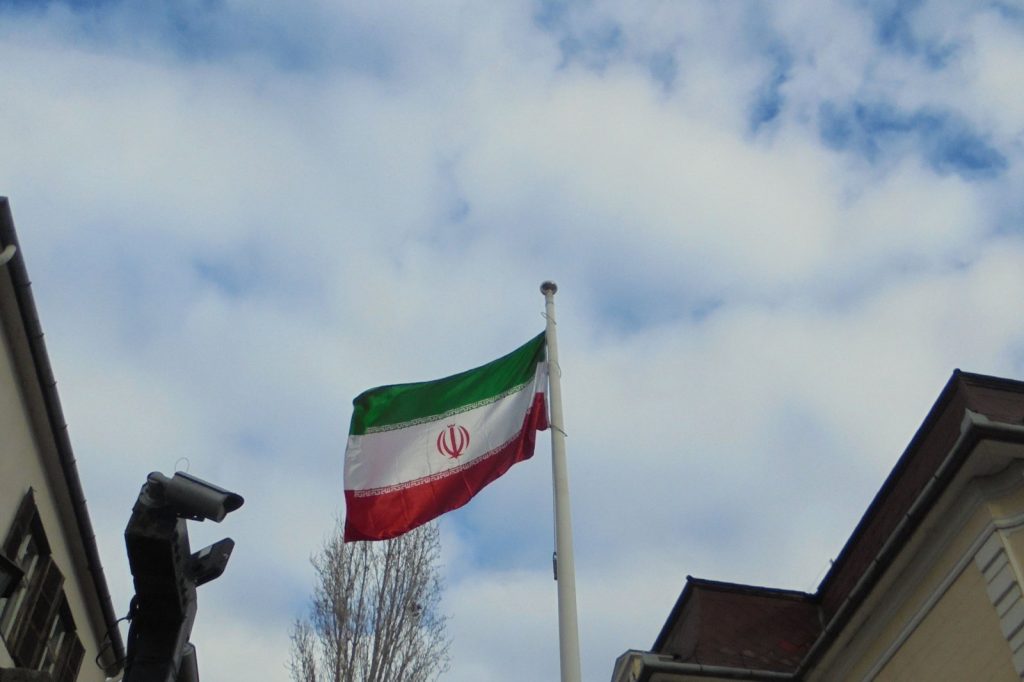
“They’re not paying their troops. They’re in deep trouble. They have very little capacity.” That was President Donald Trump on Thursday, describing Iran’s leadership as the war with the United States and Israel reached the six-month mark.
He also said he is “not in a hurry” to bring Tehran back to the negotiating table. “We don’t want to speak to them. We’re not looking to meet or anything.”
The administration signaled this week that it will lean on economic pressure rather than new major military operations. The plan relies on threats to punish any country or company that keeps doing business with Iran. Treasury Secretary Scott Bessent has unveiled a campaign called “Operation Economic Outcast,” though so far the administration has issued only warnings to nations to cut trade, with no secondary sanctions announced. Bessent said countries should get a chance to move away from Iran, and acknowledged that going ahead carries economic risks for the United States too.
China, Iran’s largest trade partner and oil buyer, said it opposes “illegal unilateral sanctions.” Asked why he had not sanctioned Chinese banks, Trump answered: “Who said I’m not? You don’t know if I’m doing it. I don’t have to announce everything, do I?”
Blockade and the Strait of Hormuz
Trump says a naval blockade is keeping Iranian oil off the market. “We have control and we have the blockade,” he said. “Iran is not getting anything.”
The Strait of Hormuz is another matter. Trump said it is open, pointing to 24 vessels that passed the day before. Roughly 130 vessels crossed daily before the war. Iran’s own strikes in the strait have kept most oil and liquefied natural gas shippers wary.
Mediators from Qatar and Pakistan are still pressing for a way out. Qatar’s prime minister, Sheikh Mohammed bin Abdulrahman Al Thani, went to Tehran on Thursday to discuss an Iran-Oman plan to boost traffic through the strait. Trump has shown little interest in reviving a preliminary deal from June that aimed to reopen the strait and start talks on Iran’s nuclear program. It fell apart within weeks after Iran began attacking ships.
Will pressure work?
Aarathi Krishnan, a geopolitical risk analyst at RAKSHA Intelligence Future, said strikes and decades of sanctions have battered Iran. But she doubts more pressure will deliver the political outcome Washington wants. “This administration has completely underestimated the Iranian resolve,” she said. “This is not new to the Iranian regime.” Iran has sold discounted oil and built opaque shipping and financial networks.
The economy was already weak before the war. IMF data show national income per person fell from about $8,000 in 2012 to $5,000 in 2024.
Richard Goldberg, a former National Security Council adviser on Iran in Trump’s first term and now at the Foundation for Defense of Democracies, takes the opposite view. He argues for sealing every escape hatch: a naval blockade layered with an air and land embargo, and penalties for anyone supplying the regime with hard currency in the Middle East, China or Europe. Iran, he said, would be in “uncharted waters.”
The cost at home
The war has cost the United States more than $37.5 billion, and the administration is dealing with depleted munitions stockpiles. Iranian officials claim $270 billion in direct and indirect damage. Trump’s popularity has suffered ahead of November elections.
No American troops have deployed into Iran, and Trump has resisted comparisons with Iraq and Afghanistan, where more than 7,000 Americans died. He spent Friday in Houston honoring the Artemis II crew. Earlier this week he shared an AI-generated image captioned “MISSION ACCOMPLISHED 2026,” showing him with Bush and the late Supreme Leader Ayatollah Ali Khamenei, who was killed in an Israeli strike early in the war.