
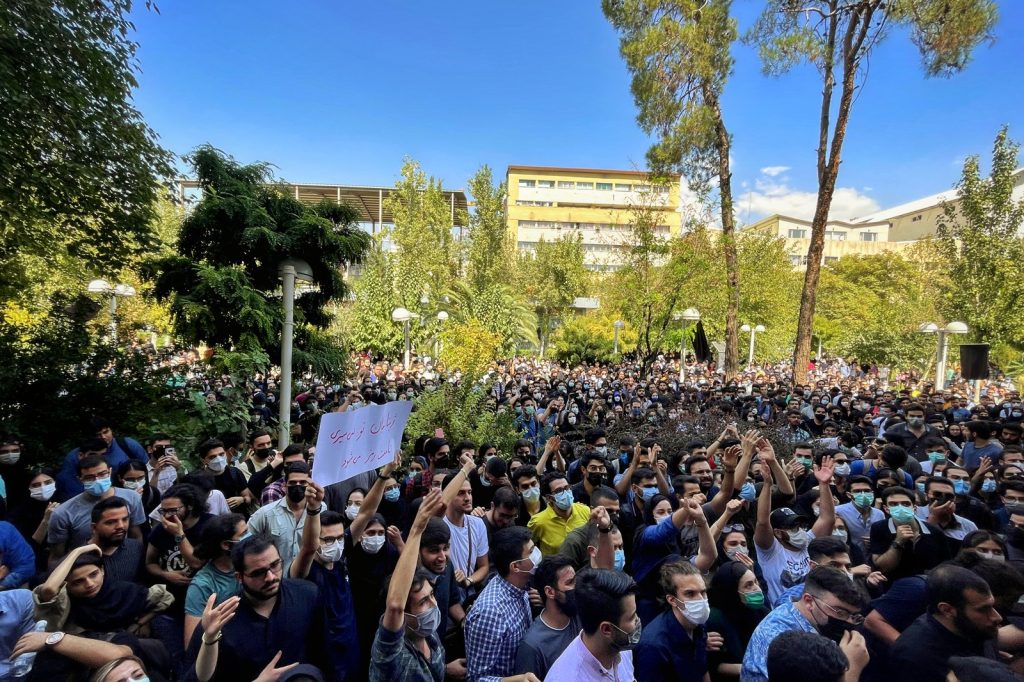
“I am not so hopeful that the Iranian society is capable of causing fundamental changes like toppling the Islamic Republic.” Meysam, a protester in the city of Rasht, spoke through an interpreter. Like every Iranian interviewed by NPR, he asked that his family name be withheld for fear of retribution.
It had been more than six months since 22-year-old Mahsa Amini died in police custody. The morality police had detained her, who also went by her Kurdish name, Jina, for failing to wear her hijab properly. Protests began in Iran’s largely Kurdish northwest and spread across the country. NPR called them the biggest challenge to the cleric-led government in its more than four decades in power.
Demands shifted fast, from justice for Amini to the overthrow of the government. Thousands of protesters were arrested and hundreds killed.
What changed
Protesters told NPR the demonstrations did bring some changes, including more women going without the hijab. The morality police had not been seen in months. Meysam said security forces no longer concentrated on enforcing the rules, except to make a little money. A police officer who came to his workplace, where many women were bareheaded, “just asked me for a bribe and went away.”
Sara, a teacher in Tehran, said the government had no reason to feel confident. In many neighborhoods, she said, people were still chanting anti-regime slogans at 9 o’clock each night, and trade unions held small protests daily. Religious people who once backed the government had “lost all hope,” she said.
Emad, a 32-year-old protester in Tehran, said demonstrators would not give up on toppling the government. “Even if this regime gives freedom of hijab, even if they control inflation, even if unemployment comes down to zero,” he said, people would still demand the dismissal of the Islamic Republic.
Leaders dig in
Analysts saw no softening. Henry Rome of the Washington Institute said anyone expecting concessions misread the lessons Iran’s rulers took from their own rise. Having come to power through a revolution, he said, they likely concluded from the fall of the Shah that even modest concessions can hasten a regime’s collapse.
Naysan Rafati of the International Crisis Group said the hardline elite that dominates most of the system was doubling down, hoping that an iron fist and repression would hold. He said the West should continue early measures such as helping Iranians reach the internet and isolating the government, so people do not feel abandoned.
The economy, Rome said, appeared to be what Iran’s leaders were focused on. Families were facing very hard economic times, Sara said, even as many hoped the uprising would continue.
Sources
Sources
- Iran protests: Fresh crackdown on mourners at… – BBC News
- Six months after the death of 22-year-old Mahsa Amini, Iranians are…




