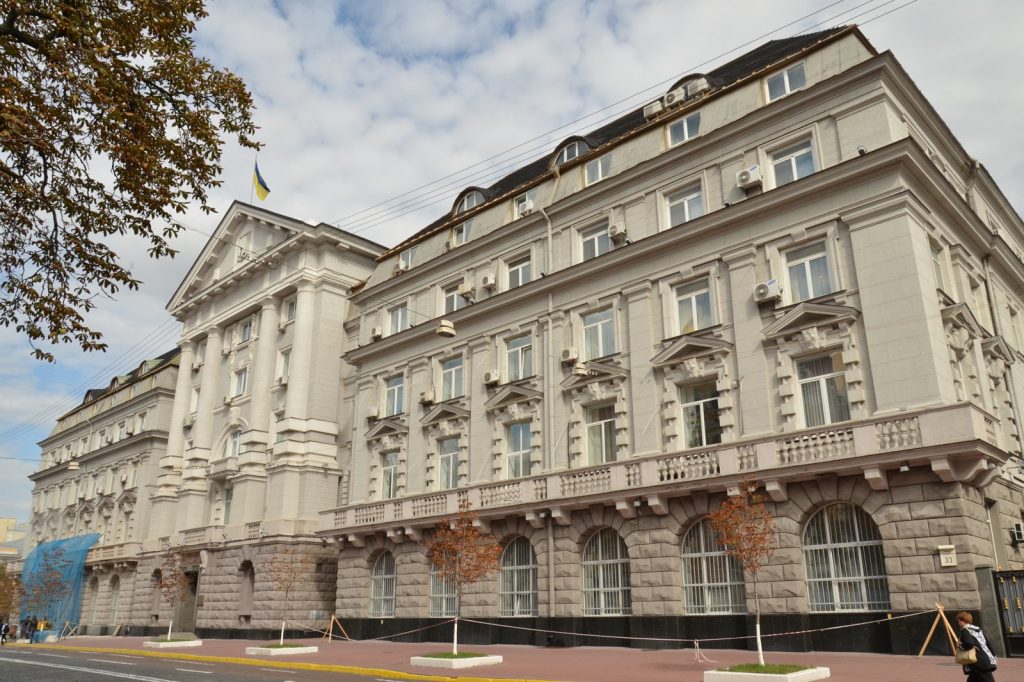
KYIV, July 7 — The shift in Ukraine’s war strategy is no longer a whisper; it is a sustained, long-range hum of drones. Vasyl Malyuk, the head of the Security Service of Ukraine (SBU), has fundamentally redefined the agency’s role from a domestic counterintelligence body into a precision-strike force reaching deep into Russian territory. Appointed by President Volodymyr Zelenskyy on February 7, 2023, Malyuk has made asymmetric warfare his signature, and the drone has become his primary tool.
Born in 1975 in Zhytomyr, Ukraine, Malyuk graduated from the National Academy of the Security Service of Ukraine in 1997. His career path is a classic intelligence track, but his tenure as chief has taken a markedly aggressive turn.
Before taking the top job, he served as deputy head of the SBU from 2020 to 2022, where he oversaw counterintelligence and counterterrorism operations. That background in defensive security operations makes his pivot to offensive, long-range strikes all the more notable. The trend underneath his leadership is a calculated bet on technology over manpower.
Malyuk has publicly articulated a clear, economic rationale for the campaign. His stated goal is to “reduce the economic potential of the aggressor” and to “limit the supply of fuel to Russian troops.” This is not about symbolic gestures.
It is a methodical effort to degrade Russia’s war-fighting capacity by targeting its energy and military infrastructure at the source. Watch this space: this doctrine of deep-strike economic warfare is likely to become a template for other asymmetric conflicts. The SBU under Malyuk has claimed responsibility for multiple long-range drone strikes.
One of the most significant came on August 26, 2024, with an attack on the Omsk Oil Refinery. That facility is a critical node in Russia’s fuel supply chain, and hitting it so far from the Ukrainian border demonstrated a new operational reach. The SBU has not detailed the specific drone systems used, but the consistent ability to penetrate deep into Russian airspace signals a rapid evolution in Ukrainian unmanned technology and tactics.
From Counterintelligence to Deep Strikes
Malyuk’s background is rooted in the classic spy-versus-spy world. He holds the rank of Lieutenant General and has been heavily involved in operations against Russian intelligence networks inside Ukraine. This work continues, but it now runs in parallel with a kinetic campaign that was once unthinkable for a security service.
He has also coordinated closely with Western intelligence agencies, a partnership that has likely provided technical and targeting support for the drone program. The expansion of drone operations is not just a tactical choice; it represents a strategic shift in how Ukraine allocates its limited resources.
Instead of committing to costly ground offensives to push the front line, Malyuk’s SBU is striking the logistical and economic backbone of the Russian war machine. The goal is to force Moscow to divert resources to defend its own critical infrastructure, stretching its air defense network thin. What’s changing is the perception of what a security service can do.
Traditionally, the SBU was focused on domestic security, counterespionage, and political stability. Malyuk has transformed it into a forward-operating strike arm.
This blurring of lines between intelligence and military action is a hallmark of modern conflict, and Ukraine is at the forefront of this evolution. The trend underneath is the democratization of strategic strike capability—a state actor using relatively cheap drones to inflict disproportionate damage on a larger adversary.
The Man Behind the Strategy
Malyuk is not a public firebrand. He is a career intelligence officer who speaks in measured, operational terms. His public statements are precise and strategic, focusing on the economic and military logic of the strikes rather than emotional appeals.
This discipline reinforces the message that the drone campaign is a calculated, long-term investment, not a series of opportunistic raids. His appointment by President Zelenskyy in early 2023 came at a critical juncture.
The war had entered a phase of grinding attrition, and Ukraine needed new ways to impose costs on Russia without committing to large-scale ground maneuvers. Malyuk’s background in counterintelligence and counterterrorism made him a logical choice to oversee a more unconventional approach. He has delivered on that mandate, turning the SBU into a key component of Ukraine’s overall military strategy.
The operations he oversees are not without risk. Every drone launch is a potential intelligence bonanza for Russian electronic warfare units.
The SBU must constantly adapt its tactics and technology to stay ahead of Russian countermeasures. But the continued success of these strikes suggests that Ukraine is winning the innovation race in this particular domain. Looking forward, the trajectory is clear.
Malyuk’s SBU will continue to push the boundaries of what drone warfare can achieve. The economic damage to Russia’s energy sector is cumulative, and each successful strike erodes Moscow’s ability to sustain its war effort. The question now is how Russia will respond—whether by hardening its defenses, retaliating asymmetrically, or seeking to disrupt the supply chains that produce these drones.
The shift is real, and it is reshaping the battlefield. Vasyl Malyuk has placed the SBU at the center of a new kind of warfare, where a drone pilot in a control room can alter the strategic calculus of a nuclear power.
Watch this space for the next phase of this campaign. The technology is only getting faster, cheaper, and more precise.