
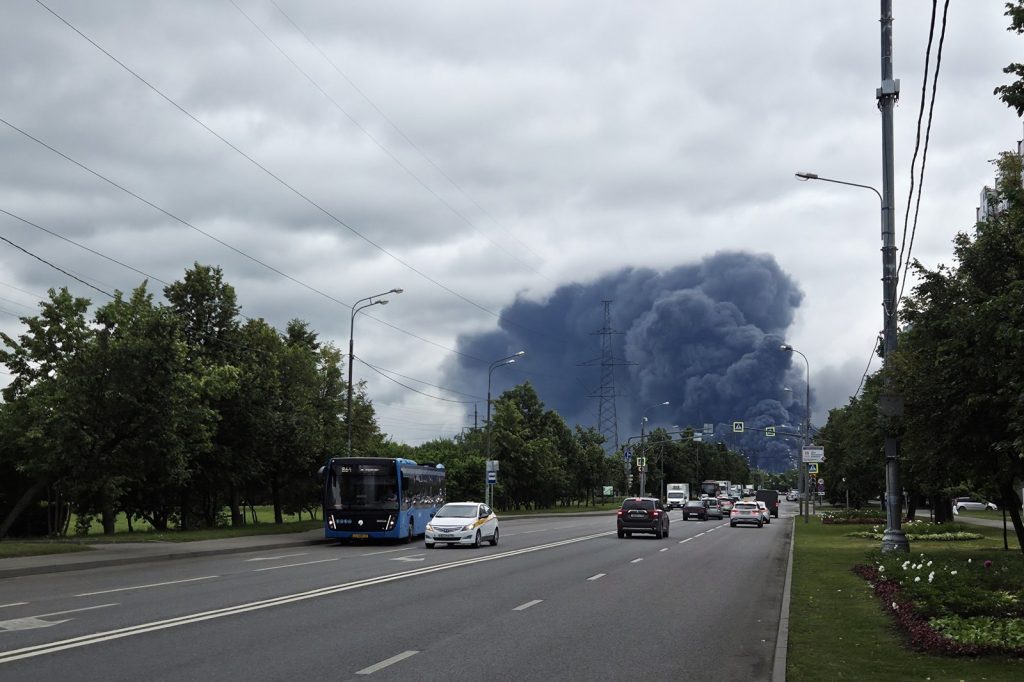
Fires broke out at an oil refinery, two fuel depots and a seaport in southern Russia after Ukrainian drone attacks, local officials said on Friday, 10 July. Some residents had to leave their homes.
In the Krasnodar region, the Ilsky refinery went up in flames when drone debris rained down across the Severskaya district. Part of it landed in the courtyard of a private house. The plant can process around 138,000 barrels of oil a day and has been a target before.
Next door in the Rostov region, Governor Yury Slyusar wrote on Telegram that firefighters were working on two fuel depots in the Azov district and at the sea port of Taganrog. The Kyiv Post reported that early indications pointed to the Kurgannefteprodukt terminal, which moves petroleum products on and off ocean-going ships. Taganrog Mayor Svetlana Kambulova said people were taken out of homes in the affected streets. A private house was damaged and the roof of an administrative building burned.
Russia’s Defence Ministry said its air defenses shot down 376 Ukrainian drones overnight, among them aircraft heading toward the Moscow region.
Who caused the damage is often disputed. Russian authorities commonly blame fires on wreckage from intercepted drones, while Ukrainian and independent accounts of the same incidents tend to call them direct hits.
Shortages at the pump
The strikes came just after President Vladimir Putin conceded that repeated attacks were behind fuel shortages across the country. A month earlier he said a task force was working on the problem and described it as “not of a critical nature.” Drivers, meanwhile, faced long lines at filling stations and higher prices.
Kyiv has intensified its attacks on Russian energy and other infrastructure in recent months to weaken Moscow’s ability to pay for the war. It calls them retaliation for Russia’s near-daily attacks on Ukrainian civilians and energy facilities since the full-scale invasion in February 2022.
A crisis that spread
An Atlantic Council analysis published in September gave a sense of how far the damage went. Ana Lejava, a Eurasia expert at Georgetown University, wrote that Ukraine had dramatically stepped up drone strikes on Russian energy sites since the start of 2026, producing the worst fuel shortage Russia has seen since the Soviet Union fell.
By late August, she wrote, more than 70 percent of Russian gas stations were reportedly out of fuel. The Kremlin banned exports of a range of fuels and, for the first time, began buying gasoline from India. Rationing reached more than half of Russia’s administrative regions, and shortages were felt even in Moscow. In Volgograd, several residents were detained after filming a video appeal that urged the authorities to deal with the lack of fuel.
The effects crossed borders. Tajikistan’s energy minister said in late August that his country had roughly sixty days of fuel reserves left. Kazakhstan cut energy exports after Ukrainian strikes damaged Caspian Pipeline Consortium infrastructure in Russia, which handles around 80 percent of Kazakh oil exports. In July, Kazakh leader Kassym-Jomart Tokayev told Putin publicly that the war should end.
In Abkhazia, a breakaway region of Georgia, shortages over the summer led Georgian authorities to allow roughly three hundred tons of petrol to be delivered, the first fuel Tbilisi had supplied there in more than three decades. Georgian officials described it as humanitarian outreach.
Sources
- Ukrainian drone strikes are disarming Russia's energy weapon
- Ukrainian drone strikes ignite fires at Russian oil sites




