
A decision by the United States to impose a 20 percent fee on all cargo transiting the Strait of Hormuz, first announced in March 2025, has now been in effect for months and continues to deepen a confrontation with Iran that has been building for years. The toll, revealed on March 18, 2025, targets shipping companies and insurers moving goods through the strategic waterway. Enforcement by the U.S. Treasury’s Office of Foreign Assets Control began on April 1, 2025, placing financial pressure on firms that fail to pay.
Tehran condemned the measure the same day it was announced, with Iran’s Foreign Ministry issuing a statement opposing the levy. The standoff over the strait comes at a time when broader tensions between Washington and Tehran have reached a level of volatility not seen in years, driven by naval posturing, nuclear advances, and the absence of a diplomatic framework.
The Strait of Hormuz, a narrow waterway connecting the Persian Gulf to the open ocean, has long been a flashpoint in U.S.-Iran relations. A large share of the world’s traded oil passes through this channel. In past crises, Iran has threatened to disrupt shipping there, and the U.S. Navy has responded with deployments.
Each such episode has raised the risk of a broader conflict. Hostility between the two countries traces back to the 1979 Iranian Revolution and the subsequent hostage crisis at the U.S. Embassy.
During the 1980s, the two sides fought a proxy tanker war in the Persian Gulf. The 2015 nuclear deal, known as the Joint Comprehensive Plan of Action, represented a diplomatic effort to de‑escalate tensions over Iran’s atomic program, but the United States withdrew from that agreement in 2018, reimposing broad economic sanctions. Iran responded by exceeding the deal’s limits on enrichment, and talks to revive the accord stalled in 2022.
A Toll on a Vital Waterway
The new fee on cargo transiting the strait was immediately met with a military response from Iran. The Islamic Revolutionary Guard Corps had already begun naval exercises in the strait since March 15, 2025, three days before the U.S. announcement.
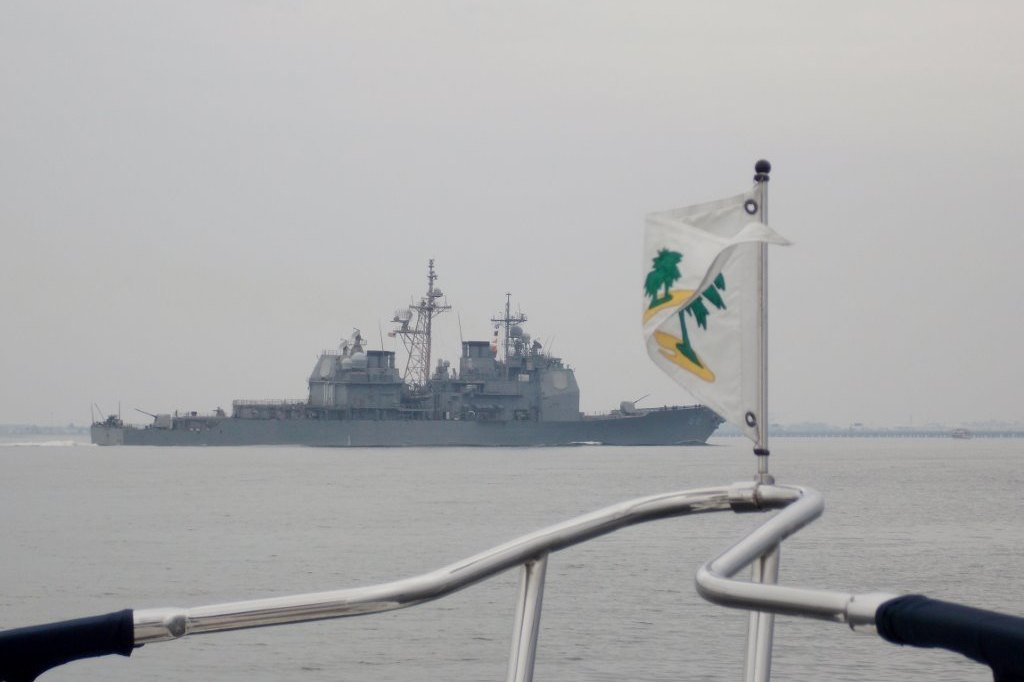
The U.S. Navy responded by deploying the USS Dwight D. Eisenhower carrier strike group to the Gulf on March 17, 2025, while the U.S. Fifth Fleet increased its patrols in the region. The United Nations Security Council is scheduled to have met on March 20, 2025, at the request of Russia and China to discuss the toll.
The European Union, through foreign policy chief Josep Borrell, called for de-escalation on March 19, 2025, urging dialogue. However, the remaining parties to the 2015 JCPOA — the UK, France, Germany, Russia and China — have not reached a new agreement since talks stalled in 2022.
The U.S. administration has framed the toll as a measure to secure the waterway and pressure Iran. Critics argue that the move risks triggering a broader military confrontation. The International Energy Agency has warned that a disruption to the Strait of Hormuz could reduce global oil supply by 15 percent, a shock that would drive prices sharply higher.
Energy markets have been watching the situation closely, as the combination of the toll, the naval buildup, and the nuclear enrichment creates a volatile environment. With the toll now enforced for months, the next few days — as of the UN Security Council meeting and the ongoing enforcement — test whether diplomacy or escalation will prevail.
Nuclear Enrichment and the Risk of Military Strikes
The standoff over the strait comes alongside rising alarm over Iran’s nuclear program. The International Atomic Energy Agency reported in February 2025 that Iran had enriched uranium to 84 percent purity, a level that alarmed arms‑control officials. That development prompted Israeli Prime Minister Benjamin Netanyahu to state on March 10, 2025, that Israel “will not allow Iran to obtain a nuclear weapon,” and Israel has since threatened military strikes.
Iran has refused direct negotiations with the United States since 2018, when the Trump administration withdrew from the JCPOA. While renewed talks under the original nuclear deal framework remain a theoretical path forward, no substantive discussions have taken place.
The nuclear dimension adds another layer to an already dangerous situation. Without a renewed diplomatic framework, both the naval confrontation in the strait and the nuclear competition show signs of deepening. What began as a dispute over a toll may accelerate a cycle of retaliation with consequences for international security and the world economy.
The Strait of Hormuz’s disruption could cause a sharp rise in global energy costs, affecting consumers and businesses far beyond the region. The UN Security Council meeting on March 20, 2025, put the issue before the international community, but with the United States and Iran on opposing sides and no new diplomatic channels open, the odds of de‑escalation remain uncertain.
The next moves by Washington, Tehran, and their allies will determine whether the standoff remains contained or escalates into a broader conflict.
Sources
- Trump reverses threat of 20% fee on Strait of Hormuz cargo as US…
- The Strait of Hormuz: A U.S.-Iran Maritime Flash Point | Council on…




