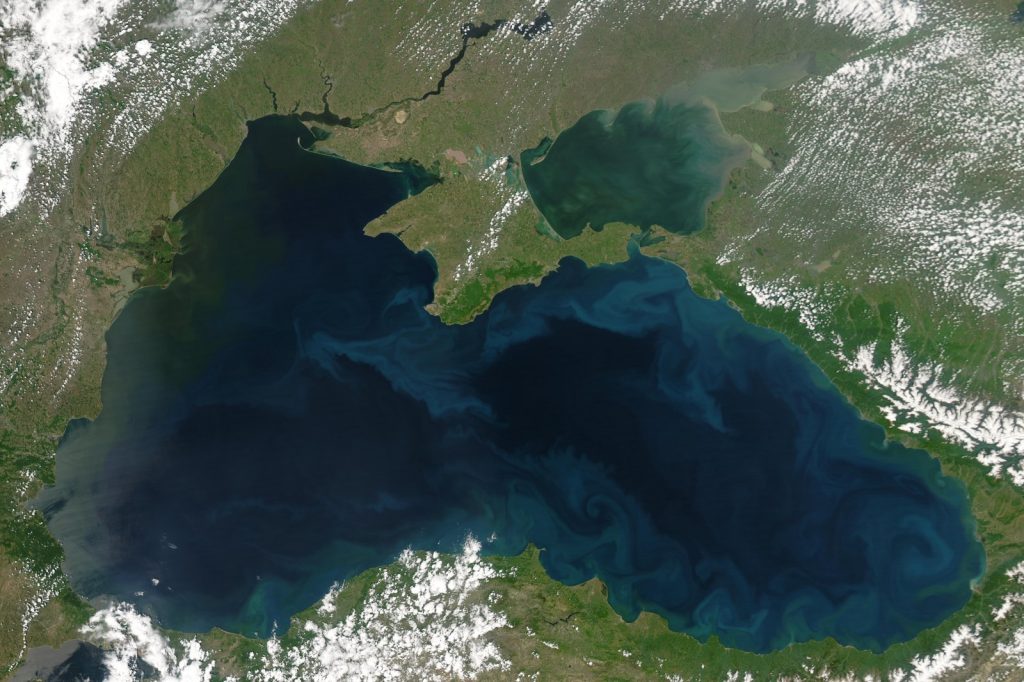
The Black Sea has functioned for centuries as a vital artery for grain shipments linking Europe to Asia and beyond, but the current conflict has turned its waters into a contested zone where both sides are striking each other’s ability to move food. Ukraine’s military has struck 20 Russian vessels, a development with direct implications for global grain markets that extend well beyond the region, according to officials who confirmed the strikes but provided no further breakdown of the vessels or the timeline of the attacks.
Before the war, Ukraine accounted for approximately 10 percent of global wheat trade and 15 percent of corn trade, and it remains a major exporter of wheat, corn, and sunflower oil. The Russian blockade of Ukrainian ports, followed by these Ukrainian strikes on Russian shipping, has disrupted established routes and introduced significant price volatility into international markets.
Historically, the Black Sea’s shallow northern shelf has supported fertile farmland, making it a natural hub for grain production and export. Ports such as Odesa and Novorossiysk have long been central to agricultural exports, and the collapse of the Soviet Union in 1991 shifted trade dynamics as Ukraine’s agricultural sector expanded to supply global markets. Today, the region’s strategic importance has taken on new urgency as both sides target each other’s maritime capabilities.
The Collapse of the Black Sea Grain Initiative
The Black Sea Grain Initiative, brokered between Russia, Ukraine, Turkey, and the United Nations, facilitated the export of 33 million metric tons of grain from August 2022 to July 2023, stabilizing global prices during its operational period. Russia withdrew from the agreement on July 17, 2023, effectively ending the coordinated safe-passage arrangement.
Following Russia’s withdrawal, Ukraine established its own humanitarian corridor through the Black Sea. By early 2024, that alternative route had exported over 10 million metric tons of grain, operating without Russian participation or guarantees and relying instead on Ukrainian naval capabilities and international insurance arrangements. The strikes on Russian vessels represent a tactical shift, as these operations may reduce the effectiveness of the Russian blockade, potentially lowering insurance premiums for commercial shipping and improving overall export volumes from Ukrainian ports.
Insurance costs have been a critical factor in determining whether private shipping companies are willing to transit the Black Sea war zone.
Retaliation and Infrastructure Damage
Russia has responded with its own strikes on Ukrainian port infrastructure. The attack on Odesa on July 19, 2023, stands as a documented example of the pattern. Such retaliatory strikes continue to threaten economic stability in the region, targeting port facilities, grain storage silos, and loading equipment.
This creates a cycle of disruption that affects both Ukrainian exports and global supply chains. The economic implications are measurable: Ukraine’s role as a major agricultural supplier means that any sustained disruption to its export capacity directly affects world prices for wheat, corn, and sunflower oil.
Import-dependent nations in Africa, the Middle East, and South Asia are particularly exposed to these price swings, though the record does not specify individual countries or current price levels. Historically, conflicts over control of the Black Sea have disrupted trade, from the Crimean War in the 19th century to Cold War tensions, and the current confrontation represents a modern iteration of that pattern.
Market Volatility and the Strategic Outlook
Price volatility has been a persistent feature of the grain trade since the onset of the full-scale conflict. The Black Sea Grain Initiative provided a period of relative stability, but its collapse reintroduced uncertainty. The Ukrainian humanitarian corridor has partially filled the gap, but the volume of exports through that route remains below pre-war levels. The strikes on Russian vessels introduce a new variable: if they succeed in weakening the blockade, the net effect could be positive for global grain supplies. However, the retaliatory strikes on Ukrainian port infrastructure may offset those gains. The record does not provide a net assessment of which side currently holds the advantage in this maritime and economic confrontation. What it does show is that both sides are targeting each other’s ability to move grain — Russia strikes Ukrainian ports and storage, while Ukraine strikes Russian naval vessels. The result is a contested maritime environment where commercial shipping operates at elevated risk and elevated cost. The coming months will test whether Ukraine’s strikes on Russian vessels can produce a sustained improvement in export volumes, or whether Russian retaliation will continue to degrade Ukrainian port capacity. Insurance markets will be
Sources
- Russian attack on Odesa kills three as Ukraine targets vessels in…
- Ukraine's drone forces strike 20 Russian vessels in Black Sea