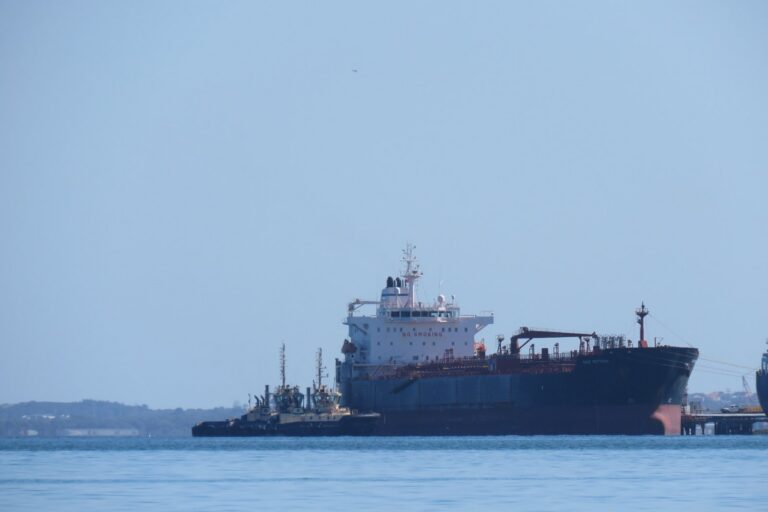
“At the moment, all grain elevators at the Don ports are full,” Alexander Yaroshenko, president of the agricultural holding Ural-Don, told the Rostov outlet Gorod N. Nothing was leaving.
Russian authorities stopped accepting applications for Kerch Strait transits on July 11, after more than 100 ships in the Sea of Azov came under drone attack. That effectively halted grain shipments from Russia’s Azov ports, The Moscow Times reported.
July wheat at a nine-year low
The consultancy SovEcon expects Russia to export 1.5 million metric tons of wheat in July. A year earlier the figure was 2.1 million tons, and the five-year July average is 3.1 million. SovEcon’s managing director, Andrey Sizov, wrote on Telegram that this would be the weakest July since 2017. “The main reason for the decline is navigation restrictions through the Kerch Strait,” he said.
Up to 25% of Russia’s combined grain and sunflower oil exports ship through ports beyond the strait, by SovEcon’s estimate. Sizov also pointed to softer demand from buyers in Egypt and Turkey.
The Don River route, which carried 14.7 million tons of grain and processed grain products last season, 27% of Russia’s total grain exports, has now stopped completely, industry sources told Gorod N.
No buyers, no easy detour
Yaroshenko described a market frozen in place. Exporters are refusing new deliveries, and contracts already agreed are collapsing because cargo cannot ship. “Active trading should be picking up right now,” he said. “But there’s no one to sell to.”
Sending grain to Novorossiysk and Tuapse looks no better. Yaroshenko said the ports in Krasnodar region cannot handle the volumes southern Russia ships in a season, and the railways were not built for them. A grain trader quoted by Gorod N warned that rail approaches to both ports would jam, possibly for months. The Black Sea ports are also poorly equipped for perishable processed products, legumes and durum wheat, the trader said, so a long closure of the Azov-Don basin could idle processing plants and strand high-value cargo.
Pressure from both directions
Later reporting from DW described a wider squeeze. On August 12, Sizov said the Novorossiysk Bread Products Plant and the Novorossiysk grain terminal had stopped operating, and KSK, a large deep-water grain terminal, followed a day later. A major terminal in Taman had gone quiet at the end of July. Only Tuapse, the smallest deep-water terminal, was still running. “This means that virtually all Russian grain exports via the Azov-Black Sea basin are blocked,” Sizov said.
Ukraine is absorbing blows too. Global Watch reported that Ukrainian officials counted 28 civilian vessels struck and 21 people killed between June 20 and July 20 in Russian attacks, and that Maersk and Hapag-Lloyd suspended services via Chornomorsk. Argus Media’s Xiaoyi Deng told DW that the disruptions have kept good wheat harvests in both countries from reaching global markets.
Sources
- Ukrainian Strikes Slash Russian Grain Exports, Analysts Say – The Moscow Times
- Grain exports stall as Ukraine steps up attacks on Russia
- Russia targets Ukraine's Black Sea lifeline