
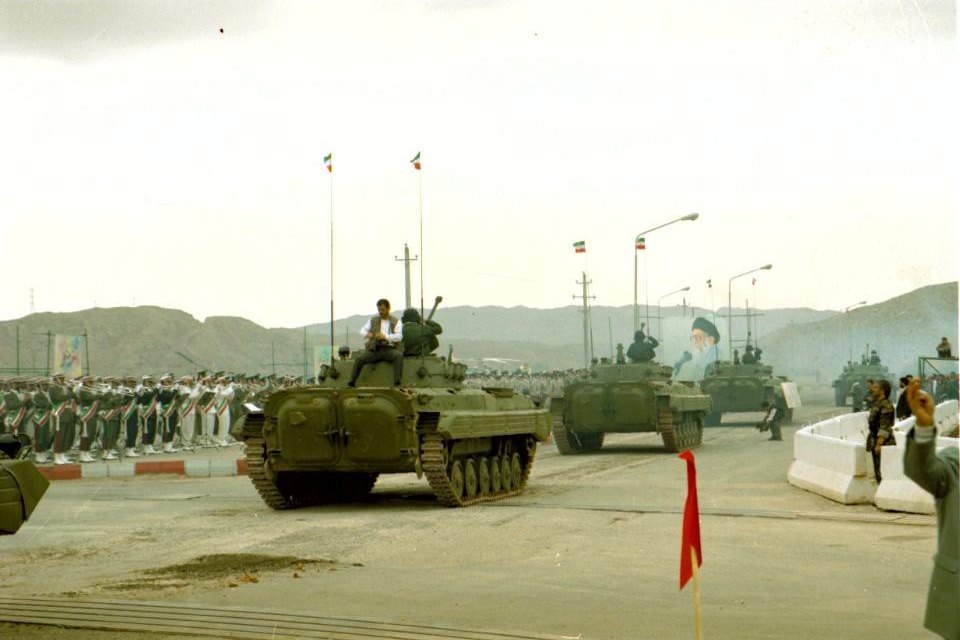
Nestled in the arid hills southeast of Tehran, along the banks of the Jajrud River, the Parchin military complex carries a history as layered as its strategic purpose — and as combustible as the materials it has housed for nearly a century. TEHRAN, July 25 — The site, established in 1935 as the Parchin Chemical and Explosives Factory by General Mahmud Mir-Djalali and built by Czechoslovakia’s Skoda Works, was conceived as part of Iran’s early drive toward domestic artillery and tank production.
That industrial vision, rooted in the interwar years, has since blurred into decades of international suspicion over what exactly takes place behind its walls. In June 2025, the complex was reportedly hit by military strikes — the most recent in a long chain of explosions, diplomatic standoffs, and clandestine activity that has made Parchin a recurring flashpoint in the wider picture of Iran’s military ambitions.
Against this backdrop, the complex sits just 30 kilometres southeast of Tehran, closely linked with the Khojir missile production complex. To the northwest, in the Barjamali Hills, a test range for liquid-propellant missile engines forms part of the Shahid Hemmat Industrial Group, or SHIG, Khojir research facility. An American spy satellite confirmed an engine test stand firing there in August 1997, an event intelligence analysts believed involved technology from the Russian SS-4 Sandal missile.
By December 15 of that year, SHIG had conducted at least a sixth test of an engine needed for an 800-mile-range ballistic missile — it was either the sixth or eighth such test that year, according to available intelligence.
A History Forged in Foreign Technology
Parchin’s evolution is inseparable from foreign assistance. In November 1976, during the Shah’s era, the site was selected for the Iranian assembly of Rapier missiles, a project later cancelled. But international collaboration did not end there.
In early 1997, the Russian Central Aerohydrodynamic Institute TsAGI contracted to build a wind tunnel at SHIG, intended for use by both Iranian and Russian missile designers to refine the Shahab-3 missile. That programme, a centrepiece of Iran’s long-range ambitions, tied Parchin directly to the corridors of Russian aerospace engineering.
The first time International Atomic Energy Agency inspectors were permitted inside the complex came in January 2005, as a confidence-building measure. They returned in November that same year. But those visits did little to quiet the questions.
In November 2007, an explosion in a warehouse at the site injured four people. By late 2011, the IAEA reported extensive landscaping, demolition, and new construction at Parchin — changes that fuelled concern rather than trust.
That November, the agency announced it had credible information that Parchin was the site of activities aimed at developing a nuclear weapon.
Nuclear Suspicions and Diplomatic Stalemate
Iran refused the IAEA renewed access in February 2012. The following month, on March 8, the United States, United Kingdom, France, Germany, Russia, and China jointly called on Tehran to allow United Nations inspectors into the complex. The demand went unanswered.
In early October 2014, The New York Times reported a blast at the site, describing a ‘huge orange flash’ visible from Tehran and two deaths — an event that underscored the volatility of whatever operations Parchin hosts. Claims of nuclear weapon activity at the complex resurfaced in July 2015.
Iran’s United Nations mission denied them, attributing changes in satellite imagery to road reconstruction near the Mamloo Dam. Iranian Foreign Minister Mohammad Javad Zarif went further, calling the analysis by the Institute for Science and International Security lies. The IAEA, for its part, noted a small extension to an existing building at Parchin in August of that year.
On September 20, 2015, IAEA Director-General Yukiya Amano and Director of Safeguards Tero Varjoranta made an unusual visit to Parchin. Iranian personnel took environmental samples at the site and handed them over to the IAEA under what were described as ‘established procedures’.
Notably, IAEA experts were not physically present during the sampling. Amano nonetheless professed satisfaction, stating that the procedure met ‘strict agency criteria.’ The visit did not, however, resolve the underlying dispute over the site’s history of suspected nuclear weapons work.
What to Watch Next
The reported military strikes in June 2025 mark the most recent chapter in Parchin’s long, contested story. The complex remains at the heart of what is at stake in the wider Iranian nuclear and missile question — a site where the legacy of a 1930s chemicals factory has become entwined with modern concerns over warhead development, engine testing, and the limits of international inspection.
Whether the June strikes alter the calculations of the parties involved, or simply add another explosion to the site’s record, will be the next question for the corridors of Vienna, Washington, and Tehran alike.




