
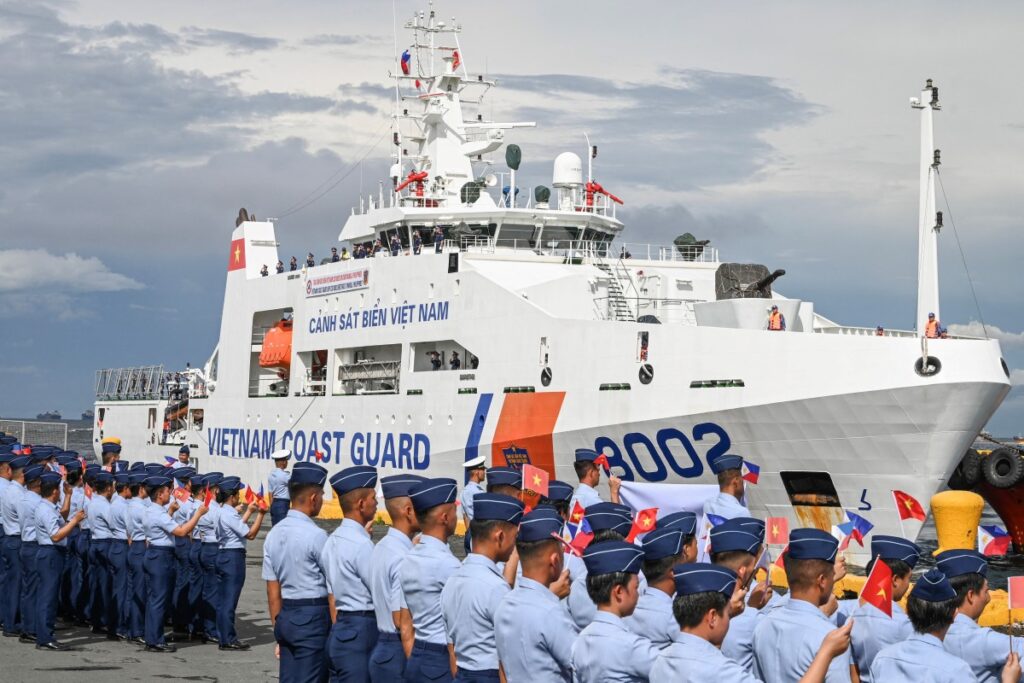
A Vietnamese official stood up at a formal ceremony in Hanoi’s presidential palace on Tuesday, January 30, and named two documents. One dealt with “incident prevention in the South China Sea”. The other covered “maritime cooperation” between the two countries’ coastguards. Vietnam and the Philippines signed both while Ferdinand Marcos Jr., the Philippine president, was in the capital on a state visit.
The texts were not released. What the public knows comes mostly from Marcos, who told Vietnam’s premier, Pham Minh Chinh, that the maritime deal is meant to give the two coast guards a broad working relationship. Training, capacity building, and swaps of personnel and ships are all on the list, so the services can run operations side by side.
Why now
Both capitals have clashed with China’s coastguard, but Manila has taken the heavier knocks lately. Al Jazeera recalled that Manila accused Beijing, late the previous year, of “swarming” Whitsun Reef, while Beijing blamed Manila for “provocations” at Second Thomas Shoal. The Philippines says Chinese vessels have fired water cannon there, shone a military-grade laser and boxed in its ships until they collided. Earlier in January, Chinese forces staged exercises in those waters as American and Philippine units did the same.
Rappler and Al Jazeera both flagged the risk of irritating Beijing, especially if the pact nudges the two claimants toward compromises on their own overlapping claims.
What Marcos said
Marcos kept the tone measured. “The South China Sea remains to be a point of contention,” he said at the meeting with Chinh. “We are firm in defending our sovereignty, sovereign rights, and jurisdiction against any provocations. But at the same time, we are also seeking to address these issues with China through peaceful dialogue and consultations as two equal sovereign states.”
Ahead of talks with President Vo Van Thuong, he had called Vietnam “the sole strategic partner of the Philippines” in Southeast Asia and said cooperation at sea underpins the ties. Chinh answered in kind: “The world and regional situation is evolving in a rapid and complicated manner and therefore we need to unite and cooperate more closely.”
The ASEAN backdrop
The two leaders met after ASEAN foreign ministers gathered in Laos and “underscored the importance of the full and effective” carrying out of the conduct declaration that ASEAN struck with Beijing in 2002 and 2012. For years the bloc has tried, without result, to settle a conduct code for the sea with China. Laos’s foreign minister, Saleumxay Kommasith, said he hoped a third reading of that code could come “as soon as possible.”
He added that every claimant must respect the UN sea-law treaty. A UN-backed tribunal found in 2016 that China’s sweeping claims lacked merit. China ignored the ruling.
Rice, cars and batteries
The security papers came wrapped in commerce. Under a five-year food security deal, Vietnam would sell the Philippines, a major rice buyer, as much as 2 million tonnes of rice, the white kind. A day before the talks, Marcos had met Pham Nhat Vuong, who heads Vietnam’s largest conglomerate, Vingroup. The company later said its EV arm, VinFast, would start operating in the Philippines. Marcos told Vingroup his country could help make electric-vehicle batteries, thanks to its cobalt, copper and nickel.
Marcos set a target of $10 billion in two-way trade, up from $7 billion.
Sources
- Vietnam, Philippines seal deals on South China Sea security
- Vietnam, Philippines sign deals on security in disputed South China Sea




