
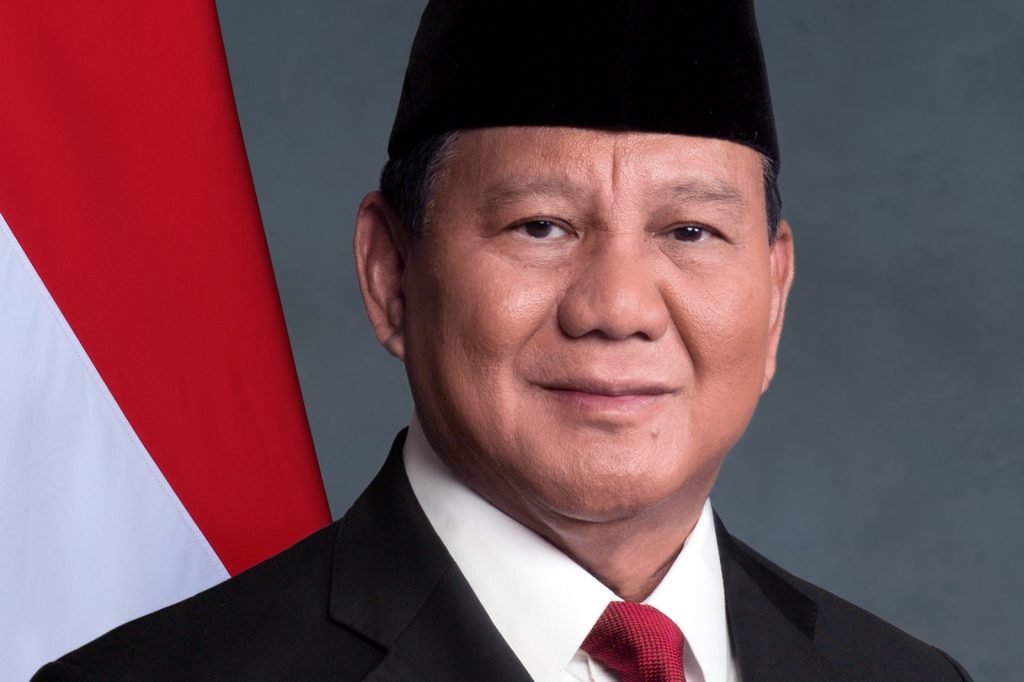
Prabowo Subianto was sworn in as Indonesia’s eighth president on October 20, 2024, and figures show how steep the inheritance is. An analysis by Wijayanto Samirin of the Paramadina Public Policy Institute, first delivered at the Global Asia Forum, catalogs the promises, the arithmetic and the cabinet that will decide whether the next five years work.
There would be no “honeymoon” period, the analysis notes. On day one Prabowo unveiled his cabinet; on day two he chaired its first meeting. He named the team the “Merah-Putih Cabinet,” after the red and white of the national flag, and it is enormous: 48 ministers plus 8 ministerial-level posts, swelling to 111 members once the vice ministers are counted, against the 34 that served his predecessor Joko Widodo. Analysts have already branded it the “Obese Cabinet,” and the piece raises the obvious worry, that a roster this size reads like a ledger of political favors being repaid with seats.
The Promises That Won the Election
Prabowo took 96.2 million votes in the 2024 election, 58.6 percent of the electorate, helped along by Widodo, whose son Gibran Rakabuming Raka now serves as vice president. The economic pledges are sized to match the mandate: GDP growth of 8 percent by the end of the term, against roughly 5 percent under Widodo; a revenue-to-GDP ratio lifted to 23 percent from 12.36 percent in 2023; continuation of the new capital project; downstream mineral processing; a Free Lunch Program for every Indonesian child that could cost the state $32 billion a year; and food and energy self-sufficiency, which Prabowo said in his inaugural speech could arrive within 4-5 years.
The Arithmetic He Inherited
The balance sheet is less cheerful. Public debt more than tripled under Widodo to Rp 8,461 trillion, and in 2025 some 16.6 percent of government revenue is earmarked for interest payments alone, 43.3 percent once principal is included. Manufacturing’s share of GDP slid from 21.1 percent in 2014 to 18.7 percent in 2023, leaving over 60 percent of Indonesians in low-paid informal work. Logistics costs ate 24 percent of GDP in 2023, against 16.7 percent in Vietnam, 15 percent in Thailand, 13 percent in Malaysia and 8.5 percent in Singapore, and the capital efficiency ratio worsened to 6.5 from 4.4 in 2014.
The cabinet itself is continuity in disguise. Eighteen of the 34 members of Widodo’s last cabinet, 52.4 percent, kept their jobs, among them the respected finance minister Sri Mulyani Indrawati and Airlangga Hartarto, who continues to coordinate economic policy. The chairmen of eight political parties sit in it, an unprecedented arrangement that, in the author’s reading, turns cabinet meetings into legislative sessions and could erode the House of Representatives. The appointment of Luhut Panjaitan to head the National Economic Council has analysts calling him “Prime Minister” Luhut, with the observation that this looks like Widodo’s third term.
What the Next Five Years Will Bear
Do not expect the 8 percent growth target soon, the analysis argues: the last time Indonesia grew that fast was 1995, when manufacturing boomed and efficiency was high. Six percent growth with better quality would be an achievement. China is positioned as the biggest winner of the term, involved in nearly every major project on the list, from a food estate in Papua spanning 2.9 million hectares to a Jakarta-Surabaya high-speed rail link and a giant sea wall protecting Java. Food self-sufficiency inside 4-5 years is, on the evidence, unrealistic.
The audience for all of it, as the piece closes, is not only the 96.2 million who voted for him: 287 million Indonesians have entrusted the new president with their future.




