
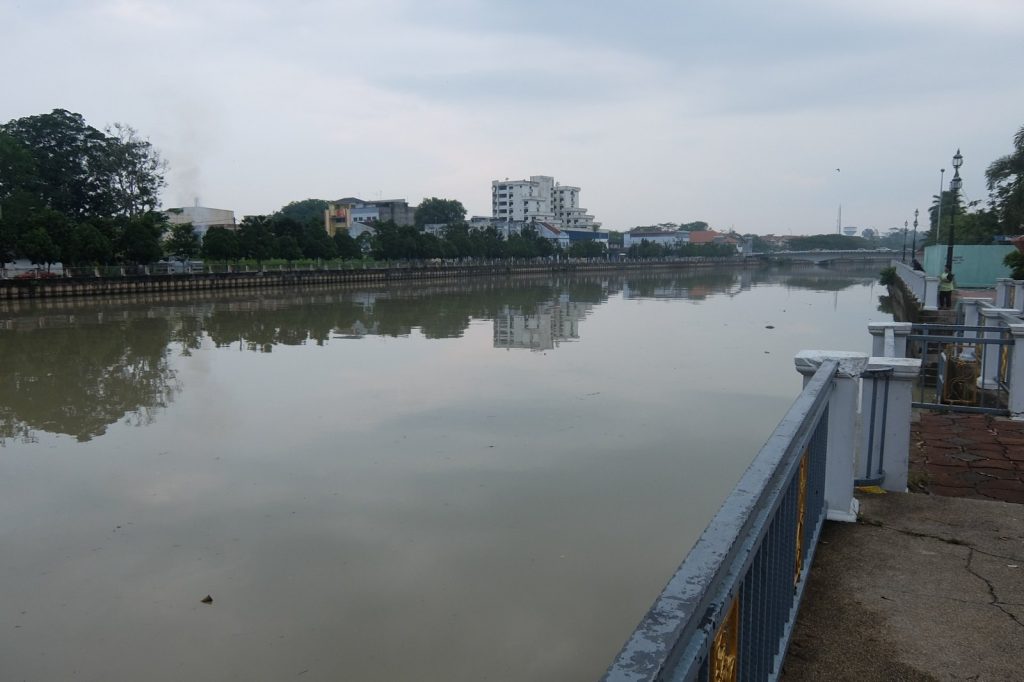
Johor wants to stop buying treated water from Singapore by 2030. The plan to get there carries a price tag above RM5 billion (US$1.13 billion): three new reservoirs and three water treatment plants, all within five years.
New Straits Times reported on March 9 that the Johor government, working with Putrajaya, had set aside RM1.6 billion for reservoirs on the Johor River, the Pontian Besar River and the Sedili Besar River. A further RM3.5 billion would go to the treatment plants, which are expected to lift the state’s treated water supply by 41 per cent. A Johor official told the paper the projects form part of Malaysia’s Zero Dependency Project.
Analysts who spoke to CNA called the timeline “ambitious” and said it leans on cooperation between federal, state and agency players.
The 1962 backdrop
Under the 1962 Water Agreement, Singapore may buy 250 million gallons a day from the Johor River at 3 sen for every 1,000 gallons. Johor can buy treated water back, up to 2 per cent of the raw water it supplied, at 50 sen for every 1,000 gallons.
In practice Johor takes far more than that entitlement. It imports an average of 16 million gallons a day, against the 5 mgd Singapore is obliged to sell. At the 2023 Leaders’ Retreat, Anwar Ibrahim and then-Singapore Prime Minister Lee Hsien Loong agreed to resume talks on raw and treated water prices, “without prejudice to each other’s respective long-declared positions on the right to review the prices under the 1962 Johor River Water Agreement”. The agreement itself runs until 2061.
Can it be built in time?
Charles Santiago, chairman of the National Water Services Commission (SPAN), said the projects are “progressing as planned”. He put the potential gain at about 1,200 mgd of extra treated water, 75 times what Johor now buys from Singapore. He also warned that success “will depend on the efficient implementation of sustainable practices and strong collaboration” among the governments, developers and regulators.
Others were less certain about the clock. Reservoirs typically take around eight years to build, analysts noted, and the reservoirs are what raise the volume of raw water Johor collects. Treatment plants can be designed and commissioned in two years.
Water specialist Zaki Zainuddin said that reaching the targeted reserves in five years “is a significant challenge, but not an impossible one”. Serina Rahman of the National University of Singapore saw money as the smaller worry, given the investment Johor has attracted, provided Putrajaya backs the work. She also pointed to 2061: with the agreement expiring then, she said, Johor needs to treat its own water.
Data centres and pollution
Johor consumed around 371 mgd as of 2022, according to the Malaysia Investment Development Authority, and data centres are pushing that up. DC Byte data shows the state’s data centre capacity rising from 10 megawatts in 2021 to 1,500MW in 2024. Johor’s state government rejected four of 14 overseas applications submitted between June and November 2024, The Straits Times reported.
S Piarapakaran of the Association of Water and Energy Research Malaysia said household use should come first and that the Water Services Industry Act 2006 lets the regulator impose stricter limits on heavy users. Santiago urged usage caps for data centres and the reuse of cooling tower discharge.
Pollution is the other pressure. In 2019, Lee told that year’s retreat that a PUB waterworks in Kota Tinggi had been shut over high ammonia levels, traced to a burst reservoir at a bio-composite centre in Sedenak. Singapore’s supply was untouched, but about 17,000 households in Kulai lost water. “If the Johor River suffers an incident like that (at) Sungai Kim Kim recently, I think it will be disastrous for both countries,” he said.




