Five days before Russian tanks crossed the border in February 2022, Volodymyr Zelensky stood in Munich and said Ukraine would invoke the consultation clause of the Budapest Memorandum “for the fourth time…but both Ukraine and I are doing this for the last time.” No consultations followed. The invasion did.
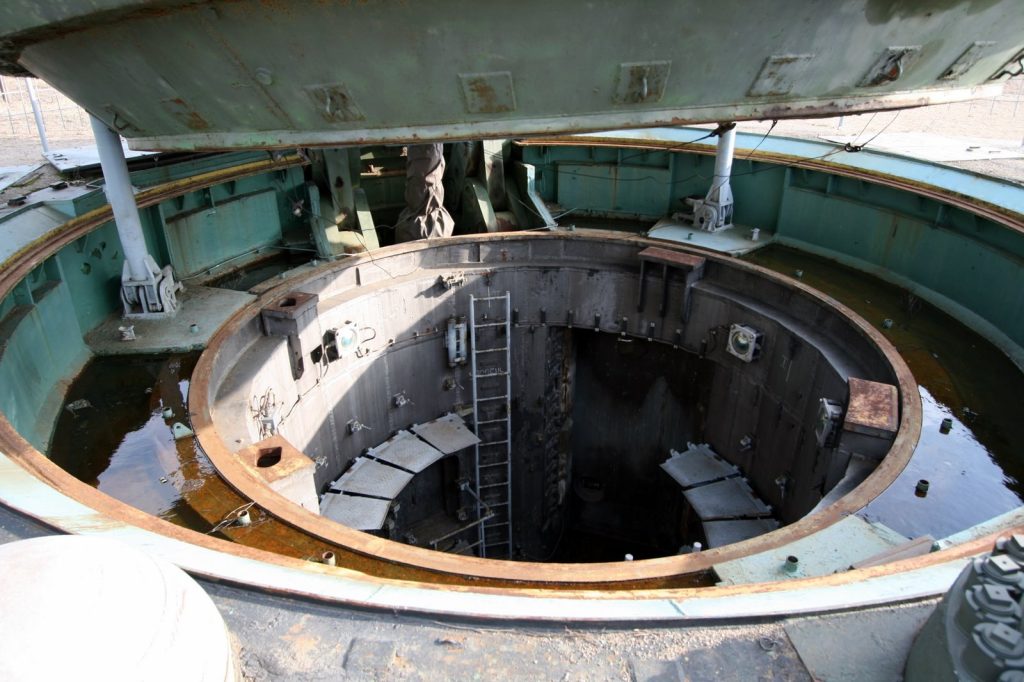
The document he was invoking dates from December 5, 1994, when Boris Yeltsin, Bill Clinton, Ukraine’s Leonid Kuchma and Britain’s John Major put their names to it. In exchange, Ukraine agreed to give up the nuclear weapons it had inherited from the Soviet Union. It held roughly 1,900 strategic warheads atop 176 intercontinental ballistic missiles, the third-largest arsenal in the world. Ukraine sent the warheads to Russia for decommissioning and joined the Nuclear Non-Proliferation Treaty as a non-nuclear state.
Assurances, not guarantees
Kyiv wanted more than it got. According to The Conversation, Ukraine first sought legally binding guarantees that Washington would step in if its sovereignty were breached. When it became clear the United States would not go that far, Ukraine accepted political assurances instead: a pledge to “respect the independence and sovereignty and the existing borders of Ukraine”.
The wording was no accident. Writing in the Yale Journal of International Affairs, Alexei Hoffman notes that American negotiators picked “assurances” over “guarantees” on purpose. An assurance says what a signatory will not do. A guarantee says what it will do. The Russian and Ukrainian texts used a word that translates as “guarantees”, but U.S. officials had read a statement into the record in January 1994 saying the term carried the lesser meaning. Steven Pifer, who led the American team, later said the weaker word was chosen because “we were not prepared to extend a military commitment.”
Critics saw the gap at the time. In 1993 John Mearsheimer warned that Ukraine could not defend itself against a nuclear-armed Russia with conventional weapons, and that no state would offer it a meaningful security guarantee. He even predicted trouble over the Black Sea Fleet and Crimea.
Two breaches
Russia broke its commitments first in 2014, with the annexation of Crimea and its role in the fighting in eastern Ukraine. The response was lukewarm. A House of Lords committee observed that Britain, as a signatory, “had a particular responsibility” and had not been as active or visible as it could have been. The full-scale invasion of 2022 buried what was left. Putin then ordered Russia’s nuclear deterrence forces onto high alert, a further repudiation of the pledge.
Washington and London sent money, equipment and training and tightened sanctions, but ruled out direct intervention such as a no-fly zone. That met the letter of their commitments, the Conversation argues, and left Ukraine to fight alone.
What Ukraine concluded
The mood in Ukraine has turned hard. In 1994 about 30 percent of Ukrainians favored keeping nuclear weapons; by December 2024, Hoffman reports, 73 percent supported restoring them. On the memorandum’s thirtieth anniversary the Foreign Ministry called it “a monument to short-sightedness in strategic security decision-making” and said Ukraine would accept no substitute for full NATO membership. Ukraine has since signed twenty-eight bilateral security agreements under the G7 Vilnius framework, which officials describe as supplements to NATO membership, not replacements.
The lesson reached beyond Kyiv. Ukraine was not alone in the bargain: Belarus and Kazakhstan struck the same deal, and between them the three states gave up more than 3,200 strategic warheads. Hoffman points out that Belarus, which finished its denuclearization in November 1996, now hosts Russian tactical nuclear weapons, which arrived by June 2023. Its defense minister blamed the failure of the Budapest guarantees. Kazakhstan, with a 7,644-kilometer border with Russia, has drawn no practical security from the memorandum at all.
Sources
- Ukraine war: what is the Budapest Memorandum and why has Russia’s invasion torn it up?
- Assurances Are Not Guarantees: Budapest's Lesson for Nonproliferation (Volume 21, Issue 2) — Yale Journal of International Affairs