
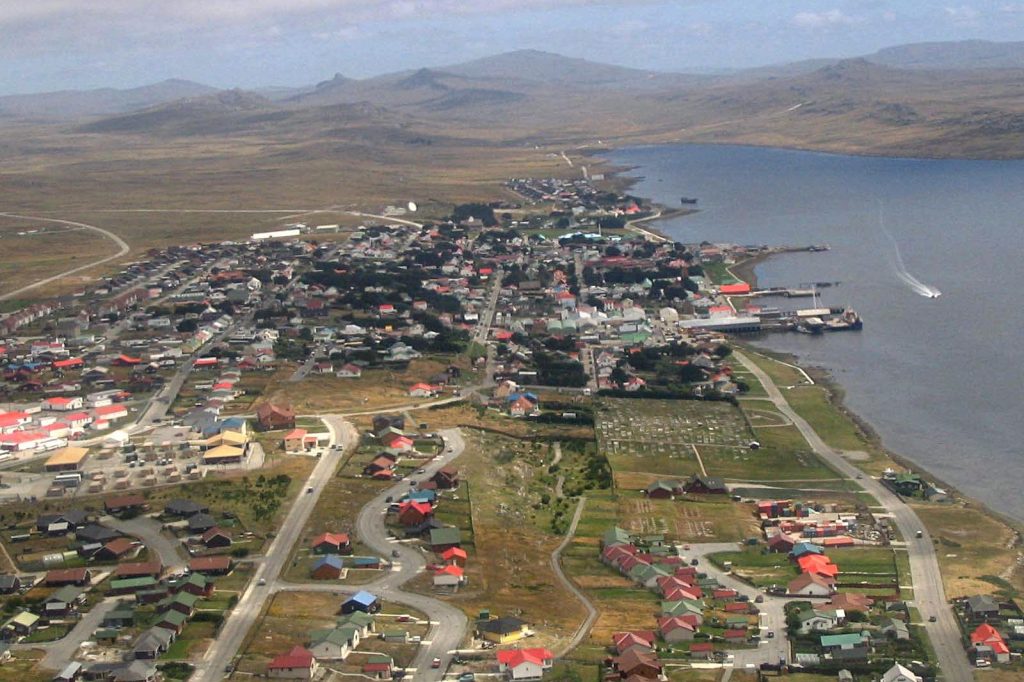
The Falkland Islands have about 3,600 residents, and the Guardian found them in October 2026 braced for a hostile Argentina. They are also, by one measure, among the richest places on earth.
A small population that keeps growing
Four decades ago there were 1,800 inhabitants and a tiny wool-centred economy that leaned on UK government handouts. Today the population has been growing at 3% a year in recent times and draws on about 70 nationalities. The pull is a 26% top rate of tax, good pay and a growing, self-reliant economy. Filipinos, who came in the late 1980s and 90s for social care and service work, form the largest minority. A residency scheme capped at 90 people a year has been frozen for 12 months because so many want in.
Life is still stripped down. There are no buses, the far-flung parts of the islands can only be reached by boat or the government’s twin-engine aircraft, and the whole landmass, half the size of Wales, has one cashpoint. The hospital cannot handle complex injuries, so much of the health budget goes on medical evacuations to South America.
Squid, tourists and an oil field
Squid built the modern economy. In 1986 the UK let the islands set up a 200-nautical-mile exclusive fishing zone where operators need a licence from the local government. Fleets of Spanish, Korean and Taiwanese vessels buy them. Gross domestic production per capita rose from about £2,000 in 1982 to £85,000 in 2025, the Guardian reported, which puts the islands sixth in the world, just behind Norway.
Cruise ships bring 75,000 or more visitors a year to Stanley. Fortuna chief executive James Wallace warns that the squid catch is declining and nobody yet knows why.
The hopes of the islanders now rest on the Sea Lion oil project, about 136 miles north, led by Navitas with Rockhopper Exploration. Independent estimates suggest it could triple the islands’ GDP. Two major contractors have recently pulled out under Argentinian pressure.
Sovereignty and the garrison
Britain has ruled the islands since 1833. Argentina says it inherited them from the Spanish crown and points to their proximity to the mainland, and calls them the Malvinas. In 1982 a 10-week conflict began when Argentina’s military dictator, Leopoldo Galtieri, ordered an invasion, and Margaret Thatcher’s government sent a naval task force. The war killed 649 Argentinians, 255 British military personnel and three islanders.
The UK keeps 1,800 personnel at Mount Pleasant and on Ascension Island, along with four Typhoon jets, a ground-based air defence system and HMS Medway on patrol. The Guardian called a military threat from Argentina largely hypothetical. The pressure is economic: President Javier Milei has legislated to criminalise companies and individuals involved in the nascent oil industry and suggested fisheries could be next.
In April 2026, after a reported Pentagon email raised a US review of its position, Downing Street said sovereignty “rests with the UK”. A No 10 spokesman said the islands had voted overwhelmingly to remain a UK overseas territory. The BBC noted that previous US administrations recognised British administration of the islands but took no formal position on sovereignty.
Sources
- No 10 says Falklands sovereignty rests with UK after report of US 'review'
- 4,000 people minding our own business: four decades on, Falklands again face a hostile Argentina – The Guardian




