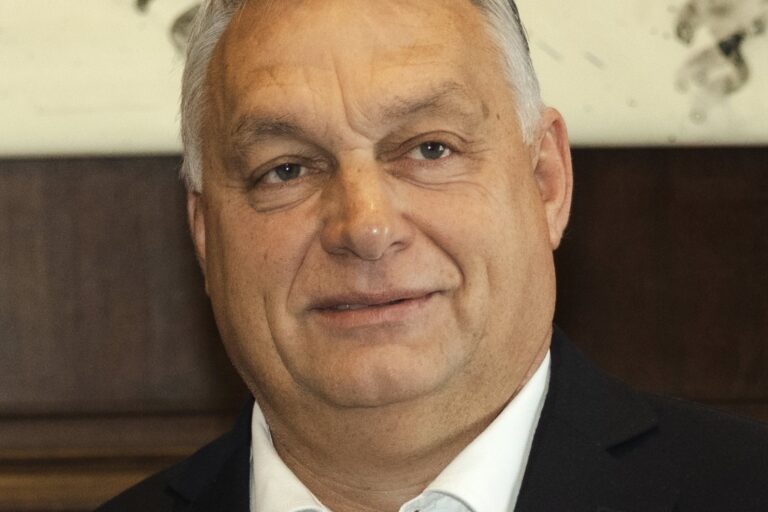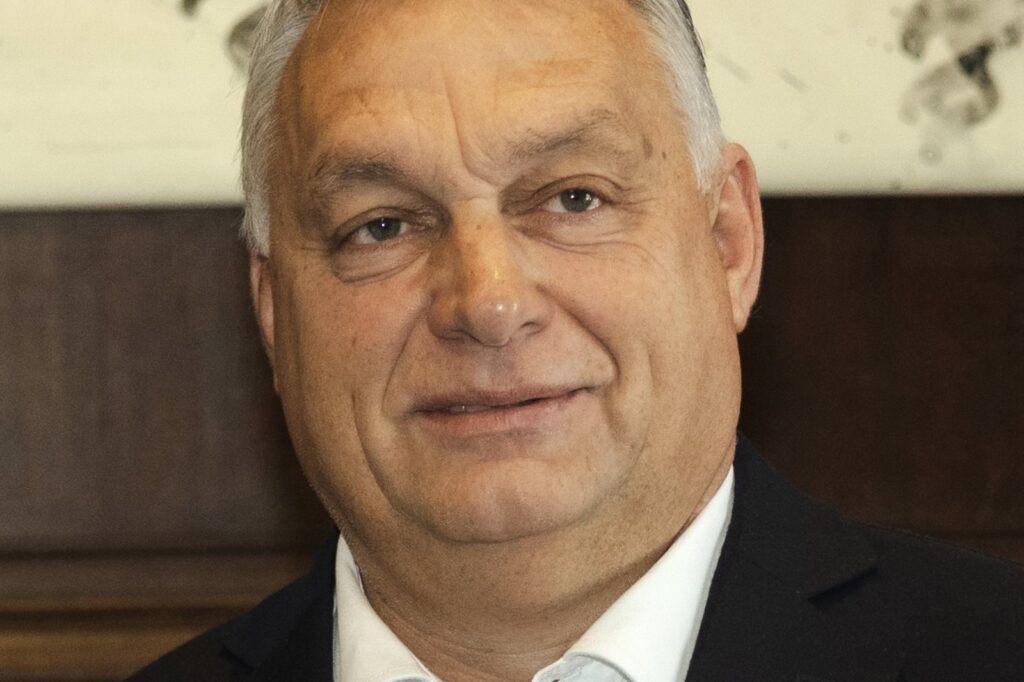
From Anti-Communist Student to Illiberal Strongman
BUDAPEST, October 21, 2026 — The era of Viktor Orbán, the architect of Hungary’s “illiberal state,” has ended in a decisive political rupture. After sixteen years of uninterrupted rule, the former prime minister lost power in a landslide defeat and now faces a constitutional ban on returning to office. His successor, Péter Magyar, has moved swiftly to dismantle the institutional framework that Orbán built, signaling a sharp turn in Central European politics.
Orbán’s journey to the pinnacle of Hungarian power began in the turbulent years following the fall of communism. Born in 1963, he first entered the National Assembly in 1990, leading the parliamentary group of Fidesz until 1993. He was first elected prime minister in 1998, heading a conservative coalition that saw inflation and the fiscal deficit shrink during his tenure. Hungary also joined NATO during this period. However, after losing re-election in 2002, Orbán spent the next eight years in opposition, a period that allowed him to refine his political strategy and consolidate his grip on the Fidesz party, which he has led since 2003.
The turning point arrived in 2010, when Orbán returned to power and began a systematic transformation of the Hungarian state. He won supermajorities in four consecutive elections, in 2010, 2014, 2018, and 2022. These victories provided the mandate for sweeping constitutional and institutional changes. The most significant of these were the 2013 amendments to the Constitution, which restructured the judiciary and created regulatory bodies to oversee media. Organizations such as the European Commission and Freedom House described these developments as weakening judicial independence and media pluralism, enabling a process of democratic backsliding. On November 29, 2020, Orbán officially became Hungary’s longest-serving prime minister, surpassing previous records.
The Architecture of National Cooperation
Orbán’s government, often referred to as the “System of National Cooperation,” was characterized by a centralization of power that critics labeled a kleptocracy. The administration faced persistent allegations of corruption involving the allocation of public contracts and EU funds. Analysts noted that the system enriched elites associated with the ruling party, creating a network of patronage that was difficult to challenge from within the traditional opposition. Orbán described his political model as an “illiberal state,” explicitly rejecting liberal democratic norms in favor of Christian nationalism and soft Euroscepticism.
In foreign policy, Orbán positioned Hungary as a bridge between the West and non-Western powers. He promoted closer economic and political ties with China, Russia, and Turkey, while opposing aspects of European Union migration and asylum policy. Domestically, his government supported legislation restricting LGBTQ rights, including bans on same-sex marriage, same-sex adoption, and LGBTQ-inclusive education. Despite these domestic stances, Orbán approved Finland and Sweden’s NATO membership applications, though he delayed the process. He consistently opposed Ukraine’s accession to both the European Union and NATO, a stance that placed him at odds with many Western allies.
The friction with Brussels escalated over the years. In March 2019, Fidesz was suspended from the European People’s Party, the EU’s largest Christian Democratic group, due to rule-of-law disputes. In March 2021, Fidesz formally left the EPP over a dispute regarding new rule-of-law language in the group’s bylaws. This isolation within the EU’s main political family mirrored the growing skepticism toward Orbán’s governance model among European institutions. The wider picture was one of a member state increasingly operating outside the norms of its own union, a situation that would eventually trigger severe financial and diplomatic consequences.
The April Upheaval and Constitutional Exile
The collapse of Orbán’s dominance came in April 2026, when his Fidesz party suffered a landslide defeat to Péter Magyar’s Tisza Party. The election saw record voter turnout, reflecting a broad desire for change among Hungarian citizens. Tisza won 141 of the 199 seats in the unicameral legislature, a result that the new party viewed as a mandate to dismantle the “System of National Cooperation.” Orbán, who had served as prime minister from 1998 to 2002 and again from 2010 to 2026, announced that he would remain the leader of Fidesz but would refuse to take his seat in the new parliament.
In a move that effectively ended any possibility of a quick political comeback, the new parliament adopted a constitutional amendment imposing a two-term limit on the prime minister position. This change barred Orbán from returning to the office, marking a significant departure from the previous constitutional framework that had allowed for indefinite tenure. The amendment was part of a broader package of institutional reforms aimed at restoring democratic checks and balances. Orbán’s refusal to take his seat underscored the finality of his political defeat, as he stepped back from direct parliamentary involvement while maintaining his role as party leader.
The transition of power was not merely a change of personnel but a fundamental restructuring of the state. The new government, led by Magyar, who took office in May 2026, immediately began the process of dismantling the institutions that had been created or modified during Orbán’s tenure. This included reforms to the judiciary and media regulation, areas where the previous government had faced the most criticism from international observers. The speed and scope of these changes indicated a determination to reverse the course of Hungarian politics and re-integrate the country into the mainstream of European democratic practice.
Dismantling the System and Rejoining Europe
One of the most immediate steps taken by the Tisza government was to address the frozen EU recovery and cohesion funds. These funds had been blocked by the European Union over transparency and rule-of-law concerns. Following a preliminary agreement with the European Commission in May, the EU approved Hungary’s revised post-pandemic recovery plan on July 10, 2026. This decision unblocked 10.4 billion euros in EU recovery funds aimed at supporting the green and digital transitions, as well as economic growth. The approval came in exchange for extensive rule-of-law reforms, signaling a restoration of trust between Budapest and Brussels.
A key component of these reforms was Hungary’s move to join the European Public Prosecutor’s Office (EPPO). The government implemented this by the August 31 deadline, a step that was seen as a significant concession to EU standards on judicial independence and anti-corruption efforts. Additionally, the Tisza government established a new anti-corruption authority, the National Asset Recovery and Protection Agency, which will investigate alleged systemic corruption under Orbán. This agency is tasked with recovering assets that may have been improperly acquired during the previous administration, a move that has been welcomed by European partners as a step toward accountability.
The judicial reforms have been equally sweeping. On September 15, the National Assembly elected five new members to the Constitutional Court of Hungary after a recent constitutional amendment capped the retirement age of the court’s judges at 70. This change forced the immediate retirement of five judges, including chair Péter Polt. The 17th Amendment to Hungary’s Fundamental Law also reduced the terms of incoming judges from 12 to nine years and transferred the power to elect the court’s chair from parliament to the court itself. These changes are designed to ensure greater independence and accountability within the judiciary, addressing long-standing concerns about the politicization of the courts.
A New Diplomatic Chapter
Against this backdrop of domestic reform, Hungary’s international relations are also undergoing a significant shift. In October 2026, Israeli President Isaac Herzog visited Budapest for the first high-level talks since Orbán’s ouster. Herzog met with Hungarian President András Baka and Prime Minister Péter Magyar, marking a new chapter in bilateral relations. Herzog described Hungary as a “friend and an ally,” praising its role in promoting “balanced and constructive relations” between Israel and the European Union. He expressed confidence that the relationship would continue to develop under the new government, noting that the strong bilateral alliance had deepened considerably over the past year.
Herzog congratulated Magyar on his election victory, describing it as “an expression of Hungarian democracy” and of the “vitality and energy” of the Hungarian people. This praise highlights the international perception of the April 2026 election as a decisive moment for democratic restoration in Hungary. Baka, in a more restrained assessment, described relations as “cordial and stable” and said the two countries had no “outstanding bilateral issues,” with Israel remaining an “important economic partner.” The visit also touched on regional security issues, with Herzog raising the threat posed by Iran and its regional proxies, including Hamas, Hezbollah, and the Houthis, warning that the danger extended beyond the Middle East.
The wider picture is one of a Hungary that is redefining its role in Europe and the world. The dismantling of Orbán’s “illiberal” system and the unlocking of frozen EU funds suggest a return to the norms of the European Union. The new government’s emphasis on rule-of-law reforms and anti-corruption measures indicates a commitment to transparency and accountability. As Hungary navigates this transition, the focus is on building a democratic system that can withstand future challenges and maintain its place in the international community. The events of 2026 have marked a decisive break from the past, offering a new direction for Hungary’s political and diplomatic future.
Sources
- Viktor Orbán
- Israeli President in Hungary for first high-level talks since Orbán's ouster – Jewish Telegraphic Agency
- Hungary’s Democratic Transition Starts to Take Shape – Jamestown
Photo: Vox España (CC0)