
The Armed Conflict Location and Event Data project counts 178 vessels attacked by the Houthis during their two-year blockade of the Red Sea. Four ships were sunk and nine sailors killed. Hundreds of commercial vessels were sent around South Africa to stay out of range.
How the campaign unfolded
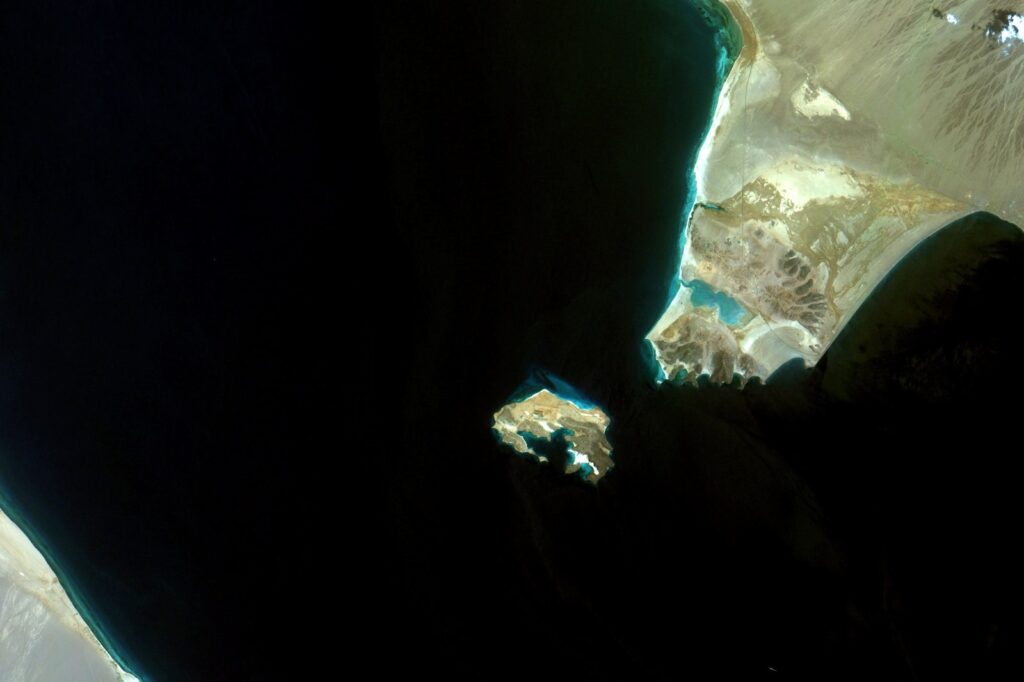
The Houthis, an Iran-backed armed movement in Yemen, began firing missiles and armed drones at Israel after the Gaza war started. They then declared any Israel-linked ship a target, a category that took in US and UK warships, and they also hit vessels from countries with no tie to Israel. Much of the activity centered on the Bab el-Mandeb, the strait at the southern end of the Red Sea.
The international response came in stages. The United States announced Operation Prosperity Guardian on December 18, 2023, as a naval protection force for merchant ships. In January 2024 the UN Security Council passed Resolution 2722, condemning the attacks and affirming freedom of navigation. From January 12, 2024, US and UK forces carried out air and missile strikes on Houthi targets, while other countries separately went after Houthi vessels.
On the timeline, the first pause came on May 6, 2025, when President Donald Trump announced an end to US strikes under a bilateral ceasefire. The Houthis then halted attacks on international shipping and on Israel after the Gaza peace plan took effect on October 10, 2025.
It did not hold cleanly. During the war on Iran, the Houthis threatened on February 28, 2026 to escalate, and on March 28 they resumed attacks on Israel. On July 13 they started hitting Saudi Arabia again, and by July 20 had announced a blockade of Saudi ports and ships in the Bab el-Mandeb. On July 30, Saudi Arabia, Turkey, Pakistan, Egypt and several other states formed the Multinational Maritime Defense Alliance to protect navigation through the strait, the Red Sea and the Gulf of Aden.
Suez traffic comes back, unevenly
The cost to trade was steep. In the last week of 2023, container capacity through the Suez Canal fell to 330,000 TEU, against a weekly average of 1.29 million. Between February 2024 and mid-2026 it averaged just 141,000 TEU a week, about 11% of the level for the same weeks of 2023, according to BIMCO’s analysis of Clarksons Research data.
The recovery started in summer 2026. On July 6, Maersk and Hapag-Lloyd announced that the AE15/SE3 service of their Gemini cooperation, which links Asia with the Mediterranean, was returning to Suez. BIMCO now counts 16 services with changed itineraries since early July, spread across Gemini, Ocean Alliance, Premier Alliance and MSC. In the first two weeks of October, weekly capacity through the canal reached 753,000 TEU, against 1,457,000 in the same period of 2023. It is the first time the figure has topped 50% of the pre-crisis level.
Another BIMCO number: 36% of container capacity using either Suez or the Cape of Good Hope went through the canal in early October, compared with an 8% average from 2024 to mid-2026 and roughly 80% before the attacks. Hapag-Lloyd has scheduled the AE12/SE1 vessel Umm Qarn to leave Tanjung Pelepas on October 27 for a westbound Suez crossing, under naval protection and subject to security assessments.
The strait itself has not bounced back. As of May 2026, about 31 ships a day passed through the Bab el-Mandeb, as they had since January 2024, compared with 75 a day before the war.
A second front in the Horn of Africa
A fresh threat sits on the western shore. Ethiopian government-allied forces have retaken Mekelle, Tigray’s capital, and reached Zalambessa near the Eritrean border on October 13. Addis Ababa accuses Eritrea of sending troops across and backing insurgents, which Asmara rejects. Eritrea says Ethiopia is preparing for war, and the concern is that a clash could pull in the port of Assab. On October 14, US Secretary of State Marco Rubio spoke with Ethiopian Prime Minister Abiy Ahmed and urged restraint, dialogue and respect for territorial sovereignty. Human Rights Watch has reported civilian casualties from shelling in southern Tigray.
Shipping lines now weigh the savings of the Suez route against a security picture that can change fast. A renewed Ethiopia-Eritrea war would add interstate conflict along a coastline that already links crises in the Persian Gulf, the Indian Ocean and the Mediterranean. For now, BIMCO’s chief shipping analyst, Niels Rasmussen, says the diversions around the Cape had pushed global demand for container capacity up by about 10%, and that effect is fading as services return to Suez.
Sources
- Red Sea crisis
- Is a new front in the Red Sea crisis looming? Italy watches the Horn of Africa
- The capacity of the container ships that transit through Suez exceeds 50% of the levels prior to the Red Sea crisis
Photo: Coordenação-Geral de Observação da Terra/INPE (CC BY-SA 2.0)




