
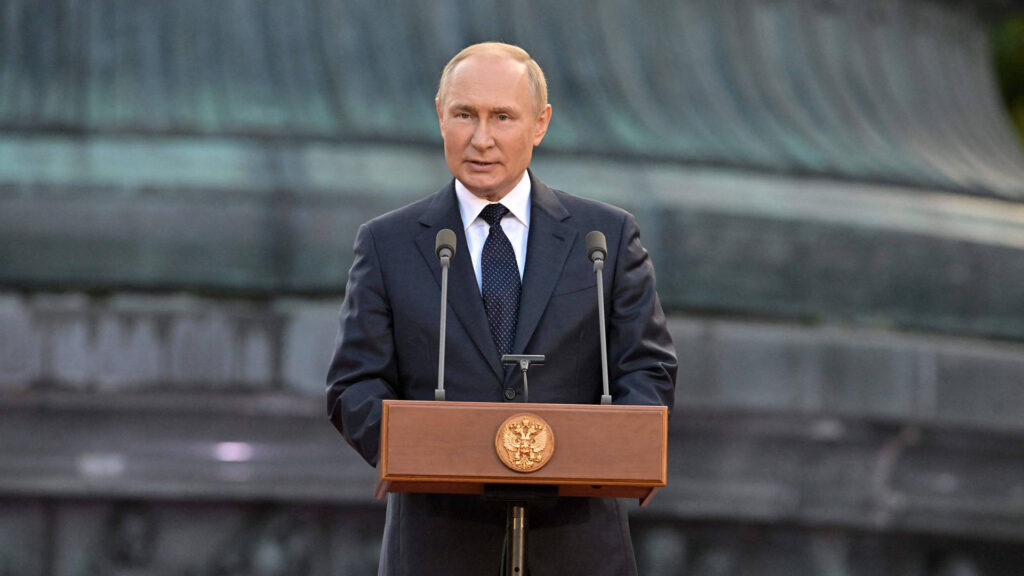
Friday afternoon, Vladimir Putin appeared on state television in a military uniform. He thanked his troops. The target: Kostyantynivka, a town of 78,000 people before the war, sitting in Ukraine’s Donetsk region.
Moscow’s message was clear — the city had fallen. The claim landed fast.
By Saturday, Ukraine’s army spokesman Andriy Kovalyov was pushing back. He told AFP the city remained under Ukrainian control. “The situation remains difficult,” Kovalyov said.
“It is under the control of the Ukrainian Defence Forces.” He acknowledged small groups of Russian soldiers had infiltrated the town. But fighting, he insisted, continued.
President Volodymyr Zelensky went further. He called Moscow’s announcement a lie. “If Kostyantynivka were under Russian control, then perhaps Putin would have no problem meeting me there to find a diplomatic way to finally end” the conflict, Zelensky said.
Russia’s defence ministry countered with its own statement. “Russian troops are in all parts of the town — from the southern to northern outskirts.” This is not the first time the script has played out. The Russian army has been sending in small groups of soldiers to infiltrate and secure positions — a method it used to capture the Ukrainian city of Pokrovsk in late 2025.
The pattern is familiar: announce victory, then consolidate. The question is whether the infiltration can hold.
Kostyantynivka matters because of what lies beyond it. It is one of the final obstacles on the route to the major Ukrainian-held cities of Kramatorsk and Sloviansk. Capturing those two cities is the Kremlin’s ultimate goal in the Donbas.
Kostyantynivka is a stronghold for Kyiv’s troops, a key Kremlin target. Moscow has been trying to take it for months.
The duelling claims came on a day when Russia also said Ukrainian drones had struck its second city, St Petersburg. That development added another layer to a conflict that shows no signs of easing. On the ground in Kostyantynivka, the mechanics are worth watching.
Small groups of Russian troops are inside the town. But Ukrainian forces say they are still fighting. The situation, by Kovalyov’s own admission, remains difficult.
Putin’s public appearance in uniform was a signal. He thanked troops for seizing the city.
But the Ukrainian army says the city is not seized. The two versions cannot both be true. One side is lying, or one side is wrong about its own position.
Either way, the town remains contested. The Russian playbook has a rhythm.
Announce a victory. Let the announcement settle. Then move to consolidate.
It worked in Pokrovsk. Whether it works here depends on how many small groups have actually infiltrated, and whether they can hold their positions against Ukrainian defenders who say they are still in control. For now, the town’s status is unclear.
Moscow says it is theirs. Kyiv says it is not.
The fighting continues. The next few days will tell which version is closer to the truth.




